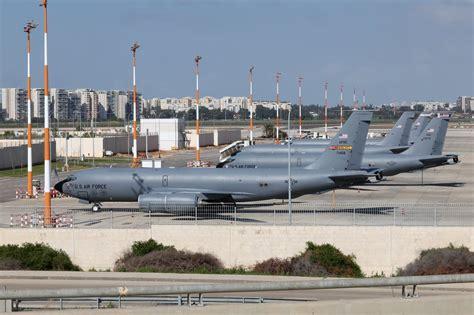
Ben Gurion Airport has become an unlikely focal point in the US military’s air campaign across the Middle East. During Operation Epic Fury, the airport’s expansive civilian facilities provided the United States Air Force with valuable additional space for tanker aircraft at a time when military airpower was being concentrated across the region. But the arrangement created an increasingly difficult problem as the summer travel season approached.
The decision to move American tanker aircraft away from Tel Aviv is therefore about far more than airport congestion. It reflects a complicated balance between military readiness, aircraft survivability, commercial aviation demand, and regional security. With airlines gradually returning to Israel and passenger numbers rising, every available parking stand at Ben Gurion has become strategically important.
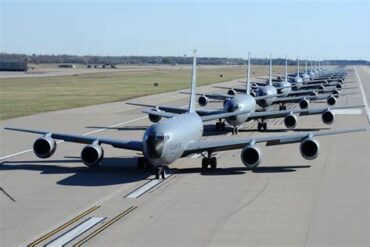
At the same time, keeping dozens of KC-135 Stratotankers and KC-46 Pegasus aircraft at a major civilian airport creates a concentration of valuable military assets in a location that has already demonstrated its vulnerability to missile attacks. Moving the tankers to more heavily protected military facilities gives the US Air Force greater flexibility while allowing Ben Gurion to return toward normal commercial operations.
Why US Air Force Tankers Were at Ben Gurion Airport
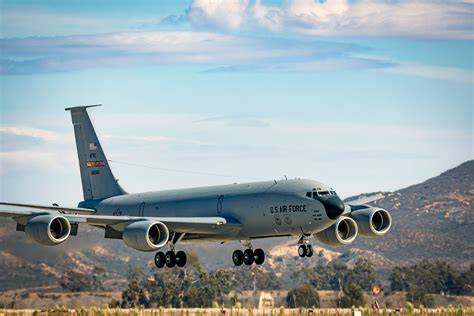
The presence of large numbers of American tankers at Ben Gurion was driven primarily by the unprecedented scale of the US military deployment. When fighting escalated, military aircraft filled bases across Israel and the Gulf region. Tactical fighters, support aircraft, command-and-control platforms, transports, and tankers all competed for limited ramp and maintenance space.
Ben Gurion consequently became an important overflow location. The airport was not necessarily the ideal long-term home for tanker aircraft, but it offered something extremely valuable during the initial buildup: immediate capacity.
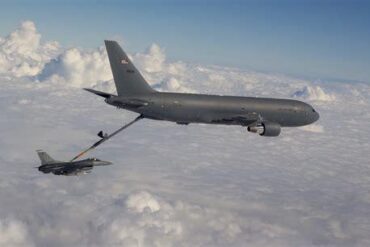
That distinction matters. Tankers do not normally need to be stationed at a civilian international airport simply because they are supporting combat operations. Their value comes from their ability to move fuel to fighters and other aircraft in the air, allowing combat aircraft to remain airborne for longer and operate farther from their bases. During a major campaign, however, the number of aircraft involved can quickly exceed the capacity of dedicated military installations.
US Central Command described the concentration of American military power involved in the operation as extraordinary. Israeli and joint military bases were already carrying large numbers of tactical aircraft, making Ben Gurion a strategically useful additional parking location.
The airport also initially offered a degree of protection through its location and the assumption that it was not the enemy’s highest-priority target. That calculation became less comfortable as the conflict continued.
Ben Gurion’s Summer Traffic Creates a New Problem
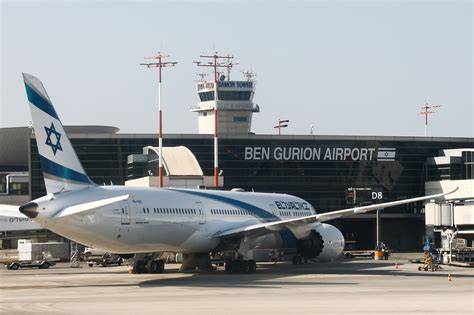
The military requirement that made sense during the early stages of the conflict became increasingly difficult to justify as civilian aviation recovered. Ben Gurion is Israel’s principal international gateway, and the summer months traditionally bring enormous passenger volumes.
The airport has only 99 aircraft parking stands, according to the reference material, and as many as 72 were reportedly occupied by US military aircraft during peak periods. That left the airport with dramatically less flexibility precisely when airlines were preparing for their busiest period of the year.
The consequences extend beyond aircraft parking. Every military aircraft occupying a stand can affect aircraft movements, ground handling, taxiing, refueling, and gate allocation. The result is a complicated logistical puzzle in which civilian airlines must work around a military presence that was never designed to remain indefinitely.
Israeli Transportation Minister Miri Regev pushed for a limit of 20 military aircraft at the airport. The proposed restriction reflected a broader concern that Ben Gurion needed to regain enough capacity to accommodate returning airlines and the millions of travelers expected during the summer.
The pressure became particularly significant as daily passenger traffic approached roughly 100,000 travelers. At that level, even relatively small reductions in operational capacity can create major disruptions.
Why Tankers Became a Liability at Ben Gurion
The most important reason for relocating the tankers is ultimately survivability. Ben Gurion may be a vital airport, but it remains a civilian facility surrounded by valuable infrastructure and populated areas. Parking dozens of large tanker aircraft together creates an obvious concentration of high-value military assets.
The danger was demonstrated during missile attacks on the Tel Aviv area. Iranian ballistic missile barrages targeted the region, and despite Israel’s layered air-defense network, some threats penetrated the defensive shield. Missile fragments, interceptor debris, and other explosive material reached the airport environment.
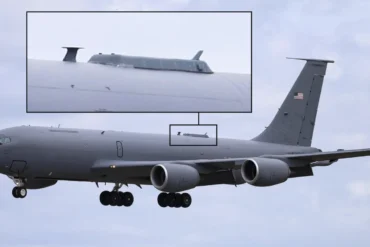
Several KC-135 Stratotankers reportedly sustained damage, although no US military aircraft were destroyed at Ben Gurion during the attacks described in the reference material. The incident nevertheless exposed the weakness of concentrating aircraft on an exposed civilian ramp.
A tanker is particularly valuable because of the role it plays in sustaining combat operations. Losing one does not simply remove another aircraft from the order of battle. It can reduce the number of available refueling sorties and force planners to restructure missions across an entire theater.
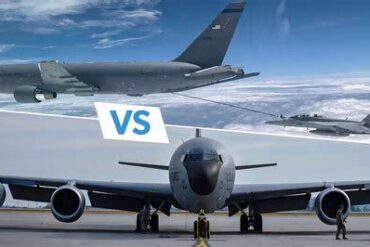
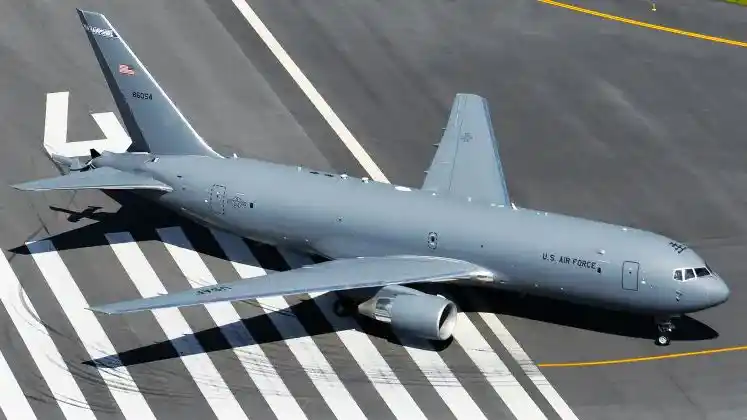
The KC-135 has been a backbone of American aerial refueling for decades, while the newer KC-46 is intended to provide a modern replacement with advanced defensive, communications, and refueling capabilities. Both aircraft are substantial investments, making their protection a priority during sustained combat operations.
The 20-Tanker Limit Was Not the End of the Story
The attempt to limit the American presence to 20 aircraft highlighted the competing priorities of military planners and airport authorities. For Israel’s civilian aviation system, the objective was straightforward: recover as much airport capacity as possible before the summer peak.
For US Central Command, the situation was considerably more complicated. Tanker availability is directly connected to combat capability. Removing aircraft too quickly could weaken the aerial refueling network just as operations were continuing.
That tension became obvious when the planned withdrawal was interrupted. According to the reference material, the United States halted the scheduled removal of aircraft on July 14 after fighting with Iran resumed. Four additional tankers subsequently arrived, bringing the number at Ben Gurion back to approximately 33 despite previously planned departures.
The development demonstrated an important principle of military logistics: temporary basing arrangements can change almost instantly when the strategic environment changes.
A tanker that appears unnecessary on Monday can become essential on Tuesday if air operations intensify. That is why the US Air Force cannot treat the relocation from Ben Gurion simply as an airport scheduling exercise.
Why Southern Israeli Air Bases Make More Sense
The long-term solution is to move tanker operations to dedicated military facilities such as Nevatim Air Base, Ovda Air Base, and Ramon Airport. These locations provide a fundamentally different operating environment.
Military bases are designed around aircraft operations rather than passenger traffic. Their runways, ramps, fuel systems, security arrangements, shelters, and air-defense infrastructure can be optimized for military requirements. They can also keep sensitive military movements separated from commercial aviation.
The southern Negev region offers another advantage: greater geographic separation from the immediate threat environment. Moving tankers farther from Iran’s most direct weapons range does not eliminate the threat, but it can complicate an adversary’s targeting calculations and increase the distance that incoming weapons must travel.
Dispersal is equally important. Keeping all tankers at one location creates a tempting target. Spreading aircraft across multiple bases reduces the possibility that a single successful missile or drone attack could cripple the entire refueling force.
Building Stronger Infrastructure for US Tankers
Relocating American tankers is not simply a matter of finding an empty parking apron. A KC-135 or KC-46 is considerably larger and heavier than the fighter aircraft for which many Israeli military facilities were originally configured.
The reference material describes major engineering work designed to accommodate these aircraft. Reinforced aprons, improved fuel infrastructure, hardened shelters, and blast-resistant storage systems are all part of the broader effort to transform southern Israeli airfields into self-sustaining logistics hubs.
Fuel is particularly important. Tankers consume enormous quantities of aviation fuel while supporting large-scale operations, meaning that an airbase hosting them needs reliable storage and rapid distribution capability. Buried or hardened fuel facilities can also reduce vulnerability to missile strikes.
Aircraft shelters represent another critical improvement. A tanker carrying large quantities of fuel is an especially dangerous asset to leave exposed. Hardened barriers and separated parking positions can limit the consequences if one aircraft is hit.
The objective is not merely to protect individual aircraft. It is to preserve the operational continuity of the entire tanker fleet.
Air Defense Becomes Central to Tanker Basing
The relocation also coincides with efforts to strengthen air defenses around military airfields. The conflict demonstrated that even sophisticated missile-defense networks cannot guarantee that every incoming weapon will be intercepted.
The defensive architecture around southern bases can therefore combine multiple systems designed for different threats. Longer-range systems such as Arrow 3 can address ballistic missile threats, while David’s Sling provides another layer against medium- and long-range threats. Iron Dome and other short-range defenses can address rockets, drones, and lower-altitude threats.
The integration of American and Israeli sensors is equally significant. Secure tactical networks can allow information gathered by different radar and surveillance systems to contribute to a broader operational picture.
US Navy Aegis-equipped ships operating in surrounding waters can also contribute powerful radar coverage. When those sensors are connected to regional command networks, military planners gain more time to identify and respond to incoming threats.
For tanker aircraft, this matters enormously. A refueling aircraft may spend hours operating in a relatively predictable pattern. Its survival depends not only on its own capabilities but also on the defensive network protecting its operating bases and flight corridors.
What the Relocation Means for Ben Gurion Airport
For Ben Gurion, the departure of the tankers could have an immediate operational effect. Freeing military parking stands gives civilian airlines more room to schedule flights, position aircraft, and recover from disruptions.
The timing is especially important because several airlines have resumed or expanded service to Israel. El Al, Arkia, and Israir have increased summer operations, while European airlines have gradually returned to Tel Aviv. Major US carriers are also expected to restore more service as conditions permit.
More aircraft require more than runway capacity. They require gates, parking positions, ground crews, baggage systems, fueling capacity, and predictable taxi operations. Removing dozens of large military aircraft therefore has a multiplier effect on the airport’s overall efficiency.
The pressure was severe enough that airport authorities reportedly considered the possibility of canceling tens of thousands of commercial tickets if the military presence remained too large.
That explains why the tanker withdrawal has become a summer aviation issue as much as a military issue.
The Tankers Can Still Return
Despite the move toward permanent military basing, the tankers are not necessarily gone from Ben Gurion forever. Agreements between American and Israeli military authorities reportedly preserve an emergency return option.
That provision is logical. If another major regional conflict erupts, the United States may once again need every available aircraft parking position.
Ben Gurion could therefore resume its role as an emergency staging location if circumstances demand it. The difference is that it would no longer need to function as the routine home for dozens of tanker aircraft during periods of relative calm.
This creates a more flexible model: military bases become the primary operating locations, while Ben Gurion remains available when operational requirements exceed dedicated military capacity.
Why Moving the Tankers Is a Strategic Decision
The US Air Force’s decision to move tankers out of Ben Gurion Airport is ultimately about finding a sustainable balance between combat readiness and force protection.
During the height of Operation Epic Fury, parking American tankers at the airport provided urgently needed capacity. The extraordinary concentration of military aircraft made that arrangement understandable. But as commercial aviation returned and missile attacks demonstrated the risks of concentrating aircraft at a civilian hub, the disadvantages became increasingly obvious.
Moving the KC-135 and KC-46 fleets to southern military facilities addresses both problems. Ben Gurion can reclaim precious space for commercial aviation, while the United States can operate its tankers from bases designed to protect and sustain military aircraft.
The broader lesson is that modern air campaigns depend on infrastructure just as much as aircraft. Runways, fuel farms, shelters, air defenses, radar networks, and parking aprons are all part of the combat system.
As Israel’s summer aviation season gathers momentum, the sight of American tankers disappearing from Ben Gurion’s crowded ramp therefore represents more than a change in parking arrangements. It signals a shift toward a more dispersed, hardened, and sustainable American airpower footprint in the region—one designed to keep the tankers ready for the next mission while giving civilian aviation room to breathe.