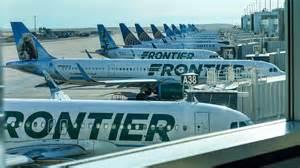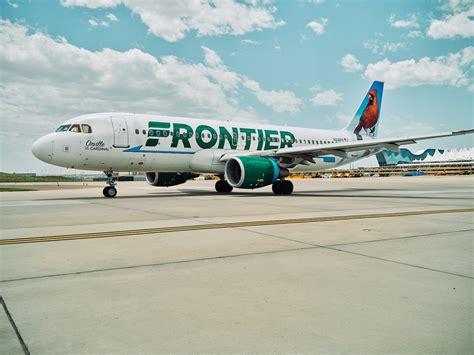
Frontier Airlines is expanding its U.S. and international network with nine new nonstop routes, adding fresh options for travelers between major leisure markets and several destinations where competitors have recently reduced service. The expansion comes as the ultra-low-cost carrier increases its overall schedule during a period of significant change in the American airline industry.
According to OAG data, Frontier plans an average of 693 daily movements in August 2026, representing a substantial 14% increase year over year. The growth comes partly from opportunities created by the disappearance of Spirit Airlines, whose former routes have left gaps that Frontier can target with relatively low network risk.
Between September 2026 and March 2027, Frontier has scheduled 337 routes, including 298 domestic and 39 international markets. While some existing services are being discontinued, the carrier is simultaneously adding nine new nonstop links. Seven are domestic, while two connect the United States with international destinations. Three of the new routes are particularly limited, operating only during the Christmas holiday period.
Frontier Airlines’ 9 New Routes at a Glance
The nine additions connect 17 airports across a network spanning 12,225 miles. The first launches on September 10, when Frontier begins flying between Las Vegas Harry Reid International Airport (LAS) and Boise Airport (BOI). Other launches follow throughout November and December, with frequencies ranging from weekly holiday services to daily operations.
The schedule includes Las Vegas–Boise, Nashville–Tampa, Denver–Fort Lauderdale, Detroit–Los Angeles, Kansas City–Orlando, Ontario–Oakland, Houston–San Juan, Los Angeles–Guatemala City, and Dallas/Fort Worth–San José, Costa Rica.
Several of these markets have an important connection to Spirit Airlines. Frontier is effectively stepping into markets that Spirit previously served, a strategy that allows the carrier to pursue established passenger demand rather than developing an entirely new city pair from scratch. For airlines, monitoring competitors’ schedule changes can therefore reveal opportunities almost as quickly as it reveals threats.
Las Vegas to Boise Launches Frontier’s Expansion
Frontier will begin Las Vegas to Boise flights on September 10, giving passengers four weekly departures during the first week of operation. The route has previously been part of Frontier’s network, although service ended in 2025.
Boise itself returned to Frontier’s network in 2025 when the airline restored flights to Denver. That service is scheduled to end on September 8, just two days before the new Las Vegas operation begins. The shift illustrates how Frontier can adjust its aircraft deployment while maintaining a presence in an important market.
The LAS–BOI corridor also has demonstrated demand. U.S. Department of Transportation data shows that 245,117 round-trip local passengers traveled between the airports during the 12 months ending May 2026. That equates to approximately 672 local passengers per day, excluding seasonal effects. Around 18,116 passengers also connected through another airport, with Salt Lake City being a particularly important connecting point.
Frontier Faces Competition Across Several New Markets
Frontier’s new routes are not entering empty skies. Las Vegas–Boise will have competition from Alaska Airlines and Southwest Airlines, while Nashville–Tampa will face American Airlines and Southwest. Denver–Fort Lauderdale will be contested by Southwest and United Airlines, and Detroit–Los Angeles will put Frontier directly against Delta Air Lines.
Kansas City–Orlando will also have competition from Delta and Southwest, while Houston–San Juan will compete with United. The presence of established carriers means Frontier will need to rely on its low-cost structure and competitive fares to attract price-sensitive travelers.
At the same time, the airline’s return to familiar markets may provide an advantage. Frontier previously operated several of these routes, including Denver–Fort Lauderdale, Detroit–Los Angeles, Kansas City–Orlando, and Houston–San Juan. That previous experience can provide useful insight into seasonal demand, pricing, aircraft utilization, and passenger behavior.
Holiday Routes Bring a Different Opportunity
Three additions have especially short operating windows. Houston–San Juan and Los Angeles–Guatemala City begin December 17 and are scheduled to operate daily only through January 4, 2027. Dallas/Fort Worth–San José begins December 19 and operates only on December 19, December 26, and January 2.
These services are designed around the exceptionally busy Christmas and New Year travel period. Rather than committing aircraft to year-round operations, Frontier can use temporary capacity to capture concentrated seasonal demand while limiting exposure once the holiday rush ends.
The DFW–SJO service is particularly notable because it creates direct competition for American Airlines at its largest hub. Between 1999 and 2025, American was the only carrier operating nonstop between Dallas/Fort Worth and San José, aside from earlier competition from TACA/LACSA in the late 1990s.
Frontier Airlines Targets Opportunities Left by Spirit
The broader pattern behind these launches is perhaps more significant than any individual route. Frontier is using capacity released by Spirit’s network contraction to enter markets with proven demand, including several city pairs that Spirit served as recently as 2025 or 2026.
This strategy fits the ultra-low-cost carrier model. Frontier can selectively enter markets, operate limited frequencies where appropriate, and increase capacity when demand supports it. The nine new routes therefore represent more than a simple list of additions: they show how Frontier is reshaping its network around competitive openings.
For travelers, the expansion means more nonstop choices and potentially lower fares, particularly where Frontier challenges larger airlines. With seven domestic routes and two international additions scheduled through the coming months, Frontier’s 2026 network growth will be worth watching as the carrier continues to capitalize on changes across the U.S. aviation market.