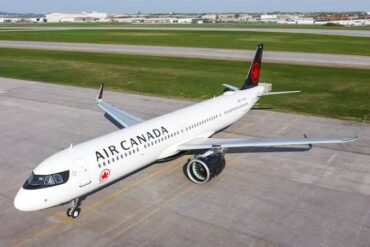
Air Canada is expanding its European network at a remarkable pace, adding 14 new nonstop routes to Europe across its 2026 and 2027 schedules. The expansion is centered on three important eastern Canadian gateways: Montréal–Trudeau International Airport (YUL), Toronto Pearson International Airport (YYZ), and Halifax Stanfield International Airport (YHZ). Montréal accounts for seven of the new routes, Toronto adds six, while Halifax receives one additional European connection.
The scale of the expansion is notable not only because of the number of destinations, but also because of the aircraft Air Canada is deploying. Modern narrowbody aircraft, particularly the Boeing 737 MAX 8 and Airbus A321XLR, are allowing the carrier to serve European cities that do not necessarily require a traditional widebody aircraft. The A321XLR is especially important because its long range gives Air Canada greater flexibility to connect Canadian hubs with secondary European markets.
The new routes also demonstrate a shift in the geography of Air Canada’s European network. Instead of concentrating exclusively on major gateways such as London, Paris, Frankfurt, and Rome, the airline is reaching deeper into markets including Basel, Nantes, Dubrovnik, Tenerife, Catania, Palma de Mallorca, and Ponta Delgada. These destinations can attract both leisure travelers and connecting passengers while giving Air Canada additional opportunities to build demand beyond the largest European hubs.
Montréal Leads Air Canada’s European Expansion
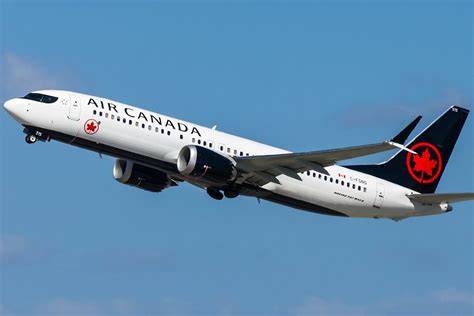
Montréal is at the center of Air Canada’s latest European growth, with seven new routes being introduced from YUL during 2026 and 2027. The expansion began in June with new services to Catania in Italy, Nantes in France, and Palma de Mallorca in Spain. These routes immediately broadened Montréal’s reach into Southern and Western Europe, giving passengers more nonstop choices without requiring a connection through another major European airport.
The aircraft assignments have also evolved as Air Canada has gained operational experience. Catania and Palma de Mallorca were initially operated by the Boeing 787-8 Dreamliner, while Palma had originally been expected to receive the A321XLR. Air Canada ultimately substituted the larger 787-8 because of concerns surrounding A321XLR performance in the hot Spanish summer conditions. The decision illustrates how aircraft capability, weather, payload, and route economics can all influence the practical deployment of long-range narrowbodies.
Nantes provides another example of the changing role of the A321XLR. Air Canada initially launched the route with the 737 MAX 8 before transitioning it to the A321XLR. Flights to Berlin began in July, initially using the 787 before the A321XLR became involved. Tenerife South is scheduled to receive A321XLR service from Montréal beginning in October, while the carrier will add Dubrovnik in April 2027 with the 787 and Basel in May 2027 with the A321XLR.
Air Canada has described the broader expansion as a way to support commerce and tourism while creating new opportunities for travelers to explore international destinations. The route strategy reflects that objective by combining established leisure markets with cities that have historically had fewer direct links to Canada.
Toronto Adds Six New European Routes
Toronto Pearson is also playing a major role in Air Canada’s European expansion, with six new nonstop routes scheduled to begin during 2026 and 2027. Two launched in June: seasonal service to Ponta Delgada in the Azores and flights to Budapest, Hungary.
The Ponta Delgada route operates seasonally from June through September using the 737 MAX 8, giving Toronto passengers a direct link to Portugal’s Azores archipelago during the peak summer travel period. Budapest, meanwhile, has a longer seasonal operating window, with Boeing 787 Dreamliner service scheduled to continue through October.
Toronto will add another Tenerife connection in October when Air Canada launches flights to Tenerife South using the A321XLR. Unlike the year-round Montréal service, the Toronto route is scheduled to operate only through March, creating a more targeted seasonal link to one of Spain’s major Atlantic leisure destinations.
The remaining Toronto additions are scheduled for June 2027. The airline plans to launch A321XLR services to Oslo, Norway, and Shannon, Ireland, while Nice, France, will receive the larger A330-300. The combination shows how Air Canada is matching aircraft size to expected demand, using long-range narrowbodies where their flexibility is valuable and widebodies where passenger volume supports greater capacity.
Halifax Gets a Second European Destination
Halifax Stanfield International Airport may not have the scale of Toronto or Montréal, but it remains an important gateway to Canada’s Atlantic provinces. Air Canada already operates seasonal daily service from Halifax to London Heathrow, and the latest expansion adds another European destination to the airport’s network.
In June, Air Canada launched seasonal Halifax–Brussels service, creating the carrier’s second nonstop European route from YHZ. The Brussels flights operate three times weekly and use the 737 MAX 8, demonstrating once again how the aircraft is helping Air Canada connect smaller Canadian markets with Europe.
The Brussels service operates from June through September and is scheduled to return the following June. The route gives Halifax passengers another direct option into continental Europe while also providing access to Air Canada’s broader network through Brussels.
Full List of Air Canada’s New Europe Routes
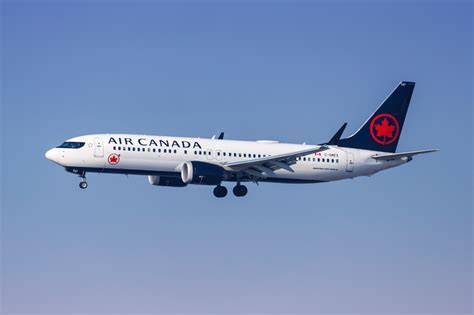
Air Canada’s 14 new European routes for 2026 and 2027 are distributed across its three eastern Canadian gateways:
- Halifax: Brussels
- Montréal: Basel, Berlin, Catania, Dubrovnik, Nantes, Palma de Mallorca, Tenerife South
- Toronto: Budapest, Nice, Oslo, Ponta Delgada, Shannon, Tenerife South
Together, these routes represent a significant expansion of Air Canada’s transatlantic network. The introduction of the A321XLR is particularly important because it allows the airline to serve European destinations with lower-capacity aircraft while retaining the range required for long international sectors.
The result is a European network that is becoming both broader and more flexible. Rather than relying entirely on large aircraft and major European hubs, Air Canada is using a combination of 787 Dreamliners, A330-300s, 737 MAX 8s, and A321XLRs to match aircraft capacity and range with individual markets. For passengers, the most visible consequence is simple: more European cities are becoming available nonstop from Canada, with additional destinations scheduled to arrive through 2027.