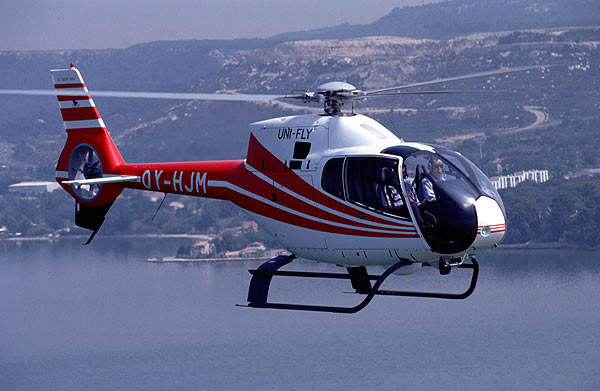
The Eurocopter EC120 Colibri, later known under Airbus Helicopters as the H120, stands as a pivotal achievement in the realm of light utility rotorcraft. Developed through a multinational collaboration involving Eurocopter France, China National Aero-Technology Import & Export Corporation (CATIC), Harbin Aviation Industries (HAIG), and Singapore Technologies Aerospace (STAero), this five-seat, single-engine helicopter exemplifies the fusion of international engineering standards and operational flexibility.
Launched as a strategic successor to the aging Aérospatiale Gazelle and SA 315B Lama, the EC120’s conception aimed to fulfill the expanding need for a modern, cost-efficient rotorcraft suitable for both civilian and military applications. With final assembly in France and Australia, and full-scale manufacturing in China under the designation HC120, the Colibri has embedded itself in various aerospace landscapes across continents.
Origins and International Development
The development of the EC120 was born from a broader vision in the 1980s when Aérospatiale—Eurocopter’s predecessor—pursued a program designated P120. This initiative was designed to consolidate market segments occupied by legacy helicopters with a new, unified airframe. Strategic global partnerships were initiated, but geopolitical turbulence, notably the Tiananmen Square protests in 1989, momentarily threatened Chinese involvement.
Nevertheless, the joint development agreement formalized on October 20, 1992, cemented the roles of the three key partners. Eurocopter, holding a 61% stake, led the program and contributed the dynamic assemblies, avionics, and final assembly. CATIC, with a 24% share, was responsible for the cabin and fuel systems, while STAero managed tail boom structures and composites, comprising the remaining 15%.
Prototype Testing and Commercial Rollout
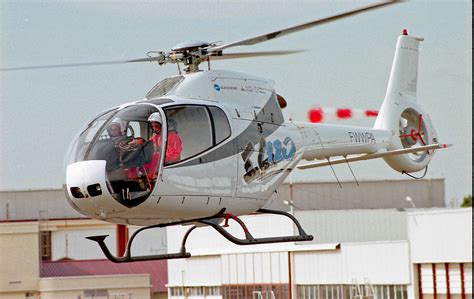
The first EC120 prototype took to the skies on June 9, 1995, marking a critical milestone. Following intensive testing and the addition of a second prototype, the model was unveiled to the public in February 1997 at the HAI show in California. The market responded robustly—over 100 units were ordered by the end of 1998, prompting an increase in production rate from four to six aircraft per month.
To meet rising demand, Australian Aerospace opened a secondary assembly line in Brisbane in 2002. This move bolstered Eurocopter’s global production capability and prepared the model for wider operational reach, including co-production agreements with AVIC II in China.
Harbin HC120 and Chinese Market Penetration
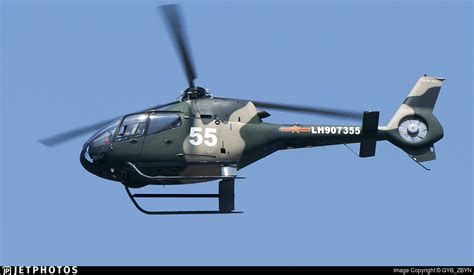
Under the designation HC120, the Colibri entered Chinese production in 2004 at the Harbin Aircraft Manufacturing Corporation. With exclusive rights in the domestic market, Harbin built up infrastructure to support large-scale deployment. The People’s Liberation Army (PLA) became the launch customer in 2014, initially acquiring eight units with options for an additional fifty. These helicopters have since been utilized in a variety of applications, including law enforcement, military training, and border surveillance.
The Green Rotorcraft Initiative and Diesel Demonstrator
A defining technological innovation for the EC120 emerged through the Green Rotorcraft initiative under the European Clean Sky Joint Technology Initiative. In 2015, the EC120 became a platform for testing the HIPE AE440 diesel engine, developed by Mecachrome and Austro Engine. This 4.6-liter V8 high-compression powerplant promised substantial performance benefits:
- 42% reduction in fuel consumption
- 30% decrease in direct operating costs
- Greater operational efficiency in hot and high-altitude environments
The AE440 engine, with dual turbochargers and air-to-air intercooling, ran on jet fuel, providing a unique blend of reliability, reduced emissions, and logistical simplicity.
Design Excellence and Safety-Driven Engineering
The EC120 Colibri’s design prioritizes modularity, safety, and simplicity. At the heart of its rotor system lies the three-bladed Speriflex main rotor head, coupled with the eight-bladed fenestron tail rotor—a configuration that not only enhances safety but contributes to significantly reduced noise levels, surpassing ICAO limits by 6.7 decibels.
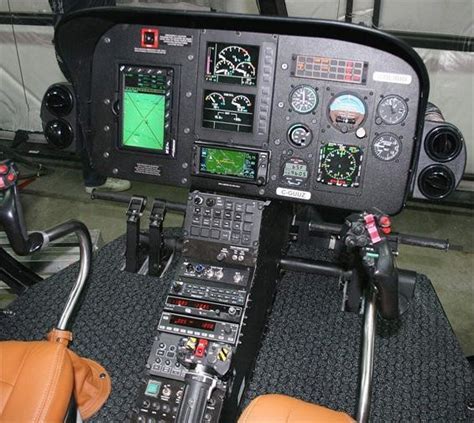
Its crash-resistant structure, energy-absorbing seats, and comprehensive VEMD (Vehicle and Engine Multifunction Display) enable intuitive piloting with low workload. The single-engine Turbomeca Arrius 2F, rated at 504 horsepower, provides stable cruising speeds of 191–226 km/h, a range of 727 km, and an endurance of over 4.5 hours.
The EC120 offers flexibility in its configurations:
- Five-seat arrangement for corporate or public utility use
- Casualty evacuation module with stretcher capacity and medical attendants
- Cargo transport with 2.94 m³ of internal volume and up to 700 kg of external sling load
Operational Milestones and Global Use Cases
Since its first delivery in 1998, the EC120 Colibri has made its mark in over 30 countries, spanning law enforcement, military, border patrol, training, and corporate aviation.
Notable deployments include:
- United States CBP, acquiring over 20 units for surveillance under the Light Sign Cutter program
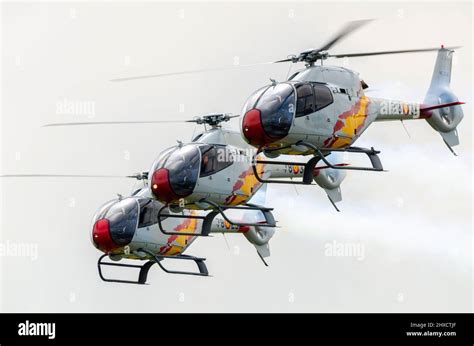
- Spanish Air and Space Force (SASF), which operates the Patrulla ASPA aerobatic team
- French Army Aviation, where 36 units were adopted through a 22-year public-private partnership (PPP) with Hélidax
- Kurdistan Traffic Police, utilizing EC120s for rescue and reconnaissance missions since 2011
Design Versatility and Aftermarket Customization
The EC120 Colibri is particularly popular in training due to its responsive handling, modern avionics, and compact airframe. Its avionics suite is centered around the First Limit Indicator (FLI), which simplifies power management. While the base model includes only right-hand flight controls, optional dual-control systems support pilot instruction and advanced flight training.
Optional mission kits include:
- FLIR (Forward-Looking Infrared)
- Emergency flotation gear
- Wire strike protection
- External lighting and cameras
- Cargo sling and rescue hoist systems
Luxury variants, marketed under Stylence interiors, offer corporate clients an upscale experience with leather seating, in-flight communication tools, and enhanced acoustic insulation.
Program Termination and Market Transition
Despite its wide success, Airbus Helicopters formally ended the EC120/H120 production in 2017, citing shrinking demand in the entry-level turbine segment. That year, only five units were delivered, starkly contrasting with 63 Robinson R66s shipped within the same period. Airbus has since refocused on more complex, multirole helicopters with greater sophistication.
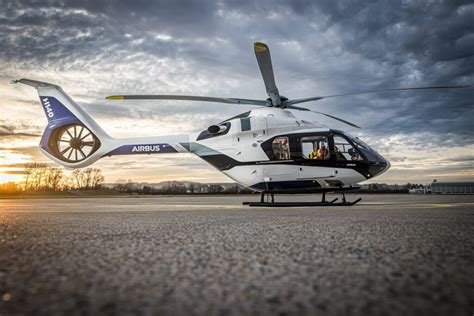
Nonetheless, the EC120 remains a mainstay in light helicopter fleets worldwide, thanks to its reliability, low operating cost, and adaptable platform.
Specifications (EC120 B)
Dimensions & Weights
- Length: 11.52 m overall
- Height: 3.4 m
- Empty weight: 960 kg
- Max takeoff weight: 1,800 kg (external load)
Performance
- Cruise speed: 226 km/h
- Range: 727 km
- Endurance: 4h 32min
- Rate of climb: 6.1 m/s
- Service ceiling: 5,180 m
Powerplant
- Turbomeca TM 319 Arrius 2F
- 504 hp take-off / 449 hp continuous
Rotor System
- Main rotor diameter: 10.0 m
- Fenestron tail rotor
- Disk loading: 21.8–22.9 kg/m²
Avionics
- VEMD with dual screens
- Optional autopilot and GPS suites
FAQ
Is the EC120 still in production?
No, production officially ended in November 2017. Airbus Helicopters discontinued the H120/EC120 program due to declining global demand and strategic repositioning toward more advanced rotorcraft.
What are the typical uses of the EC120 Colibri?
The EC120 is widely used for law enforcement, corporate transport, training, surveillance, rescue operations, and casualty evacuation. Its versatility and low operating cost make it suitable for diverse missions.
How does the EC120 compare to other light helicopters?
The EC120 offers superior noise reduction, safety features, and fuel efficiency, particularly when compared to other light single-engine helicopters. It also introduced advanced avionics like the VEMD and incorporated crash-resistant design features well ahead of its time.