The Cessna CitationJet M2 exemplifies the pinnacle of light business jet engineering, representing decades of aerodynamic refinement, cutting-edge avionics integration, and operational efficiency within the renowned Citation family. Since its origins in the early 1990s, this jet has evolved into a sophisticated and highly reliable aircraft that appeals to discerning private owners and corporate operators alike. This in-depth exploration unveils the rich history, innovative design, and exceptional performance that position the Citation M2 as a dominant force in its category.
Origins and Historical Context of the CitationJet Family
The inception of the CitationJet family marked a significant milestone in business aviation when Cessna unveiled the Model 525 at the 1989 NBAA convention, priced at $2.4 million. Designed to succeed the discontinued Citation I, which exited production in 1985, the CitationJet aimed to offer a four to five passenger jet with lowered operating costs, smooth and forgiving handling characteristics, and the capability to operate efficiently from short runways. The prototype’s maiden flight on April 29, 1991, was swiftly followed by FAA certification on October 16, 1992, and the first delivery on March 30, 1993. Notably, despite having 600 pounds less thrust than the Citation I, the CitationJet outpaced it by 29 knots at cruise, underscoring the benefits of its aerodynamic and structural advancements.
By 2017, over 2,000 units of the CitationJet family had been delivered, and the collective airframe flight hours had exceeded five million, showcasing its sustained popularity and operational reliability. The Citation M2, introduced in 2011, serves as the latest evolution, incorporating modern technologies while maintaining the core philosophy of accessible, efficient, and high-performance light jets.
Aerodynamic Mastery and Structural Innovation
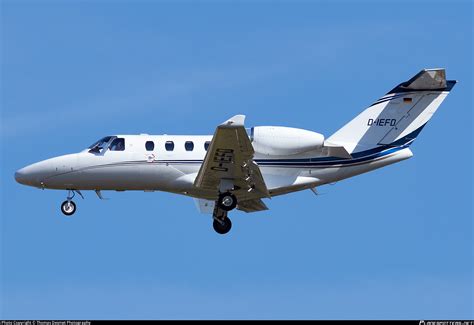
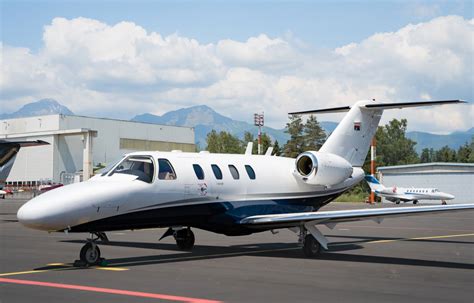
At the heart of the Citation M2’s enduring success lies its aerodynamic excellence. Featuring a six-seat, single-pilot certified monoplane design, the M2 incorporates a pressurized cabin and retractable tricycle landing gear to optimize both performance and comfort. Its wing architecture employs a laminar-flow supercritical airfoil (NASA 0213), a choice that markedly reduces drag and enhances fuel efficiency during cruise.
The redesigned carry-through wing section and T-tail configuration improve control responsiveness and stability, particularly at higher altitudes and during approach and landing phases. The inclusion of composite fairings and trailing-link landing gear further reduces weight and smooths ground operations. Ice protection is managed via an advanced bleed-air system, supplanting traditional pneumatic boots to ensure safer operations in adverse weather conditions.
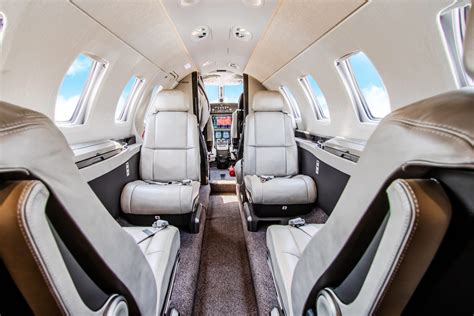
Cabin comfort is enhanced through a fuselage diameter of 58 inches, paired with a lowered aisle and smaller side windows, which contribute not only to aerodynamic cleanliness but also a quieter, more refined interior environment. These design choices culminate in a cruise speed of 437 knots and a practical range of 1,500 nautical miles when carrying four passengers, positioning the M2 as an agile and efficient performer on regional routes.
State-of-the-Art Garmin G3000 Avionics Suite
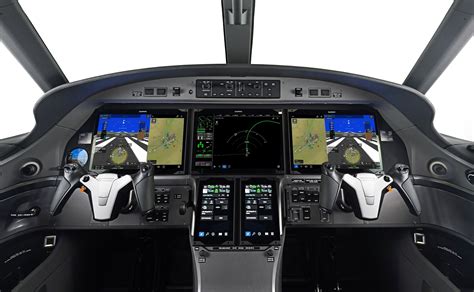
The Citation M2’s cockpit is a showcase of modern avionics technology, highlighted by the integration of the Garmin G3000 system. This glass cockpit features three high-resolution touchscreen displays that provide pilots with comprehensive flight information, including synthetic vision, weather radar, terrain awareness, and traffic alerts, all within a streamlined and user-friendly interface.
Garmin’s G3000 system facilitates reduced pilot workload and enhanced situational awareness, critical for single-pilot operations. It also includes robust flight management and autopilot capabilities, with autothrottle functionality planned for certification by 2025 to further optimize flight efficiency and safety.
Performance Excellence and Operational Versatility
The Citation M2 excels in delivering robust performance metrics suitable for demanding business aviation schedules. Its twin Williams FJ44-1AP-21 engines, each producing approximately 1,965 pounds of thrust, enable the aircraft to reach a flight level of 410 in just 24 minutes. This rapid climb capability is advantageous for avoiding turbulence and optimizing flight routing.
The jet’s short-field performance is equally impressive, requiring just around 3,400 feet of runway for takeoff, enabling access to smaller, less congested airports and providing passengers with closer proximity to their final destinations. With a maximum takeoff weight of 10,700 pounds and a fuel capacity of 492 gallons, the M2 balances payload and range efficiently, making it a cost-effective solution for missions typically ranging up to 1,150 nautical miles.
Maintenance and operating economics are enhanced by the FADEC-equipped engines, delivering smooth throttle response and reliability with extensive intervals between overhauls, contributing to the M2’s favorable direct operating cost profile.
Variant Evolution and Market Placement
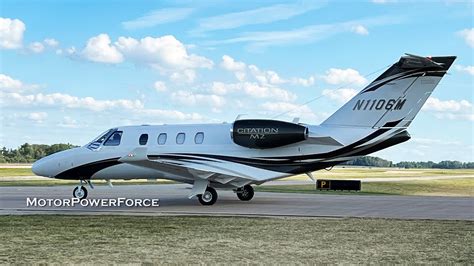
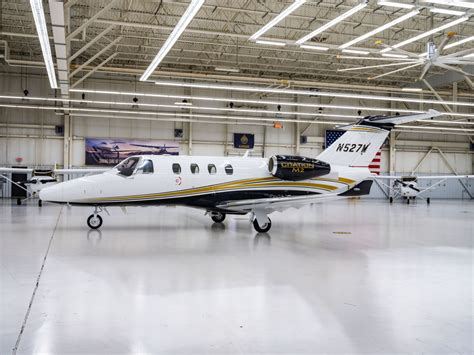
The CitationJet family comprises several variants, with the M2 serving as a refined evolution of the CJ1 and CJ1+ models. Early variants like the CJ1 introduced Pro Line 21 avionics, while the CJ1+ incorporated full authority digital engine control (FADEC) systems. The M2 distinguishes itself by integrating more advanced Williams FJ44-1AP-21 engines, the Garmin G3000 suite, winglets for improved aerodynamic efficiency, and an upgraded interior design that caters to modern expectations of comfort and technology.
The M2 Gen2, certified in 2022, pushes these improvements further by offering a premium cabin with wireless charging, increased cargo capacity by 50 pounds, and more generous legroom for the copilot seat, emphasizing passenger and crew comfort. Priced at approximately $6.15 million in 2023, the M2 occupies a compelling niche in the very light jet segment, balancing advanced features with cost-conscious operation.
Safety Record and Legacy
The CitationJet line has maintained a solid safety record, notwithstanding the unfortunate 2001 Milan Linate accident involving a 525A model, which resulted in tragic loss of life and underscored the critical importance of stringent air traffic control measures. This event spurred advancements in both regulatory oversight and aircraft system improvements.
Cessna responded by incorporating enhanced avionics safety features, including terrain awareness and traffic collision avoidance systems, into subsequent models like the M2. These advancements, combined with rigorous pilot training standards, have ensured that the Citation M2 remains one of the safest and most reliable aircraft in its class.
Comprehensive Technical Specifications
The Citation M2’s technical details further highlight its versatility and advanced capabilities:
- Crew: 1–2 pilots
- Passenger Capacity: 6
- Length: 42 ft 7 in
- Wingspan: 47 ft 3 in
- Maximum Takeoff Weight (MTOW): 10,700 lb
- Fuel Capacity: 492 gallons
- Maximum Cruise Speed: 437 knots
- Maximum Range: Approximately 1,150 nautical miles
- Engines: Two Williams FJ44-1AP-21 turbofans, each delivering 1,965 lbf thrust
These specifications illustrate the M2’s balance of performance, efficiency, and passenger comfort, enabling flexible mission profiles from regional hops to extended trips.
Conclusion: The Citation M2 as a Light Jet Industry Standard
The Cessna CitationJet M2 has carved out a distinguished reputation as a versatile, efficient, and technologically advanced light business jet. Its evolution from the original CitationJet models reflects Cessna’s commitment to continuous improvement, integrating aerodynamic refinements, cutting-edge avionics, and enhanced passenger amenities. Offering superior climb performance, short-field capability, and modern single-pilot operation systems, the M2 is an ideal aircraft for operators seeking a blend of performance, economy, and comfort.
With upcoming innovations such as autothrottle and further cabin enhancements, the Citation M2 is poised to remain a dominant player in the very light jet market, setting the standard for what modern business aviation demands.