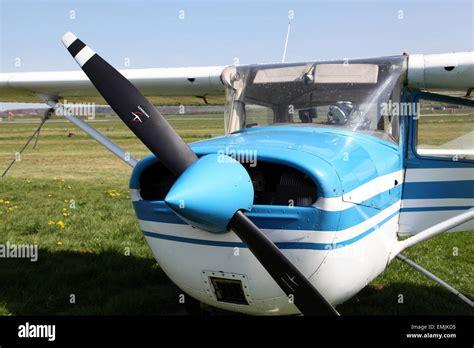
Few aircraft in general aviation history hold the enduring legacy of the Cessna 150. Built to be practical, accessible, and forgiving in flight, the Cessna 150 shaped generations of aviators from its debut in 1958 until production ceased in 1977. With 23,839 units produced, it remains one of the most successful two-seat aircraft ever manufactured, bridging the gap between post-war aviation and the modern pilot training era.
The 150 was conceived as a successor to the tailwheel-equipped Cessna 140, with its prototype, the Model 142, taking flight on September 12, 1957. Cessna’s ambition was clear: to create a trainer that could meet the expanding demands of post-war flight schools and hobbyist pilots. By integrating tricycle landing gear, a revised wing design, and more user-friendly handling, the Cessna 150 set a new benchmark.
Design Evolution and Aerodynamic Refinement
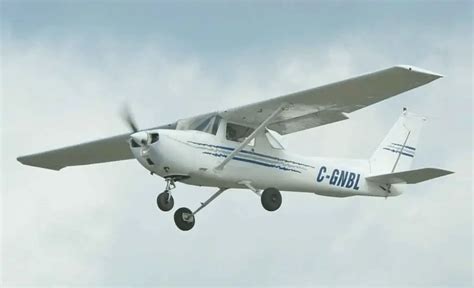
The early Cessna 150 models featured a fastback fuselage and straight vertical tail, reminiscent of the 140 but updated with a tricycle undercarriage for easier ground handling and better forward visibility during taxi. The squared-off wings and tailplane tips were designed for enhanced stability and simplified manufacturing.
As development progressed, substantial design updates were introduced. From the 150D, Cessna incorporated a wraparound rear window, improving situational awareness. The 150F brought the iconic swept vertical stabilizer, enhancing aerodynamic efficiency and giving the aircraft a more contemporary profile.
Cabin ergonomics also improved with each iteration. The post-1966 models featured wider doors, repositioned seats, and a larger baggage compartment, accommodating the practical needs of both students and instructors.
Production, Variants, and Global Reach
Cessna built the 150 in an array of variants, each with incremental refinements. These were denoted alphabetically from 150A through 150M, reflecting over a decade of subtle but meaningful evolution:
-
150A (1961): Revised landing gear position
-
150B (1962): Introduced fiberglass wingtips and new propeller
-
150C-D (1963–64): Cabin redesigns and flap mechanism updates
-
150F (1966): Swept tail and peak production year with over 3,000 units
-
150L (1971–74): Larger main gear and tubular steel gear legs
-
150M (1975–77): Extended dorsal fin and enlarged elevator and rudder
Cessna partnered with Reims Aviation in France to produce licensed European models, which included versions with leading-edge slats for improved short-field performance. Assembly also took place in Argentina, cementing the aircraft’s role in international flight training.
Operational Use: Training the World’s Pilots
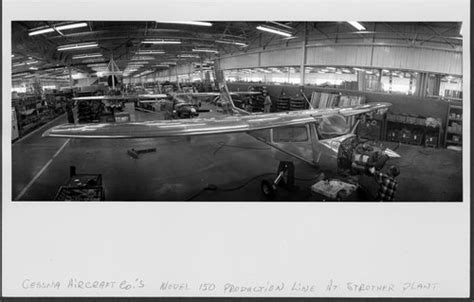
The Cessna 150’s true genius lies in its role as a trainer aircraft. Rugged, responsive, and cost-effective to operate, it became the backbone of countless flight schools, aero clubs, and personal pilot programs across the globe.
It was adopted not only by private entities but also by military and governmental organizations. Civil air patrols, agricultural monitoring programs, and police departments all utilized the Cessna 150 for reconnaissance, training, and liaison duties. In nations with fledgling aviation sectors, the 150 often represented the first aircraft a new pilot would command.
Its docile flight characteristics, forgiving stall behavior, and low operating cost earned it a reputation as the perfect platform for student pilots. Meanwhile, instructors appreciated its simplicity and mechanical reliability.
Aerobat and Modifications
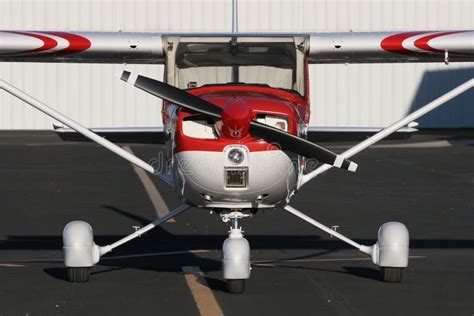
Among the most popular variants was the Cessna 150 Aerobat (A150K–M). This model came with a reinforced airframe, four-point harnesses, and the ability to withstand +6 to -3g forces, allowing for basic aerobatic maneuvers. Its red checkerboard wing design became iconic in general aviation circles.
Over time, numerous Supplemental Type Certificate (STC) modifications expanded the aircraft’s functionality:
-
Taildragger conversions, appealing to backcountry and bush pilots
-
Vortex generators for lower stall speeds and better short-field performance
-
Auxiliary fuel tanks and auto fuel STCs, increasing range and flexibility
-
Modern avionics upgrades to comply with 21st-century airspace requirements
Some restorers, like Aviat Aircraft, reimagined the platform completely with the Aviat 150, integrating composite components, glass cockpits, and redesigned interiors while preserving the original silhouette.
Notable Incidents and Historical Flights
Despite its gentle nature, the Cessna 150 has been involved in a number of noteworthy incidents, often due to external factors. Among the most high-profile was the 1994 White House crash, when a pilot deliberately crashed a stolen 150 onto the South Lawn.
Other significant events include:
-
A record-breaking solo flight from the U.S. to South Africa, demonstrating the aircraft’s reliability over long distances with auxiliary modifications.
-
Several mid-air collisions (notably in 1968, 1971, and recent years) involving general aviation and commercial aircraft, emphasizing the need for airspace coordination in mixed traffic environments.
Each incident, though tragic, has contributed to broader discussions around flight training protocols, airspace regulation, and collision avoidance systems.
Performance Specifications: 150M Commuter II (1976)
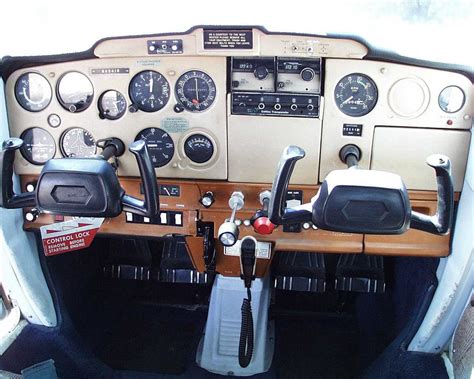
The Cessna 150M, especially the Commuter II version, exemplified the final evolution of the model line. Its performance profile was modest but perfectly tailored to its mission:
-
Engine: Continental O-200-A, 100 hp
-
Cruise Speed: 82 knots (152 km/h)
-
Maximum Speed: 109 knots (202 km/h)
-
Range: 349 nautical miles
-
Service Ceiling: 14,000 ft (4,267 m)
-
Rate of Climb: 670 ft/min
-
Takeoff Distance Over 50 ft Obstacle: 1,385 ft
With a useful load of approximately 500 lbs, the 150M could comfortably accommodate two occupants, fuel, and moderate baggage, making it ideal for training or short-hop recreational flying.
Comparison with Related Cessna Models
The 150 served as a transition point in Cessna’s lineage. It directly evolved into the Cessna 152, which retained much of its architecture but introduced a Lycoming O-235 engine, unleaded fuel compatibility, and improved noise reduction.
Compared to the Cessna 140, the 150’s modern landing gear and training-friendly layout were game changers. Against the Cessna 172, the 150 remained a lighter, more economical alternative, offering lower operating costs and simpler systems.
For flight schools, owning a fleet that included both the 150 and 172 allowed a structured progression from basic training to more complex cross-country operations.
Enduring Legacy and Market Today
Today, the Cessna 150 remains a staple of used aircraft markets, often priced between $20,000 and $40,000 depending on airframe time, modifications, and condition. Its simplicity, affordability, and mechanical accessibility make it popular among homebuilders, restorers, and weekend aviators.
With spare parts still widely available and a thriving community of owners, forums, and restorers, the Cessna 150 continues to inspire both nostalgia and confidence.
FAQs
Is the Cessna 150 still a good trainer aircraft today?
Yes, the Cessna 150 remains one of the most cost-effective and forgiving platforms for primary flight training. Its low operating costs, gentle handling characteristics, and widespread availability make it ideal for student pilots.
How much does a used Cessna 150 cost?
Depending on condition, upgrades, and airframe hours, a used Cessna 150 typically ranges from $20,000 to $40,000. Aerobat versions or those with modern avionics may fetch higher prices.
What are the main differences between a Cessna 150 and 152?
The Cessna 152 is a slightly modernized version of the 150, featuring a more powerful Lycoming engine, compatibility with unleaded fuel, and minor aerodynamic improvements. It also introduced changes aimed at reducing noise and improving durability.