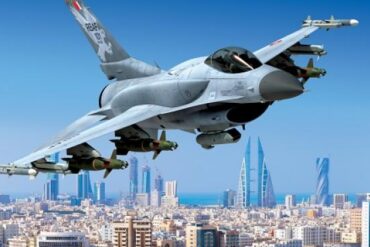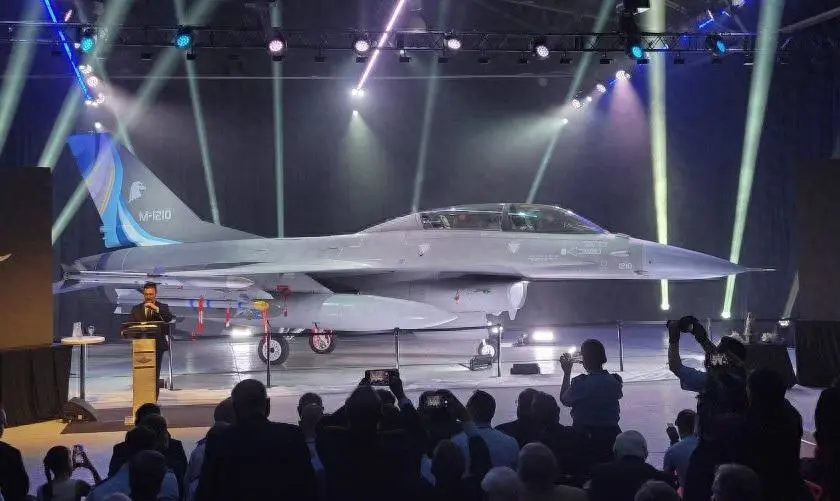
Argentina’s decision to procure 24 second-hand F-16AM/BM fighter jets from Denmark has sparked extensive discussions on both technical and geopolitical levels. This acquisition represents the most significant investment in Argentina’s air force since 1983, addressing its longstanding need for modern combat aircraft. However, the implications of this deal extend far beyond simple military upgrades.
Background and Purchase Details
Procurement Overview
In April 2024, Argentina signed an agreement with Denmark to purchase 24 used F-16 fighters for $3.38 billion. The deal includes:
- 20 single-seat F-16AM fighters
- 4 twin-seat F-16BM trainers
- 1 ground training aircraft
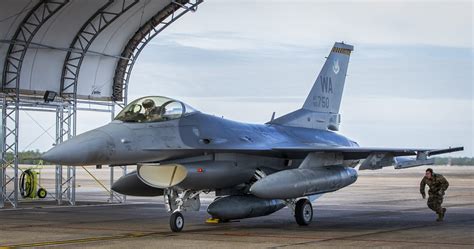
Additionally, Argentina allocated $3.12 billion for related equipment, including simulators and AIM-120B AMRAAM missiles. The U.S. State Department not only approved the sale but also recommended an additional $900 million for long-term maintenance, pushing the total cost beyond $1.5 billion.
The first F-16BM (tail number M-1210) was showcased on March 6, 2025, at Tandil Air Force Base in Buenos Aires. However, of the first six delivered aircraft, some will be used exclusively for ground training rather than active duty.
Historical Context
Since the 1982 Falklands War, Argentina has struggled to modernize its air force due to a British arms embargo, which limited access to advanced Western fighter jets. Consequently, Argentina has relied on aging platforms such as the A-4 Skyhawk and Mirage III. The F-16 acquisition represents a major shift in Argentina’s airpower capabilities and military modernization efforts.
Technical Evaluation and Aircraft Selection
Capabilities of the Danish F-16s
Denmark’s F-16A/B aircraft underwent a Mid-Life Update (MLU) between 1997 and 2005, significantly improving their avionics and combat effectiveness. Key features include:
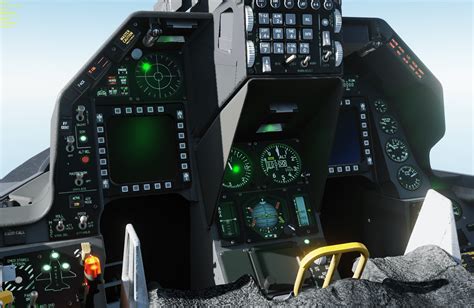
- AN/APG-66V2 radar (detection range: ~100 km)
- Link-6 data link system
- Compatibility with AIM-120 AMRAAM and precision-guided bombs
Despite these upgrades, the Danish F-16s are technically inferior to newer variants like the F-16C/D Block 50 and F-16V, primarily due to older radar and engine technology. However, they still offer a competitive edge against regional alternatives.
Comparison with the JF-17 Thunder
Before finalizing the F-16 deal, Argentina also considered the Chinese-Pakistani JF-17 Thunder (Block 3). A comparison of the two aircraft highlights key trade-offs:
Technical Advantages of JF-17 Block 3:
- Active Electronically Scanned Array (AESA) radar
- PL-15E long-range air-to-air missiles (range: 150+ km)
- Integrated electronic warfare (EW) suite
Economic and Political Constraints:
- The JF-17’s unit cost ($40-50 million) is comparable to second-hand F-16s, but its lifetime operational costs are higher.
- The UK could block JF-17 sales by restricting access to Martin-Baker ejection seats and other British-made components.
- The U.S. actively lobbied for the F-16 sale, ensuring that Argentina remained within its military sphere of influence.
Aircraft Lifespan and Maintenance Considerations
Denmark’s F-16 fleet is expected to have 10-15 years of operational life remaining. While the aircraft are in good condition, Argentina must invest heavily in maintenance to ensure long-term viability. The U.S. recommendation for $900 million in upkeep underscores the challenges of sustaining an aging fleet.
Political and Geopolitical Implications
Argentina’s Shift Toward the U.S.
The decision to acquire F-16s over the JF-17 signals a clear realignment toward the U.S. and NATO-aligned nations. The administration of President Javier Milei has adopted a pro-U.S. stance, reversing the previous leftist government’s preference for Chinese military cooperation.
Strategic Influence of the U.S. and the UK
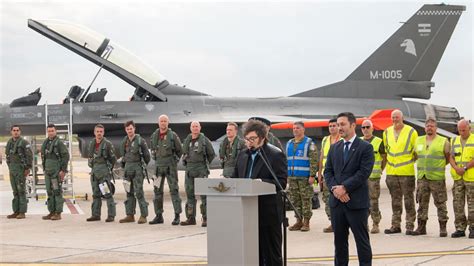
The U.S. played a crucial role in facilitating this deal by supporting Denmark’s transition to the F-35 and ensuring British non-interference. This move reinforces U.S. dominance in South America’s defense sector while reducing Chinese influence.
Britain, despite territorial disputes over the Falkland Islands (Malvinas), expressed no major concerns regarding Argentina’s F-16 purchase. British officials cited technical limitations of the aircraft and U.S. control over spare parts and software, which would allow Western powers to disable the fleet remotely if necessary.
International Reactions
- India’s defense media heavily promoted the narrative that F-16s outperform the JF-17, but analysts argue that this overlooks the JF-17’s technological edge.
- China and Pakistan viewed Argentina’s decision as a missed opportunity to expand their defense partnerships in South America.
Risks and Controversies
Technical and Operational Risks
- Aging Airframes: The Danish F-16s, while modernized, still suffer from structural fatigue and technological obsolescence.
- High Maintenance Costs: Argentina’s long-term affordability of these aircraft remains uncertain.
Sovereignty and Strategic Autonomy
Choosing the F-16 binds Argentina further to U.S. and NATO regulations, reducing the country’s ability to act independently in regional conflicts. The JF-17 option, though politically risky, might have offered greater strategic autonomy.
Conclusion
Argentina’s decision to purchase F-16s from Denmark was driven by a complex mix of economic, political, and military considerations. While the aircraft improves Argentina’s air force capabilities, it also deepens dependence on Western suppliers. The deal ensures short-term airpower enhancement but raises long-term concerns about sovereignty and maintenance costs.

FAQ
1. Why did Argentina choose the F-16 over the JF-17?
Argentina opted for the F-16 due to political alignment with the U.S., better integration with Western defense networks, and the risk of UK restrictions on JF-17 components.
2. How do the Danish F-16s compare to modern fighter jets?
While upgraded through MLU programs, these F-16s lag behind newer variants like the F-16V and F-35 in terms of radar, avionics, and weapons capabilities. However, they remain superior to Argentina’s existing fleet.
3. What are the long-term challenges of this purchase?
Argentina faces high maintenance costs, limited spare parts availability, and dependency on U.S. oversight, which could restrict operational freedom in future conflicts.