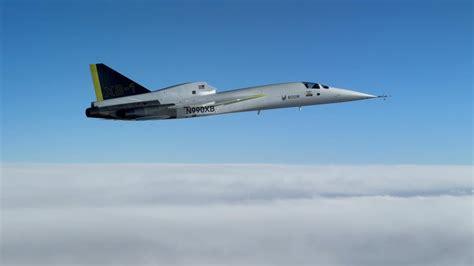
In October 1947, Captain Chuck Yeager climbed into the cockpit of the Bell X-1, an experimental aircraft slung beneath a B-29 Superfortress, and ignited the future of combat aviation. With a thunderous push from its liquid-fueled rocket engine, the X-1 broke the sound barrier, achieving Mach 1.06 in level flight. This historic feat wasn’t just a record-breaking stunt—it marked the dawn of a technological revolution that would fundamentally reshape modern warfare. In that moment, the limitations of subsonic flight were shattered, and the supersonic age began.
The Bell X-1: Breaking the Sound Barrier and Fear
Before Yeager’s flight, many experts believed that pushing an aircraft past the speed of sound would cause it to disintegrate. The so-called “sound barrier” was thought to be a wall of air pressure too powerful to breach. The Bell X-1, with its pointed nose and short wings modeled after a .50 caliber bullet, proved otherwise. By March 1948, Yeager reached Mach 1.45, and the fear surrounding supersonic flight had officially dissipated.
Though the X-1 was not a jet-powered aircraft—it was rocket-propelled—the lessons learned from its high-speed flights laid the groundwork for a new generation of jet-powered military planes. Importantly, it was clear that jet engines, not rocket engines, would power the aircraft of future conflicts. Jet propulsion offered greater fuel efficiency, endurance, and combat practicality, which rocket technology could not match.
Birth of the Supersonic Jet Fighter: The F-100 Super Sabre
Enter the North American F-100 Super Sabre, the world’s first operational supersonic jet fighter. Commissioned by the United States Air Force and first flown in 1953, the F-100 emerged from a deep well of post-WWII aeronautical innovation. It represented a quantum leap in design, speed, and tactical capability.
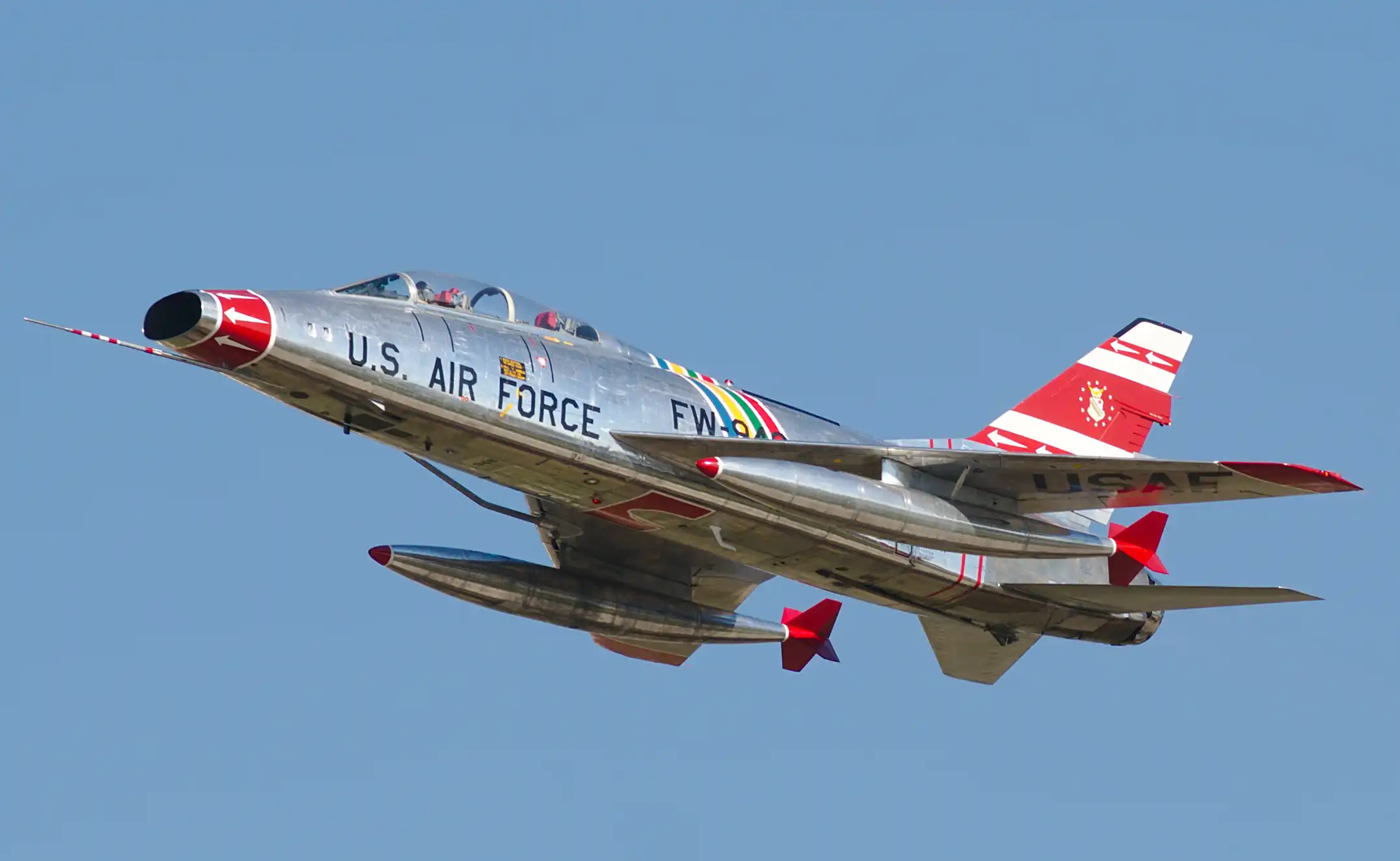
The F-100’s introduction was not without its challenges. Initial flights revealed instability at high speeds, leading to a series of crashes and engineering overhauls. Yet despite these early setbacks, the F-100 persisted. Its Mach 1.3 capabilities and rugged airframe eventually made it the backbone of American air power in the late 1950s and early 1960s.
By the time the Vietnam War began to escalate, the F-100 had transitioned into its most critical role: close air support. Supersonic speed allowed it to strike quickly and vanish before enemy retaliation could be mounted. This quick-strike capacity forever changed how air superiority was defined. The aircraft’s very presence forced enemies to rethink strategy, relying more on radar detection and rapid-response systems.
Sparking a Global Supersonic Arms Race
The unveiling of the F-100 sent shockwaves through the military aviation world. In the tense geopolitical environment of the Cold War, the Soviet Union was not far behind. In response to American advancements, Soviet engineers accelerated their own efforts, producing the MiG-19, the USSR’s first supersonic fighter jet. While the MiG-9 had failed due to design flaws and performance limitations, the MiG-19 succeeded where its predecessor did not.
Mass-produced and combat-ready by 1955, the MiG-19 could reach 903 mph, significantly faster than the F-100’s 822 mph. Soviet engineers were quick to improve on Western designs, even as they borrowed from them. The MiG-19’s agility and speed made it a formidable adversary, and its descendants—like the MiG-21—would go on to dominate skies from Asia to the Middle East.
In turn, the rapid pace of innovation created a global chain reaction. China developed the Nanchang Q-5, a supersonic ground-attack aircraft based on MiG-19 blueprints. France, the United Kingdom, and other nations poured resources into jet programs, desperate not to fall behind in what was rapidly becoming a supersonic arms race.
Redefining Aerial Combat in Vietnam
With both East and West armed with supersonic fighters, the nature of air warfare transformed. In previous conflicts, like WWII, air battles often involved extended dogfights with piston-engine planes maneuvering at relatively slow speeds. The supersonic age erased those traditions.
In Vietnam, the F-100 Super Sabre served as the workhorse for close air support missions. Flying low and fast, it could deploy bombs with precision before enemy anti-aircraft defenses had time to lock on. Unlike in WWII, these aircraft didn’t loiter. They struck with speed, silence, and surprise, often marked only by the echoing roar of a sonic boom.
This new method of aerial warfare emphasized the importance of electronic warfare, radar guidance, and missile technology. Pilots no longer had time to visually identify enemies in long, drawn-out maneuvers. Instead, engagements were often decided in seconds with radar-guided missiles, long-range targeting, and the ever-present danger of being “painted” by enemy tracking systems.
Supersonic aircraft forced a paradigm shift in military planning. Targets became fleeting—blips on a screen—requiring faster reaction times, better communications, and heavily coordinated ground-air operations. Every aspect of warfare, from mission logistics to threat detection, was transformed by the ability to move at the speed of sound.
From the Super Sabre to Stealth and Beyond
Though eventually eclipsed by newer technologies, the F-100’s legacy lives on in every fighter that came after. Its influence is most clearly seen in the development of aircraft like the F-111 Aardvark, F-117 Nighthawk, and eventually the B-21 Raider. Each of these leveraged the principle first proven by the Super Sabre: speed is survivability.
The ability to enter contested airspace, deliver payloads, and exit before detection redefined the role of air power. Speed alone was no longer enough—stealth, radar evasion, and digital systems became the new frontier. Yet none of those would exist without the pioneering efforts of the F-100 and its designers.
Today, fifth and sixth-generation fighters, like the F-22 Raptor and F-35 Lightning II, carry forward the torch. These platforms combine supersonic capability with stealth technology, advanced avionics, and AI-assisted targeting. But even they owe their lineage to the experimental days of the Bell X-1 and the production courage of the F-100 program.
The Enduring Legacy of Supersonic Warfare
More than seventy years after Chuck Yeager’s groundbreaking flight, supersonic jets remain central to global power projection. While hypersonic research and unmanned systems may define the future, the supersonic jet defined the modern era of war.
Supersonic flight didn’t just change how fast aircraft could go—it changed what wars looked like from the sky. It rendered traditional defenses obsolete, shifted strategy from brute force to speed and precision, and forced militaries to rethink combat from the ground up.
From the heat-blurred skies over Vietnam to today’s digitized, AI-assisted battlefields, the legacy of the world’s first supersonic jet is written not in the past, but in the very shape of modern warfare. Its roar still echoes in every mission flown at the edge of the sound barrier.
Supersonic flight is no longer a boundary—it’s a baseline, a silent expectation woven into every mission, every design, every defense. The Bell X-1 and F-100 Super Sabre didn’t just go faster. They redefined what it meant to fight from the sky.