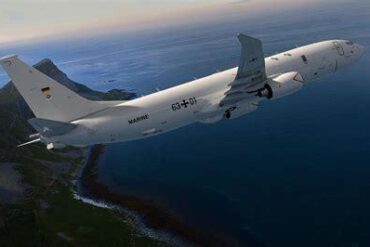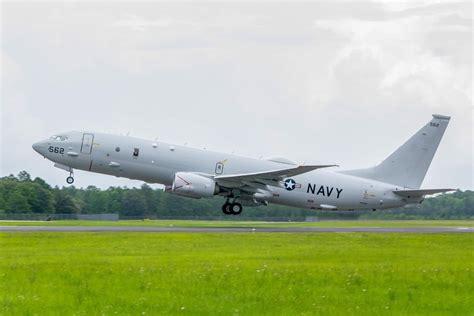
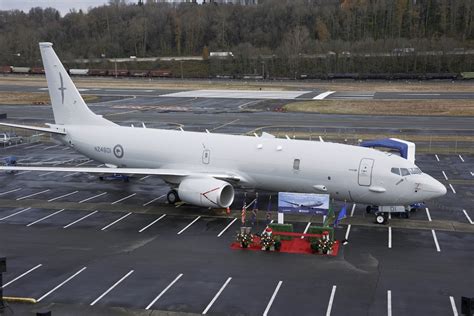
The United States has formally approved a $2.316 billion Foreign Military Sale that will allow Singapore to acquire the Boeing P-8A Poseidon, marking a decisive shift in Southeast Asia’s maritime security balance and reinforcing long-standing defense ties between Washington and Singapore. The approval, transmitted to the U.S. Congress on January 20, 2026, authorizes the sale of up to four aircraft along with weapons, sensors, and mission systems configured for immediate operational relevance rather than a bare-airframe delivery.
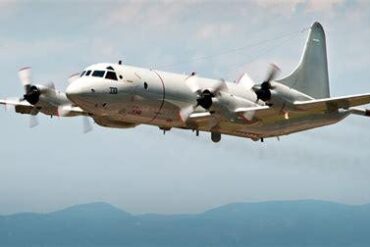
This decision follows Singapore’s selection of the P-8A in September 2025 as the replacement for its aging Fokker 50 maritime patrol aircraft, which have served with 121 Squadron since 1993. After more than three decades of service in one of the world’s most congested maritime environments, the turboprop fleet has reached the limits of its endurance, sensor integration, and survivability against modern submarine threats.
Unlike incremental upgrades, the P-8A acquisition represents a structural transformation of Singapore’s maritime patrol concept. It introduces jet-powered speed, vastly extended range, and a fully networked sensor architecture capable of persistent wide-area surveillance, real-time data fusion, and coordinated anti-submarine operations with allied forces operating across the Indo-Pacific.
Strategic Approval Anchored in Regional Maritime Realities
Singapore’s surrounding waters sit at the crossroads of global commerce, with sea lanes that carry a substantial portion of the world’s energy supplies and container traffic. The city-state has repeatedly emphasized that maritime security is inseparable from national survival, particularly as submarine fleets in the wider region grow quieter, more numerous, and more technologically advanced.
The U.S. approval reflects an understanding that Singapore’s patrol aircraft must perform multiple roles simultaneously: monitoring dense surface traffic, identifying anomalous behavior, and tracking submerged contacts over extended distances. The P-8A’s endurance and sensor fusion directly address these operational demands, offering coverage far beyond what the Fokker 50 fleet could sustain.
The sale also underscores Washington’s willingness to support trusted partners with high-end capabilities, especially those positioned along critical chokepoints linking the Indian and Pacific Oceans.
What the $2.3 Billion Package Actually Includes
Beyond the aircraft themselves, the approved package confirms that Singapore intends to field a fully mission-ready configuration from the outset. The request includes eight MK 54 MOD 0 lightweight torpedo all-up rounds, most expected to be transferred from existing U.S. Navy stocks, accelerating delivery timelines and reducing integration risk.
Equally significant are the mission-enabling subsystems embedded in the deal. These include Guardian laser transmitter assemblies, advanced system processors, and selective availability anti-spoofing modules, all designed to ensure navigation accuracy and survivability in electronically contested environments. This configuration signals that the P-8As are intended for real-world operations rather than symbolic presence.
The structure of the approval also leaves room for growth. By framing the purchase as an initial phase, Singapore preserves the option to expand the fleet or add capabilities once operational experience and threat assessments evolve.
P-8A Poseidon: A Proven Multimission Platform
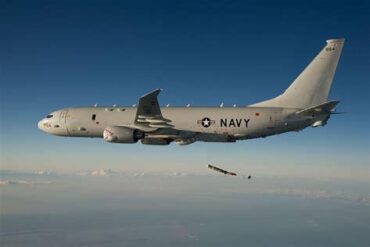
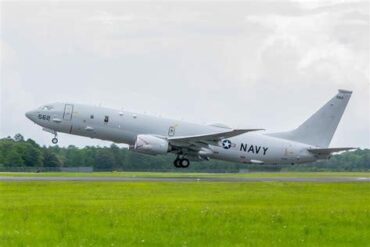
The Boeing P-8A Poseidon emerged from the U.S. Navy’s Multimission Maritime Aircraft program after the cancellation of the P-7 project, with the goal of replacing the venerable P-3C Orion. Selected in 2004, Boeing adapted the 737-800ERX airframe, reinforcing it for low-altitude operations and integrating a comprehensive suite of military sensors, weapons, and communications systems.
The aircraft first flew in 2009, entered U.S. Navy service in 2012, and achieved full-rate production approval in 2014 after successive capability increments. By mid-2025, more than 185 aircraft had been produced for U.S. and international operators, establishing the P-8A as the dominant Western maritime patrol aircraft of its generation.
Technical Capabilities That Redefine Maritime Patrol
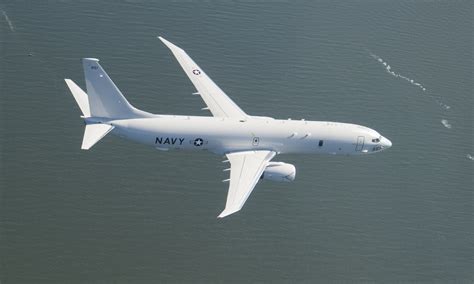
The P-8A is optimized for anti-submarine warfare, anti-surface warfare, intelligence collection, surveillance, reconnaissance, and search-and-rescue. With a standard crew of nine operating multiple mission consoles, the aircraft fuses acoustic data, radar tracks, and electro-optical imagery into a single operational picture.
It can internally carry and deploy up to 129 sonobuoys via rotary launchers, enabling sustained submarine detection and tracking across wide patrol boxes. Once engagement authority is granted, MK 54 lightweight torpedoes can be released from an internal weapons bay or wing pylons, allowing rapid transition from detection to prosecution.
Cruising at approximately Mach 0.73, the jet-powered P-8A offers speed and responsiveness unmatched by turboprop predecessors. Its patrol radius exceeds 1,200 nautical miles, enabling Singapore to project surveillance far beyond its immediate coastal waters while remaining on station for extended periods.
Integration with Singapore’s Broader Defense Modernization
The P-8A decision fits neatly into a wider pattern of Singapore Armed Forces modernization. The announcement came alongside confirmation that production of 20 F-35 fighter aircraft has begun, with deliveries expected from late 2026, and continued investment in advanced naval platforms.
Singapore’s navy is already introducing Invincible-class submarines, new multi-role combat vessels, offshore patrol ships, and upgraded Formidable-class frigates armed with Blue Spear missiles. The P-8A will act as an airborne extension of this fleet, coordinating with surface combatants and submarines to create a layered maritime defense architecture.
Reinforcing U.S.–Singapore Defense Ties
Politically, the approval reinforces a defense relationship anchored in the 1990 Memorandum of Understanding, renewed most recently in 2019. This framework supports U.S. rotational deployments, access arrangements, and long-running training cooperation, including large-scale exercises such as Exercise Forging Sabre in Idaho.
By approving a high-value, high-capability sale, Washington signals confidence in Singapore as a responsible operator of advanced military technology and a stabilizing presence in a strategically sensitive region.
Transition Timeline and Operational Impact
Singapore plans to phase out the Fokker 50 fleet and introduce the P-8A in the early 2030s, with Defense Minister Chan Chun Sing previously indicating that all four aircraft are expected to enter service during that period. The January 2026 approval confirms that the aircraft will arrive equipped for immediate patrol, tracking, and engagement missions.
Once operational, the P-8A fleet will dramatically expand Singapore’s maritime surveillance envelope, improve response times to subsurface threats, and enhance interoperability with allied forces. In a region where undersea activity is intensifying, the Poseidon’s arrival will represent not just a platform replacement, but a qualitative leap in maritime awareness and deterrence.