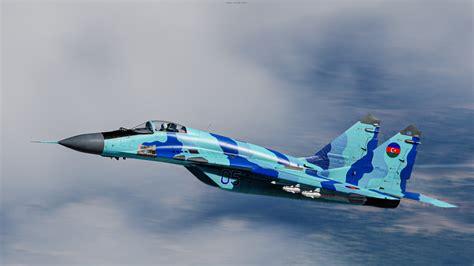
In a landmark development reshaping global defense logistics, India and the United States have formalized a rare agreement allowing a US defense contractor to modernize Russian-origin MiG-29 fighter jets used by the Indian Air Force (IAF). On June 30, 2025, Reliance Defence inked a ₹20,000 crore (approximately $2.34 billion) deal with Coastal Mechanics Inc. (CMI)—a US Department of Defense-certified contractor—to jointly undertake Maintenance, Repair, and Overhaul (MRO) operations and life-extension upgrades for a fleet of over 100 MiG-29s, along with several other legacy platforms in India’s air arsenal.
The agreement marks a historic collaboration as it bypasses the original Russian equipment manufacturers (OEMs), instead leveraging reverse-engineering and dual-sourcing strategies. This bold move comes at a time when India is pursuing greater defense self-reliance through initiatives like ‘Aatmanirbhar Bharat’ and ‘Make in India’, aiming to localize defense production and reduce external dependency.
Strategic Significance of Modernizing MiG-29s
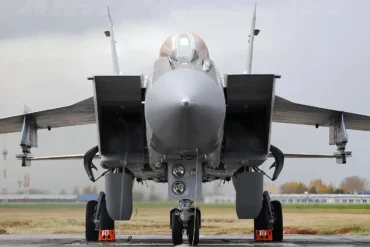
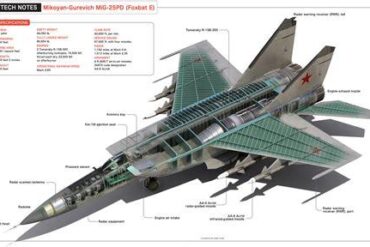
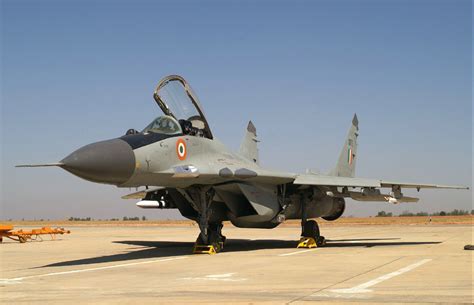
The MiG-29 Fulcrum, inducted in the mid-1980s, has served as one of the IAF’s premier fourth-generation fighters. Originally envisioned to counter Western fighters such as the F-15 Eagle and F-16 Falcon, the MiG-29 evolved into a multirole platform through successive upgrades. Its UPG (Upgraded) version includes a Zhuk-ME radar, RD-33 Series 3 engines, in-flight refueling capabilities, and glass cockpit technologies.
The Indian Air Force currently operates around 52 MiG-29UPGs across two frontline squadrons, deployed primarily along India’s northern and western borders. The Indian Navy also fields approximately 40 carrier-based MiG-29K variants, deployed on INS Vikramaditya and the indigenous INS Vikrant.
However, as with most Soviet-era hardware, logistical delays, spare parts shortages, and obsolescence have plagued their operational efficiency. The collaboration with Coastal Mechanics aims to directly address these challenges without relying on Russian OEMs, thus future-proofing the fleet and enhancing mission readiness.
US Involvement in Russian Fighter Support: An Unusual Precedent
This deal sets a notable precedent, as US defense contractors are rarely involved in the sustainment of Russian military platforms operated by allied nations. Coastal Mechanics Inc. brings deep expertise in legacy platform upgrades, including Western aircraft such as F-15, F-16, FA-18, and helicopters like the AH-64 Apache and UH-60 Blackhawk. The firm is known for reverse engineering, small-batch manufacturing, and sustainment solutions for discontinued components—an approach that fits India’s Soviet-origin fleets precisely.
CMI’s compliance with US defense protocols—including MIL-I-45208A, AS5553, and FAA-0056—ensures that the work adheres to the highest global standards. The firm’s dual expertise in missile systems, radars, and air defense platforms further expands its utility across India’s aging Soviet inventory, potentially including Su-30MKIs and Mi-17 helicopters in the future.
A Strategic MRO Hub in Nagpur: MIHAN as the Epicenter
The heart of the partnership lies in the establishment of a dedicated MRO and upgrade facility at MIHAN—the Multi-modal International Cargo Hub and Airport at Nagpur, Maharashtra. This strategic joint venture will serve as the focal point for upgrades not only for the MiG-29s but also for:
- Over 100 Jaguar strike aircraft
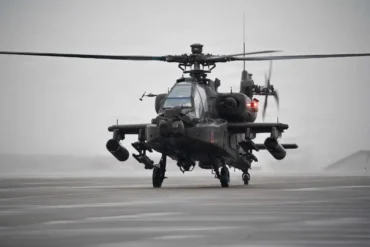
- Apache AH-64 helicopters used by the Indian Army
- L-70 air defense guns
The MIHAN facility is expected to provide full-spectrum lifecycle support, from component manufacturing and integration to long-term sustainment under a performance-based logistics model. The venture will also support foreign militaries operating similar platforms, making it a potential export-oriented defense hub.
Reducing Dependence on Russia Through Reverse Engineering
One of the critical pain points in India’s legacy fleet maintenance has been unpredictable supply chains from Russia, especially under current geopolitical tensions and sanctions. The new model under Reliance–CMI aims to break that dependency by using:
- Indigenous components and spares
- Reverse-engineered replacements
- Dual sourcing and indigenous machining for hard-to-find parts
This independence also allows India to control upgrade timelines, manage costs more effectively, and even export MRO services to other nations relying on Soviet legacy equipment.
Broader Defense Industrial Implications
Reliance Defence has been steadily expanding its footprint in India’s defense ecosystem. Beyond fighter aircraft, the company has engaged in:
- Upgrading 55 Dornier 228 aircraft with Hindustan Aeronautics Limited and US-based Genesys
- Partnering with Germany’s Diehl Defence to locally manufacture Vulcano 155mm precision-guided artillery shells
- Signing a ₹600 crore export agreement with Rheinmetall Waffe Munition GmbH for ammunition production
- Launching Dassault Reliance Aerospace Ltd., which assembles Falcon 2000, 6X, and 8X jets at Nagpur, with final assemblies scheduled by 2028
The MiG-29 upgrade deal significantly amplifies Reliance’s capabilities and credibility in MRO and aerospace systems, potentially enabling it to emerge as a private-sector anchor for India’s defense self-reliance goals.
Sustaining the IAF’s Combat Capability Post-MiG-21
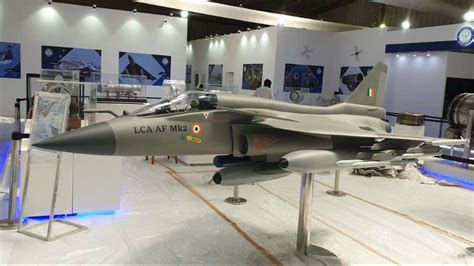
With the MiG-21 Bison fleet being phased out and the Jaguar strike aircraft nearing retirement, the MiG-29 upgrade plays a critical role in maintaining India’s operational edge. Until new-generation platforms like the Tejas Mk2, AMCA, and MRFA are fielded in strength, the MiG-29 remains a strategic stopgap.
India’s air combat roadmap includes:
- Super Sukhoi upgrade for 84 Su-30MKIs with 78% indigenous content
- Delivery of 83 Tejas Mk1A units, with plans for 97 more
- Development of the Advanced Medium Combat Aircraft (AMCA) and drone projects like CATS Warrior and ALFA-S
These efforts aim to stabilize IAF’s strength at 35–36 squadrons by 2035, even though it falls short of the doctrinal target of 42.
Conclusion: A Defense Logistics Revolution in Motion
This unprecedented collaboration between Reliance Defence and Coastal Mechanics is far more than a maintenance deal. It signifies a paradigm shift in how India intends to sustain and modernize its military platforms. By decoupling from traditional OEM dependencies, introducing US-grade standards, and leveraging indigenous manufacturing, India positions itself as a defense logistics power center in the Indo-Pacific region.
It also redefines the global defense landscape by blurring traditional East-West lines in military sustainment, setting the stage for future collaborations in a rapidly evolving geopolitical climate. The MiG-29 upgrade may only be the beginning—India’s vast inventory of Soviet-era platforms now has a viable, local, and sustainable pathway to remain battle-ready for decades to come.