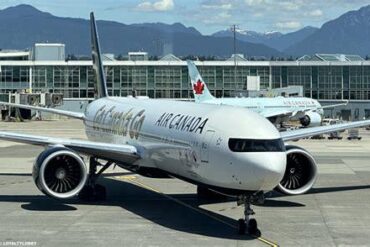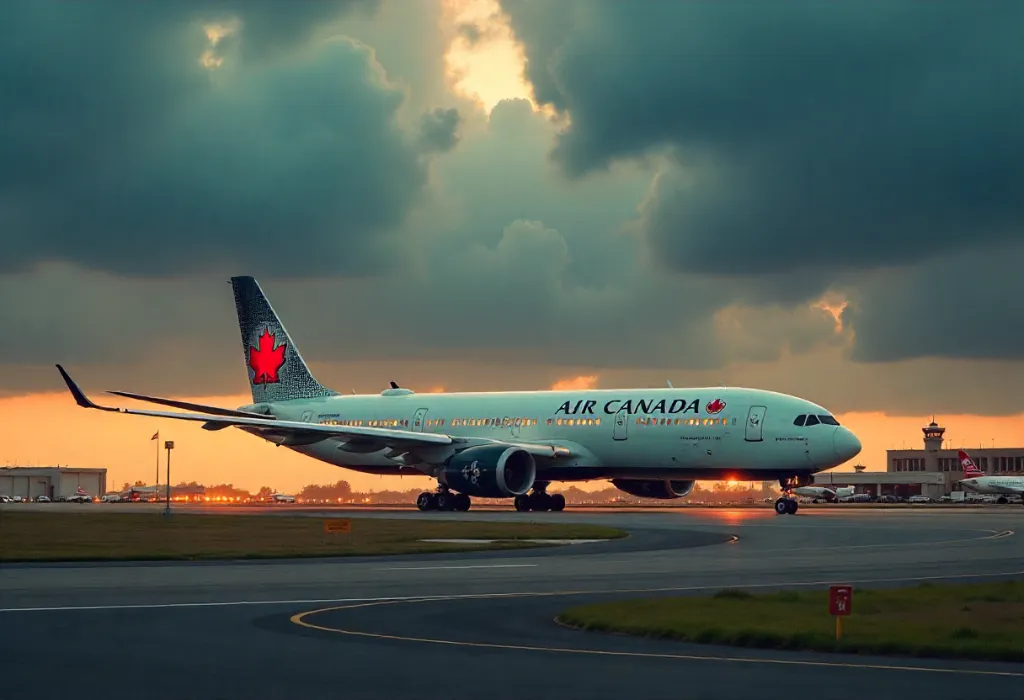
Canada’s flagship carrier, Air Canada, has reported a sharp second-quarter profit decline as intensifying trade tensions with the United States severely disrupted cross-border travel demand. The airline’s net earnings dropped to C$0.60 (US$0.44) per share, a significant fall from C$0.98 per share in the same period last year. While revenues inched upward to C$5.63 billion from C$5.52 billion, this marginal increase failed to compensate for the fallout of evaporating demand on U.S.-bound routes.
Geopolitical Turbulence Cripples Summer Travel Demand
The roots of this financial stumble are entangled in a broader geopolitical conflict. Recent tariffs, diplomatic barbs, and rhetorical attacks on Canada’s sovereignty have ignited widespread public backlash. The Canadian populace, often deeply sensitive to sovereignty-related issues, has responded with a noticeable boycott of U.S.-related travel and goods, delivering a direct blow to Air Canada’s once-profitable cross-border operations.
Traditionally, the U.S. market has been a cornerstone of Air Canada’s seasonal revenue structure. Summer months typically fuel the airline’s profitability due to increased leisure and business travel to the United States. However, 2025 has broken that pattern. Instead of experiencing its usual revenue surge, Air Canada has witnessed booking cancellations, suppressed demand, and rising consumer wariness of travel tied to political volatility.
Strategic Shift: From Continental Dependency to Global Diversification
In response to these revenue shocks, Air Canada is executing a comprehensive pivot in its network strategy. Aware that prolonged tensions could stall any recovery in U.S.-bound demand, the airline has unveiled plans to increase its available seat miles (ASM) by 3.25% to 3.75% in the third quarter of 2025. This move is part of a larger initiative to target international markets with stronger growth profiles, particularly in Europe, Asia-Pacific, and selective emerging economies.
This global pivot is not merely reactionary. It reflects a long-term ambition to reduce overreliance on North American travel corridors. By tapping into diverse international passenger flows, Air Canada is attempting to insulate its bottom line from the volatility of any one geopolitical relationship.
Redesigning the Route Map for a New Era
As bookings dwindle along traditional transborder lines, Air Canada is injecting new life into its long-haul operations, reassigning aircraft capacity, and eyeing high-yield, underexploited international city pairs. Routes into Western Europe, Southeast Asia, and key Latin American hubs are being actively evaluated for scalability. The move also aims to leverage favorable bilateral agreements and capitalize on demand in regions less affected by North American political turmoil.
Simultaneously, Air Canada is also exploring seasonal flexibility in its scheduling strategy. Recognizing the unpredictability of consumer sentiment, especially when driven by political headlines, the airline is incorporating a dynamic adjustment model that would allow for agile route modifications, capacity reductions, or reassignments in near real-time based on demand signals.
Beyond Network: Building Operational and Technological Resilience
Air Canada’s response to the geopolitical-induced downturn extends well beyond route changes. Internally, the airline is intensifying investments in data-driven forecasting, digital customer experience enhancements, and fleet efficiency improvements. The airline’s analytics teams are using advanced AI modeling to predict travel demand shifts, optimize crew allocations, and refine revenue management based on real-time geopolitical developments.
Technology is also at the heart of Air Canada’s passenger engagement strategies. Recognizing that customer loyalty can be fragile during periods of political discontent, the airline is doubling down on its efforts to ensure seamless travel experiences, transparent communications, and multi-platform service consistency. From personalized fare offers to enhanced mobile app capabilities, Air Canada is determined to win back passenger confidence even as global headlines grow more chaotic.
Forging International Alliances to Expand Reach and Shield Revenue
Faced with a volatile North American landscape, Air Canada is also strengthening its strategic partnerships with global carriers. These alliances not only enable the airline to offer extended travel networks to its customers but also share capacity and operational risks across a broader geographic portfolio. Joint ventures and codeshare agreements are being renegotiated to ensure mutual benefits in traffic rerouting and marketing synergies.
These partnerships, particularly with airlines in Europe, the Middle East, and Asia, are critical in securing access to traffic flows beyond the direct reach of Air Canada’s own fleet. The approach allows the airline to maximize load factors while minimizing the commercial impact of isolated regional downturns, such as the current U.S.-Canada fallout.
Investor Anxiety and the High-Stakes Future Ahead
Despite the airline’s swift response, investors are increasingly jittery. The drop in quarterly profits has triggered questions about the sustainability of Air Canada’s growth model amid rising geopolitical risks. With currency fluctuations, fuel cost volatility, and labor market pressure already complicating airline economics, the added layer of diplomatic turbulence makes for an exceptionally challenging environment.
Investor confidence now hinges on Air Canada’s ability to execute its international pivot effectively while maintaining operational discipline. Cost containment efforts, yield optimization, and strategic capital investments will need to align closely over the next two quarters to stabilize market sentiment.
Geopolitical Risk: A New Pillar in Airline Risk Management
Air Canada’s current predicament underscores a broader industry truth: geopolitical instability is no longer a background risk — it is now a central variable in airline strategic planning. From tariffs to trade spats, from border policy changes to consumer backlash, global politics now directly impact route profitability, fleet planning, and market segmentation.
Airlines can no longer afford to treat politics as an externality. Instead, carriers like Air Canada must develop cross-functional response frameworks that integrate political risk into core business operations. From scenario planning to boardroom risk dashboards, the future of aviation will increasingly be shaped by its resilience to geopolitical shocks.
Conclusion: Reinvention Under Pressure
The decline in profits marks a serious setback for Air Canada, but also a defining moment. The airline’s bold redirection of resources toward global market expansion, technology-led customer service, and network diversification reflects its intent to emerge stronger from this turbulent chapter.
As trade tensions continue to strain U.S.-Canada relations, Air Canada is no longer waiting for geopolitical winds to calm. It is actively charting a new course, with a clear focus on international relevance, operational flexibility, and long-term shareholder value. Whether this strategic evolution will be sufficient to offset immediate losses remains to be seen — but the pivot itself signals that Air Canada has no intention of being grounded by politics.
The coming quarters will determine whether this transformation is sustainable or simply reactive. For now, Air Canada’s response to crisis may well serve as a blueprint for how legacy carriers can navigate the volatile intersection of aviation and international diplomacy.