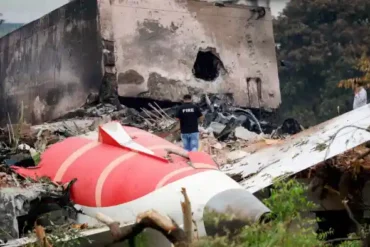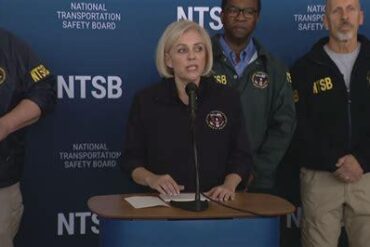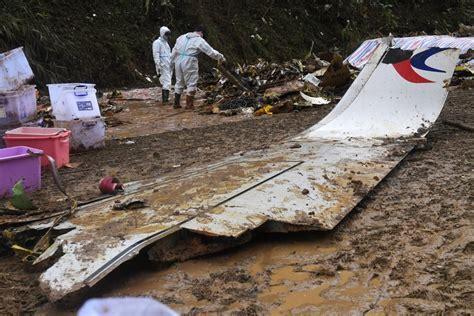
The crash of China Eastern Airlines Flight MU5735 remains one of the most haunting aviation disasters of the past decade, and newly leaked findings have reignited intense global scrutiny. More than four years after the Boeing 737-800 plunged into the mountains of Guangxi, emerging details from a reportedly leaked NTSB analysis suggest a deeply unsettling possibility: the aircraft’s engines may have been deliberately shut down mid-flight. If substantiated, this revelation would dramatically alter the narrative surrounding the tragedy and reshape ongoing discussions about aviation safety and human factors.
Reconstructing the Final Moments of Flight MU5735
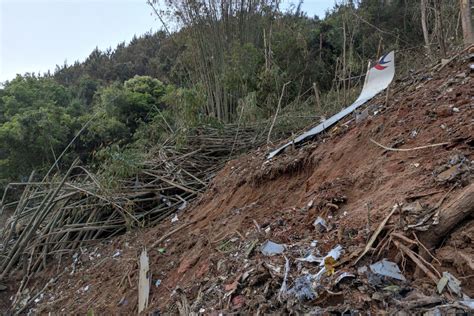
On March 21, 2022, the aircraft departed Kunming Changshui International Airport en route to Guangzhou Baiyun International Airport, carrying 132 people. For nearly an hour, the flight progressed routinely at cruising altitude. Then, without warning, the jet entered a near-vertical descent from approximately 29,000 feet. Data later indicated a brief stabilization before a second, fatal plunge into rugged terrain.
This erratic descent profile quickly drew attention among aviation analysts. Unlike typical mechanical failures, which often produce gradual or erratic deviations, the aircraft’s trajectory appeared controlled yet extreme, raising early but cautious speculation about intentional input. Despite the recovery of both the cockpit voice recorder (CVR) and flight data recorder (FDR), authorities released minimal details, leaving critical questions unanswered for years.
Leaked Report Points to Engine Fuel Cutoff
The most striking claim from the leaked NTSB report involves the alleged shutdown of both engines during flight. According to multiple media accounts, investigators identified signs consistent with a manual fuel cutoff, an action that would immediately deprive the engines of thrust and trigger a rapid descent. Such a maneuver cannot occur autonomously; it requires direct human intervention within the cockpit.
This detail shifts the investigative lens away from mechanical malfunction and toward cockpit activity. Modern Boeing 737 aircraft are designed with multiple redundancies, making simultaneous engine failure without external cause exceedingly rare. The suggestion that fuel supply was intentionally interrupted introduces a profoundly different—and more troubling—set of possibilities.
Compounding the controversy are allegations that critical findings may not have been publicly disclosed. The prolonged absence of a final report from Chinese authorities has fueled speculation about transparency gaps, with critics arguing that incomplete disclosure undermines both public trust and global aviation learning processes.
(1/6) Someone filed a FOIA request with the NTSB for data on China Eastern Flight MU5735 — the March 2022 crash in Guangxi, China that killed all 132 on board. The NTSB released all backed-up FDR (Flight Data Recorder) data… pic.twitter.com/eG7MThmLEd
— Sukka / 毛绒绒的大尾巴🦊 (@isukkaw) April 30, 2026
Absence of Mechanical Failure Deepens the Mystery
Early investigative summaries reportedly found no evidence of structural breakup, explosion, or severe weather interference. Maintenance records indicated that the aircraft was in airworthy condition, and there were no distress calls from the crew before the descent. These factors collectively narrowed the field of plausible explanations.
In aviation investigations, the absence of mechanical anomalies often redirects focus toward operational and human factors. However, drawing definitive conclusions requires comprehensive analysis of cockpit audio, control inputs, and crew behavior. Without official confirmation, the leaked findings remain unverified but consequential, prompting renewed calls for transparency.
Echoes of Past Intentional Aviation Disasters
The possibility of deliberate action inevitably recalls previous tragedies, most notably Germanwings Flight 9525, in which a co-pilot intentionally crashed an Airbus A320 in 2015. That incident led to sweeping reforms, including two-person cockpit rules and enhanced psychological screening for pilots.

While such cases are statistically rare, their impact on aviation policy is profound. They expose vulnerabilities not in technology, but in human oversight systems. If MU5735 were confirmed as an intentional act, it would likely trigger another wave of regulatory reassessment, particularly regarding pilot monitoring and real-time flight data transmission.
At the same time, experts emphasize caution. Leaked documents may lack context, and complex investigations often involve thousands of data points that must be interpreted collectively. Isolated findings, however compelling, do not constitute definitive proof.
Global Implications for Aviation Safety and Transparency
Beyond the immediate tragedy, the ongoing uncertainty surrounding Flight MU5735 highlights a broader issue: the critical importance of transparent accident reporting. International aviation relies on shared knowledge to prevent future disasters. When key findings remain undisclosed, the entire system loses an opportunity to improve.
For families of the victims, the absence of clear answers prolongs grief and fuels speculation. For the aviation industry, it creates a gap in understanding that could hinder the evolution of safety protocols. The leaked NTSB findings, regardless of their final validation, underscore the urgency of delivering a comprehensive and authoritative report.
A Tragedy Still Searching for Closure
More than four years later, Flight MU5735 continues to cast a long shadow. The emerging claims of a possible intentional fuel cutoff have transformed the narrative from one of mechanical mystery to potential human causation. Yet without official confirmation, the story remains unresolved—caught between evidence, speculation, and silence.
What is clear is that this disaster has reentered global focus, not as a closed chapter, but as an active and evolving investigation. Whether the final conclusions confirm or contradict the leaked findings, the outcome will carry significant weight for aviation safety, regulatory policy, and the enduring quest to understand what truly happened aboard that ill-fated flight.