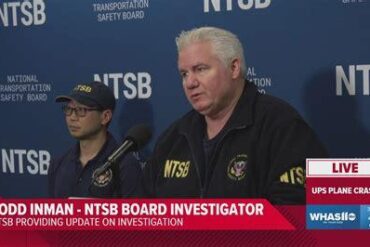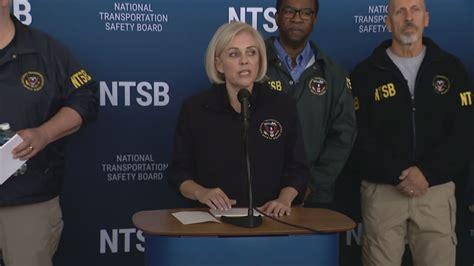
The National Transportation Safety Board has rejected 11 of the Federal Aviation Administration’s 33 responses to safety recommendations arising from the January 2025 midair collision near Ronald Reagan Washington National Airport, marking a disagreement over aviation reforms after the deadliest US aviation accident since 2001. The NTSB has classified those 11 responses as “Open – Unacceptable Response,” even as the FAA points to major changes already implemented around Washington, DC, and additional measures planned for the national airspace system.
The dispute is not about whether the FAA has responded to the tragedy. It has. Helicopter operations around DCA have been restricted, airspace procedures have changed, controller staffing and oversight have received renewed attention, and visual separation between helicopters and airplanes has been sharply curtailed. Instead, the disagreement centers on whether those measures address the deeper systemic risks identified by investigators, particularly weaknesses in collision-warning technology, controller workload, risk management and the collection of information about dangerous close encounters.
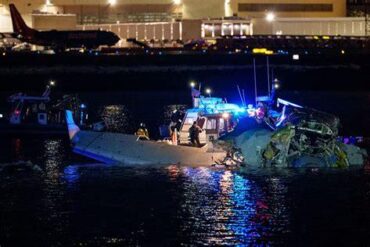
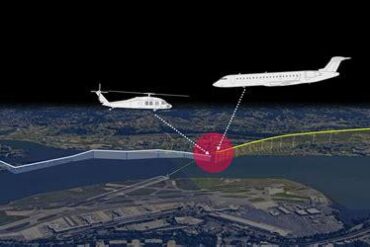
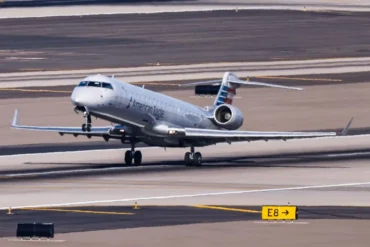
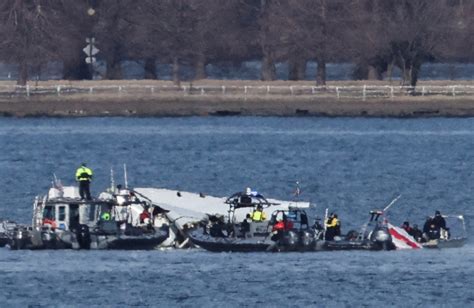
Flight 5342, operated by PSA Airlines for American Airlines with a Bombardier CRJ-700, collided with a US Army Sikorsky UH-60L Black Hawk on January 29, 2025. All 67 people aboard the two aircraft died. The crash exposed an unusually complex mix of commercial airline traffic, military helicopter operations and air traffic control responsibilities in one of the most constrained pieces of airspace in the United States.
NTSB Rejects 11 FAA Responses as “Unacceptable”
The NTSB’s final investigation produced 50 new safety recommendations. Of those, 33 were directed to the FAA, while others went to the Army, the Department of Defense Policy Board on Federal Aviation, the Department of Transportation, the DOT inspector general and RTCA. The recommendations cover both immediate operational problems and broader weaknesses in how aviation risks are identified, monitored and mitigated.
The NTSB’s “unacceptable” classification does not necessarily mean that the FAA has done nothing. The Board uses the designation when a recipient rejects a recommendation, offers an inadequate alternative, or fails to act quickly enough. That distinction matters because the FAA says several of the disputed recommendations are already being addressed, with some expected to be completed by the end of 2026 and others requiring longer rulemaking or technical-standard processes.
Among the 11 recommendations still classified as open with unacceptable responses are measures involving supervisory air traffic controller workload, annual scenario-based training, operational risk assessment and the classification of air traffic control facilities. The NTSB also wants the FAA to reassess the Level 9 classification of the DCA tower, establish clearer procedures for post-accident drug and alcohol testing decisions, and provide annual training for personnel responsible for those decisions.
Other recommendations address the way dangerous encounters are recorded and communicated. The Board wants an objective definition of a close-proximity encounter, a public database showing where such events occur, and a process for promptly notifying involved parties after near-midair collisions or TCAS resolution advisories. It also wants supervisors to document when air traffic control positions are combined and explain why the combination occurred.
ADS-B In Becomes the Central Safety Dispute
The most consequential disagreement involves Automatic Dependent Surveillance-Broadcast In, or ADS-B In. ADS-B Out broadcasts an aircraft’s position and other information derived from onboard systems and is mandatory in most controlled US airspace. ADS-B In allows an aircraft to receive surrounding traffic information and present it directly to pilots through cockpit displays, potentially adding another layer of awareness when traffic becomes difficult to see or interpret.
The NTSB wants the FAA to require aircraft operating in airspace where ADS-B Out is mandatory to also carry ADS-B In, together with cockpit traffic displays and audible alerts. The FAA has not committed to such a mandate, making the technology one of the clearest fault lines between the investigative agency and the regulator responsible for the national airspace system.
The NTSB’s position is strongly connected to its reconstruction of the final seconds of Flight 5342. Investigators determined that a suitable ADS-B-based system could have provided the American Airlines crew with its first visual and audible warning approximately 59 seconds before impact. A simulation indicated that the Black Hawk crew could have received an alert about 48 seconds before the collision.
Those figures are especially important because the CRJ-700’s existing Traffic Collision Avoidance System, or TCAS, did not provide its strongest form of warning early enough to create the same opportunity for evasive action. The aircraft received a traffic advisory substantially later, while low-altitude limitations affected the availability of a resolution advisory, the type of alert that can direct a crew toward an immediate avoidance maneuver.
For the NTSB, this illustrates a broader limitation in relying heavily on visual detection in complex, low-altitude airspace. A pilot may be looking in the correct general direction and still fail to identify an aircraft that is closing rapidly against a complicated background. Electronic traffic information does not eliminate that human limitation, but it can provide another source of information before visual contact occurs.
The Board’s recommendations therefore extend beyond simply requiring ADS-B In. They include improvements to TCAS alerts, directional traffic symbols, evaluation of lower alert-inhibit altitudes, and broader adoption of next-generation collision-avoidance technologies such as ACAS X and ACAS Xr. The underlying objective is to give pilots more usable information when the geometry and timing of an encounter leave little room for visual detection alone.
The 59 Seconds That Changed the Safety Debate
The significance of the 59-second figure extends beyond one accident. The NTSB says it has been advocating improved ADS-B-based collision avoidance for years, dating back to 2006. The Flight 5342 investigation gave the Board a particularly concrete example of how additional cockpit information could potentially have altered the available warning timeline.
NTSB Chair Jennifer Homendy has publicly expressed frustration that the technology question remains unresolved after repeated recommendations. Her criticism reflects the Board’s position that safety equipment already capable of providing earlier traffic information should receive stronger regulatory consideration rather than waiting for another accident to demonstrate the consequences of its absence.
DCA Airspace Has Already Changed
Washington’s airspace is not operating the way it did on January 29, 2025. Following the crash, the FAA permanently closed the affected Route 4 segment between Hains Point and the Wilson Bridge. Routine helicopter operations near DCA were restricted, helicopter zones were modified, and separation from airline traffic was increased.
The FAA also curtailed the use of visual separation between helicopters and airplanes in busy controlled airspace. According to the reference material, the agency argues that this measure went beyond one NTSB recommendation by suspending visual separation nationwide in relevant circumstances and requiring defined radar separation instead.
ADS-B Out requirements around DCA have also been strengthened, with limited exceptions, while the FAA has increased staffing and oversight at the airport’s control tower. These measures demonstrate that the crash has already produced substantial operational changes, even though the NTSB continues to challenge the FAA on broader national requirements.
Thousands of Earlier Close Encounters Raised Concerns
The NTSB’s investigation also found evidence that the Washington helicopter-airliner conflict was not an isolated phenomenon. FAA data reviewed by investigators identified 4,067 encounters between airplanes and helicopters operating on Routes 1 or 4 from January 2018 through February 2025 in which separation fell to 0.19 miles, or about 0.30 kilometers, or less.
Those figures became an important part of the NTSB’s conclusion that the underlying problem involved more than a single controller, flight crew or sequence of decisions. Repeated close encounters can indicate that an operating environment contains structural risks even when most individual events do not end in an accident.
The findings also reinforce the NTSB’s demand for better close-proximity reporting. A standardized definition and public database could make it easier to identify recurring locations, traffic patterns and operational conditions associated with near misses. Better information would potentially allow regulators and operators to address hazards before they produce a fatal outcome.
Congress Is Also Debating the Next Steps
The safety debate has moved beyond the FAA and NTSB. Congress has considered legislation addressing helicopter operations and collision-avoidance requirements. The Senate unanimously passed the ROTOR Act, which included a strong ADS-B requirement, but the measure fell one vote short of the two-thirds House majority needed under expedited procedures.
The House later approved the broader ALERT Act by a 396-10 vote. However, the NTSB argued that important elements, particularly provisions related to ADS-B In, did not fully satisfy its recommendations.
What Happens Next for FAA and NTSB Safety Recommendations?
The FAA says several disputed recommendations are already moving toward completion, while others require rulemaking or technical standards that cannot be implemented instantly. The NTSB, meanwhile, continues to monitor the agency’s responses through its Case Analysis and Reporting Online system, where recommendations can move from open status to classifications reflecting acceptable or unacceptable action.
The central issue is whether the lessons from Flight 5342 will remain concentrated around Ronald Reagan Washington National Airport or become part of a wider transformation of US airspace safety. The crash demonstrated how quickly a commercial jet and military helicopter can converge in a complex environment, while the investigation identified thousands of earlier close encounters that provided evidence of a broader risk.
For the NTSB, the unresolved ADS-B In recommendation is particularly significant because investigators identified potential warning opportunities measured in tens of seconds. For the FAA, the response involves balancing those safety objectives with technical standards, rulemaking, operational requirements and the diverse needs of aircraft operating throughout the national airspace system.
More than a year after Flight 5342, the physical airspace around DCA has changed substantially. The remaining disagreement shows that the larger safety response is still developing. The 11 “Open – Unacceptable Response” classifications are therefore not a finding that no reform has occurred. They are a clear indication that the two agencies still differ over which measures are necessary to translate the investigation’s lessons into permanent, nationwide aviation-safety requirements.