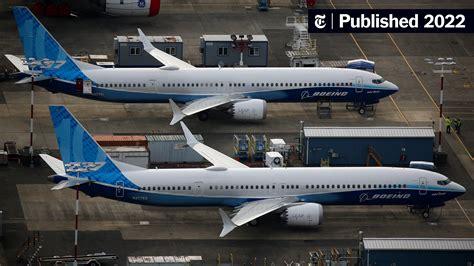
In a deeply emotional conclusion to a long-running legal battle, Boeing has reached a confidential settlement with Paul Njoroge, a Canadian man who lost his entire family in the tragic crash of Ethiopian Airlines Flight 302 in 2019. This marks another significant moment in the series of legal repercussions following the deadly Boeing 737 MAX crashes that killed 346 people across two disasters in less than five months.
The Devastating Loss Behind the Lawsuit
Paul Njoroge, a 41-year-old Kenyan-Canadian from Toronto, endured an unimaginable tragedy. His wife, Carolyne Karanja, their three children—six-year-old Ryan, four-year-old Kellie, and nine-month-old Rubi—and his mother-in-law perished in the crash of Ethiopian Airlines Flight 302. The family was traveling to Kenya to reconnect with their roots, while Njoroge planned to follow shortly after.
The aircraft, a Boeing 737 MAX 8, departed from Addis Ababa en route to Nairobi on March 10, 2019. Less than a minute into flight, the aircraft’s angle-of-attack sensor malfunctioned, triggering the Maneuvering Characteristics Augmentation System (MCAS). MCAS erroneously forced the aircraft’s nose downward four times during a frantic six-minute flight, resulting in the aircraft crashing near Bishoftu, killing all 157 onboard.
Boeing’s Secret Software and Deadly Oversight
What followed was a massive investigation that revealed critical flaws in the 737 MAX’s design, particularly in its MCAS system. Intended to stabilize the aircraft due to engine placement changes, MCAS was designed to pitch the nose downward based on a single sensor’s data—a fundamental vulnerability. Boeing did not disclose the existence or functionality of MCAS in pilot manuals or training programs, a decision that drew international condemnation.
In October 2018, five months before ET302’s crash, Lion Air Flight 610—also a 737 MAX 8—plunged into the sea off Indonesia, killing 189. The similarities between the crashes exposed systemic issues in Boeing’s design, communication, and oversight processes. It became clear that the MCAS system had been the root cause in both cases, and the company had failed to take adequate action after the first disaster.
Paul Njoroge’s Fight for Justice
Haunted by grief and driven by a need for accountability, Paul Njoroge became one of the most vocal critics of Boeing. He delivered a heart-wrenching testimony before the U.S. Congress in 2019, describing how the crash shattered his life. He detailed his inability to return to his family’s home or resume work, stating that Boeing’s decisions had left him permanently broken.
Njoroge’s lawsuit, filed in the U.S. District Court in Chicago, was set to be the first courtroom trial against Boeing over the 737 MAX crashes. However, the two sides reached a settlement just before the trial date. While the terms of the settlement are confidential, the timing suggests Boeing was seeking to avoid potentially damaging testimony and exposure in court.
The Legal Landscape and Boeing’s Broader Reckoning
Boeing has faced dozens of lawsuits from families who lost loved ones in the two MAX disasters. Most of these cases have been resolved quietly through out-of-court settlements, often just before trial. The Clifford Law Offices, representing Njoroge and several other victims’ families, has been instrumental in holding Boeing accountable.
In 2021, Boeing formally accepted responsibility for the MAX crashes, agreeing to allow victims’ families to pursue damages in U.S. courts regardless of their nationality. This agreement was part of a broader settlement in which the company avoided criminal prosecution but agreed to pay $2.5 billion in fines, compensation, and compliance measures.
Most recently, Boeing took a plea deal admitting guilt to a criminal conspiracy charge related to misleading regulators about the MCAS system. The deal includes nearly half a billion dollars in penalties, and the company remains under close scrutiny by the U.S. Department of Justice.
How MCAS Became a Symbol of Corporate Negligence
The MCAS debacle has come to symbolize the worst excesses of cost-cutting, regulatory evasion, and opaque corporate practices. Designed as a workaround for the 737 MAX’s larger engines, MCAS was Boeing’s way of avoiding full recertification and retraining requirements. By keeping changes subtle and buried, Boeing hoped to sell the aircraft as a seamless upgrade from previous 737 models.
Unfortunately, that design philosophy became deadly. The MCAS system:
- Relied on a single angle-of-attack sensor, a risky choice with no redundancy.
- Activated repeatedly, with no limit, overriding pilot input.
- Was undisclosed in pilot training manuals, leaving crews unaware of its behavior.
Only after two catastrophes did Boeing overhaul the system, making it dependent on two sensors, reducing its authority, and allowing only a single activation per high-AOA event. By then, 346 lives had been lost, and public trust in Boeing had plummeted.
The Human Cost Behind the Numbers
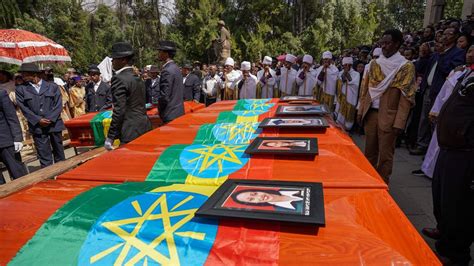
The impact of the crashes cannot be understood through numbers alone. For Njoroge, the loss wasn’t just familial—it was existential. His children represented his hopes, his wife his partnership, and his mother-in-law a beloved elder. Boeing’s negligence didn’t just rob him of loved ones; it robbed him of the future he had built with them.
His fight was never just about compensation—it was about truth, transparency, and ensuring that no other family endures what his did. The settlement, while bringing a legal end to his particular claim, doesn’t erase the deeper wounds or undo the public damage inflicted on Boeing’s reputation.
Boeing’s Ongoing Struggles with Trust and Accountability
Though the MAX has returned to service with regulatory approval, Boeing’s troubles are far from over. The company continues to face scrutiny over its corporate governance, quality control issues in other programs like the 787 Dreamliner and 777X, and increasing pressure from both investors and lawmakers.
Moreover, Boeing’s competitors—most notably Airbus—have gained ground in the narrow-body jet market. Public and airline confidence in Boeing aircraft has not fully recovered, despite widespread re-certifications. The company has poured billions into settlements, legal fees, and engineering overhauls, yet it still confronts a long road to redemption.
A Settlement with Broader Implications
While the terms of Njoroge’s settlement remain confidential, its timing is significant. Avoiding the public scrutiny of a trial spares Boeing additional negative headlines. However, it also suggests the company was concerned about what might come out under oath.
For families like Njoroge’s, justice isn’t defined solely by dollar amounts. It’s about acknowledgment. About remembering every life lost not as a statistic, but as a name, a voice, a presence that mattered. And for Boeing, the only path forward is to pair restitution with radical transparency and a redefined corporate ethos.
Conclusion: A Cautionary Tale in Aviation History
The Boeing 737 MAX tragedies remain one of the darkest chapters in commercial aviation. For Paul Njoroge, the path from anguish to settlement is filled with sorrow, activism, and a relentless pursuit of accountability. His case—among the most high-profile—stands as a sobering reminder that every engineering decision has a human consequence.
Boeing’s settlement with Njoroge may close one legal door, but it opens broader questions about how the aviation industry prioritizes safety, how regulators exercise oversight, and how corporations reckon with their past.
This story is not just about a settlement. It is about the fragility of trust, the permanence of loss, and the enduring fight for justice in the aftermath of preventable tragedy.