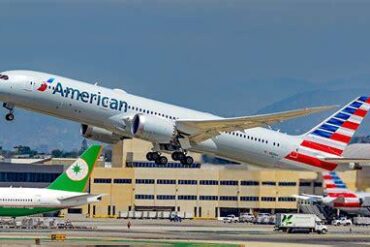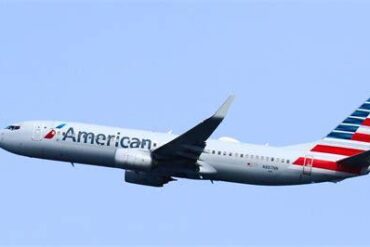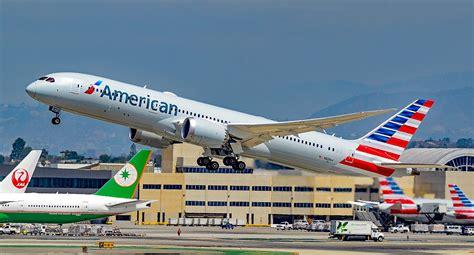
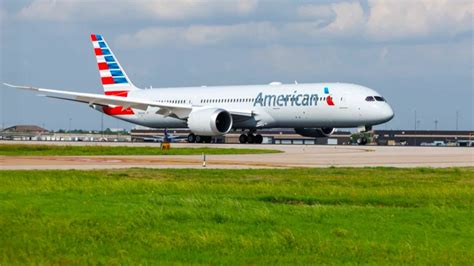
American Airlines’ plan to streamline flight operations aboard its newly unveiled Boeing 787-9P Dreamliner by reducing cabin crew from eight to seven has hit significant resistance. The carrier’s proposal, which coincided with the rollout of its ultra-premium “P” configuration, has temporarily stalled due to a lack of approval from the Federal Aviation Administration (FAA) and strong opposition from the Association of Professional Flight Attendants (APFA).
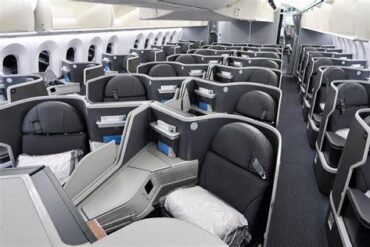
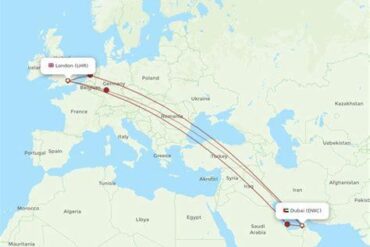
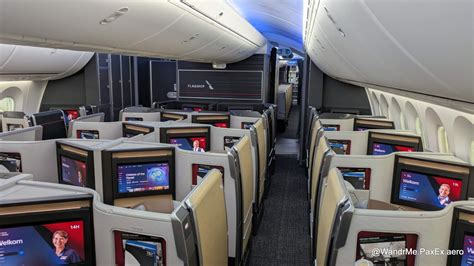
Initially intended to apply on flagship routes like Chicago O’Hare (ORD) to Los Angeles (LAX) and onward to London Heathrow (LHR), the 787-9P was envisioned as a transformative step in American’s international premium strategy. The aircraft features newly designed Flagship Business class seats with privacy doors and four luxurious Flagship Preferred Suites, reflecting a major product upgrade aimed at recapturing high-end travelers post-pandemic.
FAA Blocks Crew Reduction Over Emergency Exit Concerns
At the heart of the FAA’s denial is one inescapable technical constraint: emergency exit staffing requirements. The Boeing 787-9 aircraft is equipped with eight exits, each of which requires a dedicated crew member for safety compliance during emergency scenarios. American’s attempt to assign one flight attendant to cover both rear doors — 4L and 4R — was deemed insufficient under current federal regulations.
According to FAA safety protocols, especially in twin-aisle widebodies like the 787, every exit must be rapidly operable in an emergency, a scenario that places intense pressure on flight attendants to act within seconds. Reducing crew undermines this responsiveness, and while American argued that new training protocols and cabin layout efficiencies justified the change, the FAA maintained that any deviation could pose life-threatening risks.
Union Opposition: A Battle for Safety and Workload Standards
The Association of Professional Flight Attendants, representing more than 26,000 American Airlines flight attendants, has taken a hardline stance. In an internal memo, the union described the seven-crew plan as a “reckless decision” and a direct threat to cabin safety.
The APFA emphasized that placing a single flight attendant in charge of both rear exits during emergencies was not just a violation of best safety practices, but also a demoralizing overextension of crew responsibilities. “This is not about operational efficiency,” the union asserted. “It’s about whether we prioritize passenger lives or profit margins.”
Despite American’s insistence that other airlines — including Delta and United — have adopted reduced crew models on widebody aircraft, the APFA dismissed these comparisons as non-analogous. For example, while United has FAA-approved seven-crew ops on the 787-10, and Delta on the A330, each approval followed distinct aircraft configurations and staffing models that cannot simply be transferred to American’s new layout.

American’s Strategic Intent: Flexibility Amid Global Operations
American’s move to seek reduced staffing was not just about cost-cutting — though savings on wages and benefits are substantial over long-haul flights — but also about operational resilience. As international networks become more intricate and delays more costly, the airline hoped to ensure flight continuity even when one crew member is unavailable, particularly during layovers in high-cost international cities.
Sources close to the internal planning suggest that the airline’s leadership is concerned about short-notice flight cancellations due to sick calls or visa issues. The seven-crew model would provide just enough leeway to keep flights on schedule. However, this workaround, critics say, is a thinly veiled attempt to erode long-standing safety margins for short-term gains.
Internationally, European regulators allow certain flexibilities in widebody staffing, sometimes approving six-crew operations on 787s under exceptional circumstances. American appeared to cite these precedents in its FAA petition. However, U.S. aviation regulations maintain more stringent guidelines, and until American can demonstrate unequivocal safety equivalence, approval is unlikely.
Cabin Enhancements vs. Crew Cuts: A Conflicting Message
The 787-9P marks a significant step forward in premium product evolution for American Airlines. The reconfigured cabin includes 51 Flagship Business seats, each equipped with sliding privacy doors, a first for the airline. In addition, four Flagship Preferred Suites offer an even higher tier of comfort, aligning with competitive products from carriers like Qatar Airways and Singapore Airlines.
Yet, paradoxically, this push toward luxury service coincides with attempts to minimize in-flight staffing, which critics argue undermines the very premium experience American aims to sell. Passengers may appreciate the upgraded cabin, but will they feel safer or better served with fewer crew members onboard?
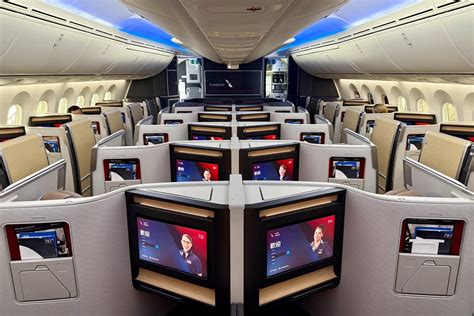
Further complicating matters, some onboard features — including the sliding doors in business class — have yet to be certified for closed-door operation by the FAA. As such, they must remain open during flight, reducing both privacy and functionality. American is reportedly offering partial compensation to affected passengers while it navigates this additional regulatory bottleneck.
A Broader Industry Shift: Balancing Cost and Safety
The American Airlines crewing controversy taps into a larger, ongoing industry tension: the challenge of balancing enhanced service with leaner staffing models. Airlines globally are under pressure to maintain profitability amid rising fuel costs, competitive pricing, and post-COVID travel demand surges. Cutting labor costs without compromising safety is a tempting yet perilous strategy.
For American, the stakes are high. The FAA’s decision will likely establish precedent not just for this one aircraft configuration but for future widebody deployments and potential narrowbody staffing changes as well. Other airlines are watching closely, as a ruling in American’s favor could open the door to more widespread crewing reductions — and union battles.
Looking Ahead: FAA Verdict Will Shape Next Moves
As of now, American Airlines has paused implementation of the seven-crew model. The aircraft continues operating under the standard eight-attendant configuration, and while the airline remains in active dialogue with the FAA, no formal approval timeline has been disclosed.
Union representatives are leveraging the delay to rally public and political support, arguing that commercial expediency must never override emergency preparedness. Meanwhile, American is reportedly revisiting training documentation, door operation procedures, and cabin configuration specs to strengthen its case.
If a revised application can prove that redundancy and responsiveness are maintained even with one fewer flight attendant, FAA officials may reconsider. But until then, the airline must operate its flagship aircraft under the very safety rules it hoped to amend.
Conclusion: A Defining Test for Airline Labor and Safety Protocols
American Airlines’ attempt to usher in a new era of ultra-premium, leanly staffed widebody travel is a defining test for the post-pandemic aviation industry. The dispute underscores how new aircraft design, luxury service ambitions, and labor practices are colliding in a high-stakes arena regulated by stringent federal oversight.
The airline’s ambition to push the boundaries of staffing efficiency while simultaneously rolling out its most luxurious product offering to date raises critical questions. Can safety, service, and cost-efficiency truly coexist? Or does one inevitably compromise the others?
Until the FAA issues a definitive ruling, American Airlines finds itself in a holding pattern — not just over airspace, but over the future of how premium air travel is delivered, staffed, and regulated in the United States.