Modern air travel demands a meticulous balance between efficiency and safety, and one of the most critical aspects ensuring passenger well-being lies in the regulated distance between aircraft. These regulations—globally harmonized and technologically enforced—aren’t arbitrary. They are the result of decades of data, engineering, and lessons learned from near-misses and mid-air collisions. In this article, we explore in detail just how close planes are legally and safely allowed to fly next to each other, what factors affect that proximity, and how aviation technology ensures these rules are followed in real time.
Minimum Separation Standards: Vertical and Horizontal Dimensions
To maintain safety in the skies, air traffic control authorities worldwide enforce strict separation minima—the minimum distances allowed between aircraft operating under Instrument Flight Rules (IFR). These distances depend on a number of variables, including altitude, airspace class, equipment onboard, and aircraft performance capabilities.
Vertical Separation Minima (VSM)
Vertical separation is perhaps the most universally understood form of separation. It refers to the altitude gap between aircraft flying in the same general area.
- Below 29,000 feet (FL290): Aircraft must maintain a vertical separation of 1,000 feet (approximately 300 meters).
- Between 29,000 and 41,000 feet: In designated Reduced Vertical Separation Minimum (RVSM) airspace, the required separation is still 1,000 feet, but both aircraft must be equipped and certified for RVSM operations. Without RVSM certification, the required spacing increases to 2,000 feet (about 600 meters).
- Above 41,000 feet: Whether RVSM-equipped or not, aircraft must maintain 2,000 feet of vertical separation.
- Above 60,000 feet: A rarified domain mostly for military or special-purpose aircraft, the required separation increases to 5,000 feet (approximately 1.5 kilometers).
This structure allows safe stacking of aircraft at cruise altitudes, optimizing airspace usage while ensuring no two aircraft are in immediate danger of occupying the same vertical air layer.
Horizontal Separation Standards
Horizontal separation comes into play when aircraft are flying at the same altitude. The specific required distance varies based on radar availability, equipment, and airspace type.
- Radar-controlled airspace: Aircraft are required to maintain at least 5 nautical miles (approximately 9.26 kilometers) of horizontal separation.
- Non-radar airspace: The minimum can increase significantly—often to 10 or even 50 nautical miles—depending on procedural protocols.
- Oceanic airspace: Where radar coverage is limited, aircraft rely on satellite-based navigation and communications. Here, horizontal separation can be as much as 50 to 100 nautical miles under older systems, though modern RNP (Required Navigation Performance) and ADS-B (Automatic Dependent Surveillance–Broadcast) technologies are enabling closer spacing, often down to 15 nautical miles.
These requirements are enforced by air traffic controllers using radar and satellite surveillance systems, as well as by onboard avionics.
The Role of TCAS in Real-Time Collision Avoidance
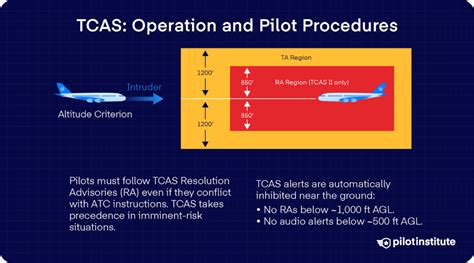
Beyond separation regulations controlled from the ground, modern commercial airliners come equipped with Traffic Collision Avoidance Systems (TCAS). This onboard system continuously scans the airspace for transponder-equipped aircraft, plotting potential threats and issuing automated commands to pilots when necessary.
How TCAS Works:
- It identifies nearby aircraft based on transponder signals.
- It calculates trajectories to assess risk of collision.
- If a threat is detected, it issues a Traffic Advisory (TA).
- If the risk escalates, a Resolution Advisory (RA) is triggered, instructing pilots to either climb or descend.
The RA commands are automated, but pilots are trained to follow them immediately. This system acts as a fail-safe, independent of ground-based ATC, and has prevented countless potential mid-air collisions.
RVSM: Reducing Distance Safely in High Altitude Airspace
Introduced globally between 1997 and 2008, Reduced Vertical Separation Minimum (RVSM) revolutionized high-altitude flight by allowing aircraft to be spaced only 1,000 feet apart between FL290 and FL410, instead of the earlier standard of 2,000 feet. This allowed airlines to fit more traffic into the most fuel-efficient altitudes, improving capacity and fuel economy.
To operate in RVSM airspace, aircraft must be specially equipped and maintained with:
- Two independent altitude measurement systems
- Autopilot systems with altitude hold
- Altitude alert systems
- Transponders with Mode C capability
Aircraft must also undergo regular inspections and certification, ensuring they meet stringent accuracy and reliability standards.
The introduction of RVSM airspace was a major leap forward in airspace efficiency, but it also placed greater reliance on precision navigation and onboard instrumentation.
Exceptions in Visual Flight Rules (VFR) Operations
While the majority of commercial traffic operates under IFR, Visual Flight Rules (VFR) flights have their own separation practices. VFR aircraft must maintain see-and-avoid vigilance and typically do not receive separation services unless they enter controlled airspace.
In such airspace, controllers may provide separation from IFR traffic, often assigning VFR altitudes that add an extra 500 feet of vertical separation. For example:
- Eastbound VFR flights use altitudes like 4,500, 6,500, etc.
- Westbound VFR flights use altitudes like 3,500, 5,500, etc.
This structured assignment provides a buffer between IFR and VFR traffic, further reducing the risk of conflict.
Parallel Runways and Proximity in Terminal Areas
In airport terminal areas—especially at large international hubs—multiple aircraft often appear very close together. However, precision spacing is maintained even during takeoff and landing.
At airports with parallel runways, such as Los Angeles (LAX), London Heathrow (LHR), or Frankfurt (FRA), aircraft may be separated laterally by just a few hundred meters. This is safe due to:
- Staggered scheduling by ATC
- Use of Instrument Landing Systems (ILS) with lateral guidance
- Defined approach corridors with divergent headings
- Independent missed approach procedures
In such environments, the margin for error is small, but the procedural safeguards and pilot training are exceptionally robust.
Perceived Proximity vs Actual Distance
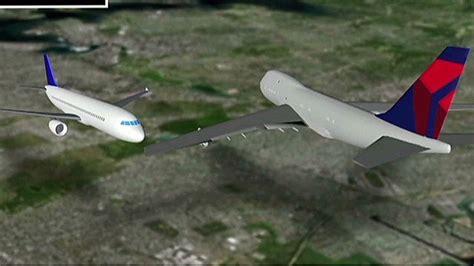
Many passengers report seeing another aircraft “very close” from their window seat—often estimating distances of just a few meters. But due to the absence of reference points in the sky and the sheer speed of passing aircraft (often a relative speed of 900-1,200 km/h), this perception is often misleading.
For example, if an aircraft passes 1,000 feet below another, and at a lateral offset of several kilometers, it can still appear alarmingly close. In reality, airliners do not operate within such small margins unless in very specific, controlled operations like air refueling or military formations.
What Happens When Separation Is Breached?
Breaches of minimum separation—known as Loss of Separation (LOS)—are taken extremely seriously. These incidents are rare, but when they occur, they trigger immediate:
- Incident reports by ATC and pilots
- TCAS RA logs reviewed by safety analysts
- Investigations by civil aviation authorities (such as FAA, EASA, or NTSB)
- Corrective actions, which may include retraining or procedural changes
Losses of separation can be caused by ATC errors, pilot misunderstandings, equipment failures, or adverse weather. The aviation industry treats such events with zero tolerance.
Conclusion: Layered Safety Built Into the Skies
The perception of how close aircraft fly to one another is often shaped by human intuition, which isn’t well-suited for interpreting three-dimensional motion at high speeds. But in reality, commercial aviation adheres to layered safety protocols, including:
- Defined separation minima for vertical and horizontal spacing
- Precision systems like RVSM, TCAS, and ILS
- Constant ATC monitoring and aircraft self-regulation
- Rigorous training and certification for pilots and controllers
These mechanisms ensure that—even when aircraft look dangerously close—they are operating within a meticulously calculated safety envelope. Modern air traffic systems are among the most reliable and scrutinized logistical operations in existence. The skies are far more structured and safeguarded than they may appear through a cabin window.
In short, aircraft can come closer than many passengers imagine, but never so close as to compromise safety under regulated, controlled conditions.