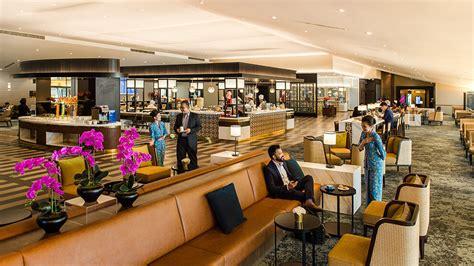
Malaysia Airlines’ lounge access policy has quietly become a case study in how small rules can ripple into big traveler frustration. At Kuala Lumpur International Airport, where long-haul itineraries funnel passengers from across Asia-Pacific into onward connections, the Golden Lounge is marketed as a refuge of calm. For premium cabin travelers, it promises space, food, showers, and a soft landing between flights. Yet the airline’s three-hour lounge access rule has introduced a layer of uncertainty that feels less like policy and more like a guessing game. The rule exists in fragments, scattered across purchase terms and frontline practice, leaving passengers to navigate an unwritten code that shifts with the agent, the hour, and the mood of the terminal.
The friction emerges most sharply for connecting travelers with overnight layovers. These itineraries are not edge cases; they are the structural reality of hub-and-spoke networks. Malaysia Airlines sells long connections through Kuala Lumpur because that is how aircraft rotations and regional demand align. When a business class passenger arrives in the evening and departs the next morning, lounge access becomes part of the value proposition, not a luxury add-on. The problem is not that limits exist. The problem is that the limits are opaque, inconsistently enforced, and disconnected from how travelers actually move through the airport ecosystem.
In practice, the Golden Lounge is a hinge point between fatigue and recovery. A traveler stepping off a transpacific flight is often not seeking to camp overnight on a sofa. They want a place to sit upright, answer a few emails, rehydrate, and gently land before retreating to a transit hotel. Denying access on the grounds of a calendar boundary or an arbitrarily interpreted three-hour window fractures that experience. The result is a quiet erosion of trust: premium cabin expectations collide with frontline discretion, and the passenger becomes a supplicant negotiating an unwritten rulebook.
Malaysia Airlines Golden Lounge Three-Hour Rule: A Policy That Exists in the Shadows
The three-hour rule is documented clearly only in one narrow context: paid lounge access. The terms specify that purchased entry is limited to a single visit, capped at three hours before departure, with a boarding pass indicator marking eligibility. That clause is clean, precise, and defensible. It exists to prevent overcrowding and to keep the lounge aligned with its purpose as a pre-departure amenity. The confusion begins when that same logic appears to bleed into premium cabin access, even though it is not explicitly stated in the published conditions for business class or elite passengers.
This is where the policy slips into shadow. Travelers with long connections are accustomed to lounge access throughout their layover at many carriers in the region. The industry norm distinguishes between originating passengers, who may be subject to time windows, and connecting passengers, whose access reflects the continuity of their journey. Malaysia Airlines’ approach, as experienced on the ground, blurs that distinction without acknowledging it in writing. The absence of a clearly published rule does not create flexibility; it creates unpredictability. In service design, unpredictability is friction wearing a polite smile.
Enforcement by Vibe: Why Frontline Discretion Shapes the Experience
The most revealing aspect of the Golden Lounge experience is not the rule itself, but how it is enforced. One agent may deny access without even scanning a boarding pass, citing a “new rule” and a three-hour window tied to departure time. Another agent, hours later, may scan the same boarding pass and grant entry without hesitation. This is not merely inconsistency; it is the substitution of system logic with personal interpretation. The lounge becomes less a governed space and more a negotiated border crossing.
For the traveler, this dynamic creates a peculiar incentive structure. The rational response is to try again later, to approach a different desk, to hope for a different interpretation. That behavior is not opportunistic; it is adaptive. When policy is unclear, people probe the edges of enforcement to understand the real rule. The airline unintentionally trains its premium passengers to test boundaries, eroding the dignity of the experience on both sides of the counter. The staff member becomes the face of an invisible policy, absorbing the frustration that should be directed at unclear documentation.
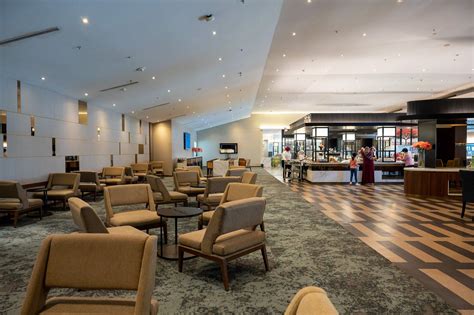
Long Layovers at Kuala Lumpur International Airport: Designed by the Network, Paid by the Passenger
Kuala Lumpur International Airport is engineered for flow, not for ambiguity. The terminal ecosystem includes transit hotels, shower facilities, quiet rooms, and lounges precisely because long connections are part of the network design. When an airline sells a 15-hour overnight layover as the next available connection, the passenger is not gaming the system. They are accepting the architecture of the route map. In that context, restricting lounge access to three hours before departure feels less like crowd control and more like a misalignment between product design and operational reality.
The Golden Lounge is not merely a room with chairs. It is a promise embedded in the business class fare: a promise of continuity, care, and coherence across segments. When access is withheld during a long layover, the product fractures into isolated moments rather than a continuous experience. The traveler is premium in the air and provisional on the ground. That split undermines the narrative Malaysia Airlines projects about hospitality, warmth, and thoughtful service.
Brand Trust in the Small Details: Why Lounge Rules Matter More Than They Seem
Airline brands live or die in the margins. The seat pitch, the meal plating, the warmth of a greeting, the clarity of a rule. The Golden Lounge access confusion is not a catastrophic failure. It is a small, persistent nick in the surface of trust. Travelers who pay for premium cabins do not demand limitless indulgence. They demand predictability. Predictability is the quiet engine of comfort. When a rule exists but is not published, and when enforcement oscillates between denial and permission, predictability collapses.
This is not an argument for unlimited lounge loitering. Lounges are finite spaces with finite resources. It is an argument for coherence. If Malaysia Airlines intends to enforce a three-hour window even for connecting passengers, that policy deserves to be stated plainly, framed with rationale, and embedded in the digital journey where travelers plan their layovers. If the intent is to allow discretion for long connections, that discretion should be structured, not improvised. Structure protects both staff and passengers from unnecessary friction.
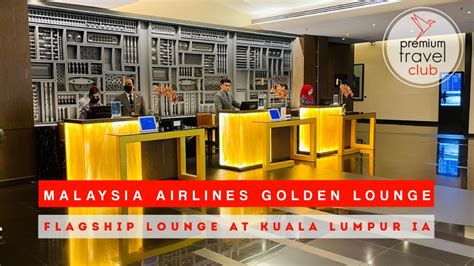
What Clear Policy Would Fix: Aligning Product, Process, and Expectation
A transparent lounge access policy would not eliminate disappointment, but it would anchor expectations. Passengers could plan whether to head straight to a transit hotel, schedule work sessions, or pace their rest. Frontline staff could enforce a documented standard rather than narrating a “new rule” that travelers cannot verify. The brand would reclaim control of the story it tells about premium travel through Kuala Lumpur.
The deeper issue is not time limits. It is narrative alignment. Malaysia Airlines positions itself as a carrier of warmth and care, a bridge across Asia with a human touch. Lounge access is a tangible expression of that story. When the rules governing that access feel arbitrary, the story falters. Trust does not collapse in grand scandals alone. It erodes in small, puzzling moments at a lounge desk, where a boarding pass becomes a question mark.
Bottom Line: The Three-Hour Rule Needs a Spine
The Malaysia Airlines Golden Lounge three-hour rule exists, but not in a way that travelers can reliably understand or plan around. Its presence in paid access terms, its rumored extension to premium connections, and its inconsistent enforcement create a fog where there should be a signpost. For a carrier that trades on hospitality and clarity of service, this is a solvable problem. Publish the rule. Define the exceptions. Train staff to apply it consistently. Let the Golden Lounge return to what it is meant to be: a calm interlude in a long journey, not a negotiation table.