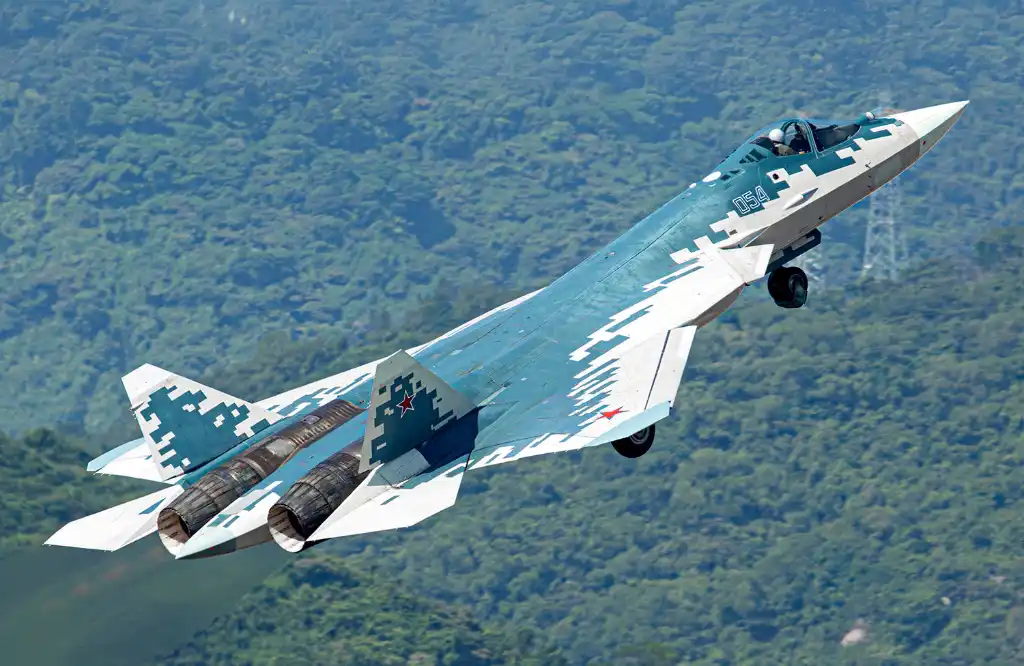
The Sukhoi Su-57, Russia’s premier fifth-generation stealth fighter, has once again captured global attention with reports indicating that the Russian Aerospace Forces (VKS) have received a new batch of Su-57 Felons. This development comes despite long-standing concerns about the aircraft’s sluggish production rate, raising questions about Russia’s capacity to sustain and scale its advanced aviation projects amid intense international scrutiny and sanctions.
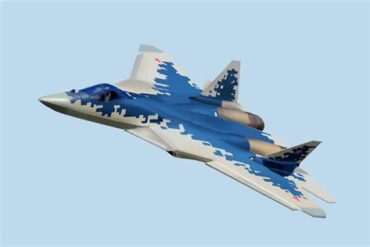
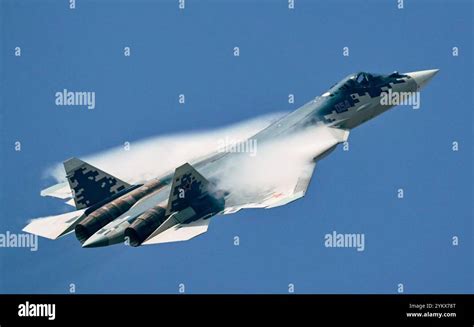
The latest evidence of delivery emerged when photos surfaced on social media on April 10, showing two newly minted Su-57s, marked with the tail numbers “25” Red (RF-81796) and “26” Red (RF-81797). These aircraft were allegedly spotted during transfer flights to an undisclosed Russian airbase. Neither the United Aircraft Corporation (UAC) nor the VKS officially announced the delivery, yet the distinctive fresh markings unmistakably confirmed that these units had just rolled off the production line, feeding into the narrative that the VKS is pushing forward with its modernization strategy despite logistical and technical hurdles.
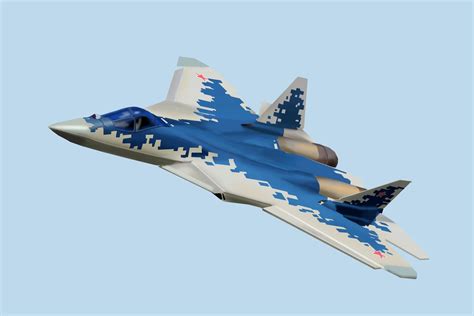
The Su-57, developed by United Aircraft Corporation’s Komsomolsk-on-Amur Aviation Plant, represents Russia’s response to the U.S. Air Force’s F-22 Raptor and F-35 Lightning II. Engineered for stealth, supermaneuverability, and advanced avionics, the Su-57 aims to solidify Russia’s air dominance. The newly spotted aircraft mark the first visible delivery for 2025, following a recorded delivery in December 2024, and serve as tangible proof of Russia’s ongoing efforts to shore up its fleet.
Persistent Production Woes and Expansion Efforts
While the new deliveries showcase progress, the Su-57’s production saga remains fraught with complications. Initially contracted in 2019 with an ambitious order of 76 aircraft by 2027, the program has been beleaguered by chronic delays, primarily attributed to inadequate manufacturing infrastructure at the Komsomolsk-on-Amur facility. The situation worsened following Russia’s invasion of Ukraine, which triggered sweeping international sanctions targeting Rostec, UAC, and other defense entities vital to the aircraft’s production chain.
The Komsomolsk-on-Amur Aviation Plant (KnAAZ), Russia’s primary Su-57 production site, has long struggled to meet demand. Military analysts have noted that despite the aircraft’s sophisticated capabilities, Russia’s operational fleet of Su-57s remains too small to present a credible challenge to NATO’s air power. In light of these constraints, the UAC has recently escalated efforts to expand production capacity. Notably, in August 2024, UAC announced plans to bolster KnAAZ’s facilities, and in early 2025, CEO Vadim Badekha confirmed ongoing initiatives to scale production further.
Evolving Capabilities and Modernization Drive
The intrigue surrounding the Su-57’s latest batch is heightened by speculation about potential upgrades. Yuri Kondratyev, Director of KnAAZ, hinted in February 2025 that a new version of the Su-57 would enter service this year, though specific improvements were not disclosed. Defense circles buzz with rumors that the latest models may feature the AL-51F1 (Product 30) engines, promising enhanced thrust, fuel efficiency, and overall combat performance.
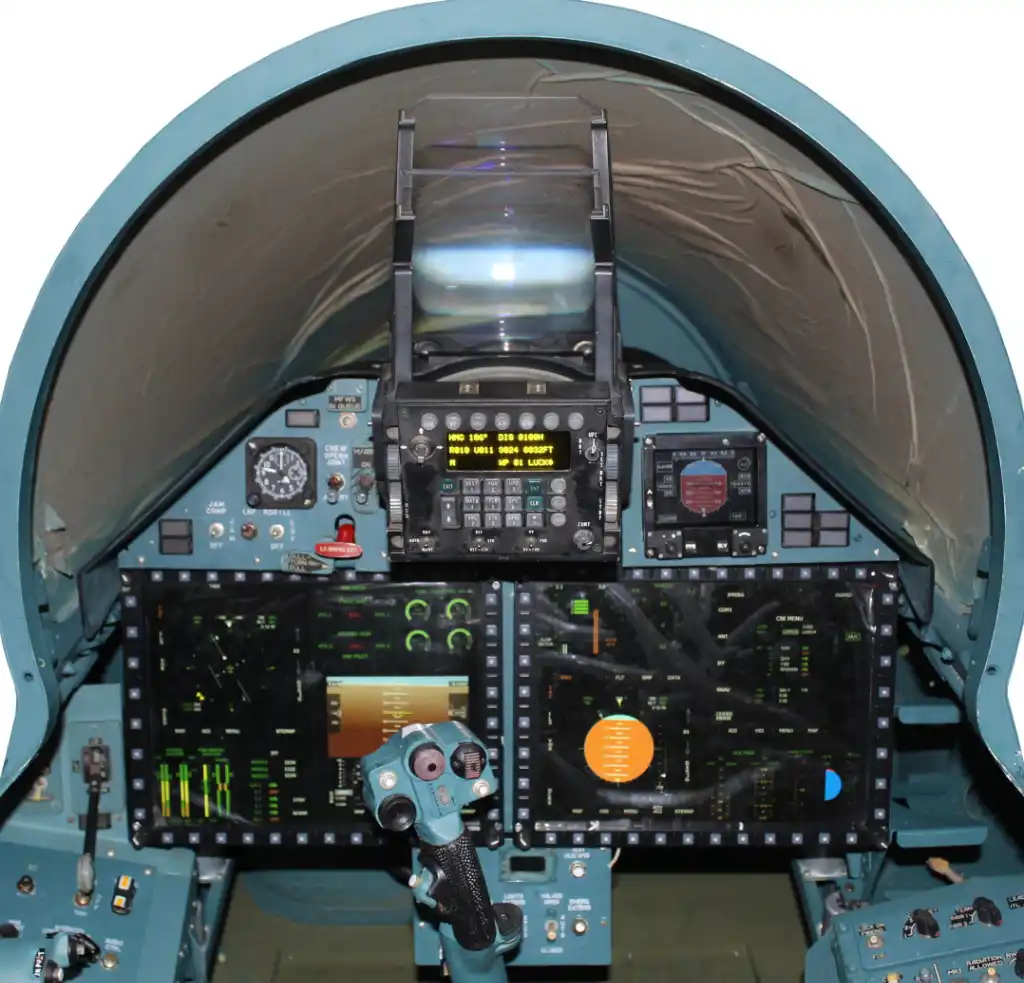
UAC’s roadmap emphasizes the Su-57’s modular architecture, designed to accommodate technological enhancements over the fighter’s projected 40–50 year lifespan. Vadim Badekha has underscored the aircraft’s future-proof design, noting plans to integrate unmanned aerial vehicles (UAVs) into the Su-57’s operational framework. This underscores a strategic pivot towards next-generation network-centric warfare, blending manned and unmanned assets into cohesive battle formations.
Combat Deployment and Export Ambitions
Operationally, the Su-57’s combat record remains modest. While deployed in the Ukraine conflict for patrols and long-range missile strikes, the aircraft has seen limited direct engagement. Ukraine notably claimed in June 2024 to have destroyed a Su-57 in a drone strike on an airbase in Astrakhan, although independent verification remains elusive.
Beyond bolstering its own air force, Russia is keen to position the Su-57 as a premier export offering. This ambition, however, has been hampered by the same production issues plaguing its domestic rollout. In an effort to stimulate foreign interest, Russia has showcased the Su-57 at major international defense expos, including Aero India 2025 and Brazil’s LAAD 2025 arms show. Algeria has surfaced as a potential buyer, with local media hinting at a purchase agreement, though no official confirmation has been made. Russia’s pitch to India is particularly aggressive, offering technology transfers, joint production, and utilization of the existing Su-30MKI production infrastructure to streamline integration.
Strategic Imperatives and Future Outlook
Russia’s acceleration of Su-57 production is not merely a technological endeavor but a geopolitical imperative. The aircraft is pivotal in Moscow’s strategy to project power, reassure allies, and court new defense partnerships in regions wary of Western restrictions. Yet the path forward is fraught with challenges: sanctions continue to squeeze supply chains, and skepticism about Russia’s industrial capacity lingers internationally.
Nevertheless, the Su-57 program has exhibited resilience. Each new delivery signals incremental progress in overcoming systemic bottlenecks, even as questions persist about scalability and long-term viability. The stealth fighter’s journey from a symbol of technological ambition to a tested mainstay of Russia’s air fleet remains a story in flux, with the latest batch marking another chapter in a saga that is far from over.