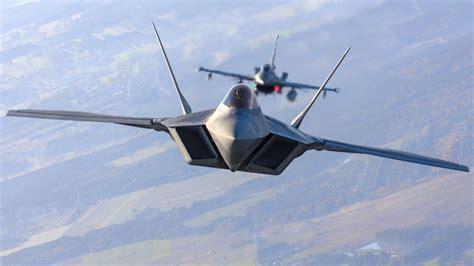
Air superiority has always shaped the outcome of wars, but the meaning of air dominance has changed dramatically in the modern era. The most feared military aircraft flying today are no longer judged solely by speed, maneuverability, or missile capacity. Instead, dominance now belongs to fighters capable of controlling information, disrupting enemy awareness, and striking targets before opponents even realize they have been detected. In 2026, stealth aircraft such as the F-35 Lightning II, F-22 Raptor, J-20 Mighty Dragon, and Su-57 Felon represent the cutting edge of this transformation, redefining what survival looks like in contested airspace.
Military aviation has entered an era where seconds decide victory. The aircraft that can gather data fastest, fuse sensor information instantly, and distribute battlefield intelligence across multiple platforms gains a nearly overwhelming advantage. This is why fifth-generation fighters have become some of the most feared machines ever built. They compress the decision-making cycle so aggressively that adversaries often lose engagements before visual contact even occurs.
The psychological impact of these aircraft is equally significant. Modern fighter pilots increasingly train against opponents they may never actually see. Entire combat formations can be tracked, targeted, and neutralized by stealth aircraft operating deep inside hostile territory while remaining almost invisible to radar networks. This shift has fundamentally altered military doctrine across the United States, China, Russia, and NATO-aligned nations.
The F-35 Lightning II And The Rise Of Information Dominance
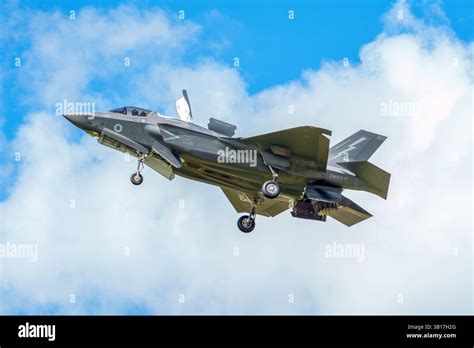
The F-35 Lightning II has evolved from a controversial defense program into the backbone of Western airpower. More than 1,300 aircraft have now been delivered globally, giving the United States and its allies an unmatched fifth-generation fleet size. Yet the aircraft’s true strength extends far beyond production numbers. What makes the F-35 feared is its ability to dominate the battlespace through information superiority.
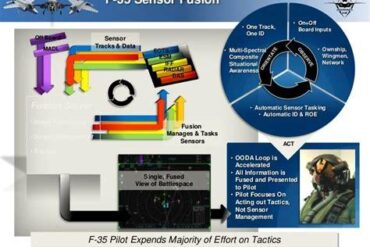
Unlike older fighters that force pilots to manually interpret multiple streams of radar and sensor data, the F-35 uses advanced sensor fusion technology to combine electronic warfare signals, infrared tracking, radar returns, and targeting information into a single coherent picture. Pilots no longer waste critical seconds sorting through fragmented battlefield data. The aircraft effectively acts as a flying intelligence center capable of understanding the combat environment in real time.
This capability proved particularly important during recent joint operations involving heavily defended airspace in the Middle East. F-35 formations reportedly escorted strike packages, identified threats, and relayed targeting information to allied systems while remaining difficult to detect. The aircraft’s stealth design dramatically reduces its radar cross-section, allowing it to penetrate sophisticated air defense networks that would threaten conventional fighters.
Another reason the F-35 inspires concern among adversaries is its role within network-centric warfare. The aircraft is not designed to fight alone. Instead, it operates as part of a larger digital ecosystem linking naval vessels, ground-based missile systems, drones, satellites, and allied aircraft. An F-35 detecting a threat can instantly transmit targeting data to other assets across the battlefield. This interconnected approach transforms the fighter into an airborne command node capable of coordinating combat operations across multiple domains.
The F-35’s fear factor also comes from unpredictability. Enemy forces may not know where the aircraft is operating, how many are present, or which systems are being monitored. By the time hostile radar systems identify unusual activity, the engagement may already be decided. In modern warfare, uncertainty itself has become a weapon.
Why The F-22 Raptor Still Dominates Air-To-Air Combat
Even with the rapid rise of the F-35, the F-22 Raptor remains the benchmark for air superiority fighters. Decades after entering service, it is still widely considered the deadliest air-to-air combat aircraft ever produced. Built specifically to destroy enemy fighters before they can respond, the F-22 combines stealth, speed, agility, and advanced radar systems in a way few aircraft can match.
The Raptor’s supercruise capability allows it to sustain supersonic speeds without using fuel-hungry afterburners. This gives the aircraft enormous tactical flexibility during interception missions and deep-penetration operations. Combined with its stealth profile, the F-22 can approach hostile formations at high speed while remaining exceptionally difficult to track.
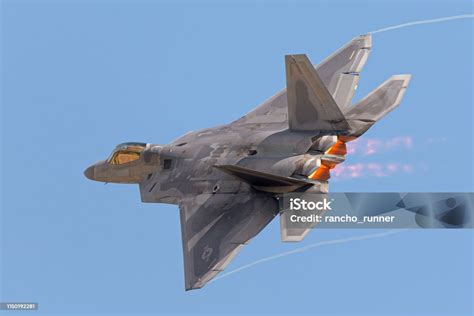
Its AN/APG-77 radar remains one of the most sophisticated airborne radar systems in existence. Designed to detect threats at long range while minimizing the fighter’s own electronic signature, the radar enables the F-22 to locate enemy aircraft before being discovered itself. In combat, first detection often means first shot, and first shot frequently means victory.
Pilots who train against the F-22 consistently describe engagements as deeply frustrating. In simulated battles, opposing aircraft are often eliminated without ever visually identifying the Raptor. That psychological advantage matters enormously during real-world operations. Fear alters pilot behavior, forces defensive tactics, and limits operational freedom.
Although the F-22 fleet is relatively small compared to the F-35 program, its strategic importance remains enormous. In any large-scale conflict involving technologically advanced adversaries, Raptors would likely spearhead the opening phase of air campaigns. Their mission would be straightforward but critical: destroy enemy fighters, establish air dominance, and create safe corridors for allied aircraft.
The aircraft’s reputation alone acts as a deterrent. Nations planning military operations must account for the possibility of encountering the F-22, and that reality influences strategic calculations long before combat begins.
China’s J-20 And The Expanding Challenge To Western Airpower
China’s rapid military aviation development has transformed the balance of power in the Indo-Pacific. At the center of this shift stands the Chengdu J-20 Mighty Dragon, a stealth fighter once underestimated by Western analysts but now recognized as a genuine peer competitor.
China currently operates more than 300 J-20 aircraft, making it the second-largest fifth-generation fleet in the world. The speed of this expansion signals Beijing’s determination to challenge American air dominance across the Pacific region.
The J-20 was designed primarily for long-range engagements. Its large airframe allows it to carry significant fuel reserves and advanced beyond-visual-range missiles, enabling operations far from Chinese territory. This range advantage is especially important in the Indo-Pacific, where vast distances define military planning.
Early criticism surrounding the J-20 focused heavily on engine reliability and thrust limitations. However, continuous upgrades have improved performance substantially, increasing confidence in the aircraft’s operational effectiveness. Combined with advanced sensors and stealth shaping, the J-20 has matured into a highly credible threat platform.
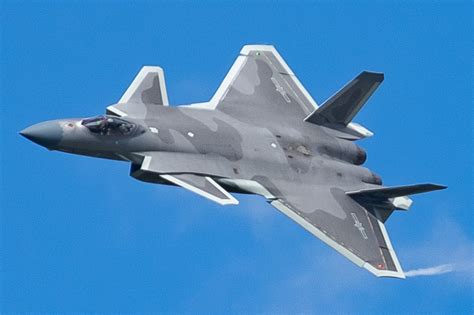
China’s ambitions extend beyond land-based aviation. The emergence of the Shenyang J-35 demonstrates a broader push toward modern naval airpower capable of projecting stealth capabilities far from the mainland. Recent electromagnetic catapult launches from the Type 003 aircraft carrier Fujian marked a major milestone in Chinese naval aviation development.
Unlike older ski-jump carrier systems, electromagnetic launch technology enables heavier aircraft takeoffs, improved sortie rates, and expanded mission flexibility. Integrating a stealth fighter like the J-35 into this system dramatically increases China’s ability to deploy fifth-generation airpower across contested maritime regions.
The J-35’s development matters because it narrows a technological gap long dominated by the United States Navy. Carrier-based stealth fighters provide operational reach that land-based aircraft alone cannot achieve. In future Indo-Pacific conflicts, the ability to launch low-observable strike fighters from mobile sea platforms could reshape regional military dynamics.
Together, the J-20 and J-35 illustrate China’s transition toward integrated multi-domain warfare. These aircraft are not isolated weapons platforms. They are components within a growing network of satellites, drones, naval forces, electronic warfare assets, and missile systems designed to complicate Western operations across the Pacific theater.
Russia’s Su-35 And Su-57 Remain Dangerous Combat Threats
Russia approaches air combat differently from the United States and China. Rather than relying exclusively on stealth, Russian doctrine often emphasizes layered integration between fighters, electronic warfare systems, and ground-based air defenses. This philosophy remains evident in both the Su-35 Super Flanker and the Su-57 Felon.
The Su-35 represents one of the most capable fourth-generation-plus fighters in active service. Equipped with thrust-vectoring engines, the aircraft possesses extraordinary maneuverability, particularly in close-range engagements. Its ability to perform aggressive post-stall maneuvers makes it exceptionally dangerous during dogfights.
However, the Su-35’s greatest strength may be its combat experience. Unlike some advanced fighters that have seen limited operational deployment, the Su-35 has participated extensively in real-world conflict environments, including operations connected to the war in Ukraine. Combat-tested aircraft provide militaries with invaluable data regarding survivability, missile effectiveness, pilot workload, and tactical performance.
The fighter’s powerful Irbis-E radar enables long-range target detection, while advanced air-to-air missiles allow engagements well beyond visual range. Although the aircraft lacks stealth characteristics comparable to Western fifth-generation fighters, its combination of sensor reach, missile capability, and maneuverability ensures it remains highly dangerous.
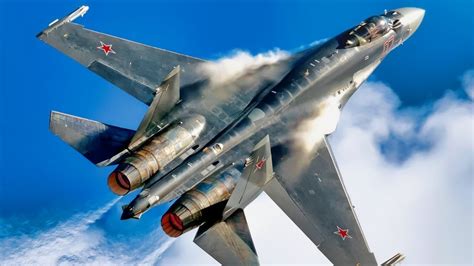
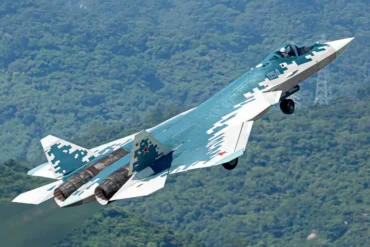
Russia’s more ambitious project, the Su-57, aims to bridge the gap between traditional Russian fighter doctrine and modern stealth warfare. The aircraft incorporates low-observable design features, advanced avionics, and sensor fusion technologies intended to compete with Western fifth-generation platforms.
The Su-57’s production numbers remain relatively limited, but the aircraft introduces important strategic concepts. Russian planners envision the fighter operating alongside unmanned systems such as the S-70 Okhotnik stealth drone, effectively functioning as a command platform for coordinated manned-unmanned operations.
This approach mirrors trends emerging in American sixth-generation development programs. Rather than focusing entirely on a single fighter’s capabilities, future combat systems increasingly emphasize collaborative networks involving drones, sensors, electronic warfare assets, and AI-supported targeting systems.
Even though Russia faces production and economic challenges, both the Su-35 and Su-57 continue to represent serious threats when integrated into layered defense structures. In contested environments supported by long-range surface-to-air missile systems and electronic warfare networks, these aircraft become significantly more dangerous than raw specifications alone might suggest.
The Advanced Fighters That Still Shape Modern Warfare
While fifth-generation stealth fighters dominate headlines, several advanced 4.5-generation aircraft remain essential components of modern air forces. Fighters such as the Eurofighter Typhoon, Dassault Rafale, and F-15EX Eagle II continue to deliver impressive combat capability when integrated into networked operations.
The Eurofighter Typhoon remains one of the world’s premier air superiority fighters. Designed for agility and high-performance interception missions, the aircraft combines advanced radar systems with exceptional maneuverability. NATO nations continue upgrading the Typhoon with improved sensors and weapons integration, ensuring its relevance against emerging threats.
France’s Dassault Rafale has built a strong reputation as a versatile multirole fighter capable of conducting air superiority missions, precision strikes, reconnaissance, and nuclear deterrence operations. Its operational success across multiple theaters demonstrates the continued value of adaptable combat platforms.
Meanwhile, the F-15EX Eagle II embraces a different philosophy entirely. Rather than emphasizing stealth, the aircraft focuses on overwhelming payload capacity. Often described as a “missile truck,” the F-15EX can carry massive quantities of air-to-air and air-to-ground weapons, supporting stealth aircraft operating closer to hostile defenses.
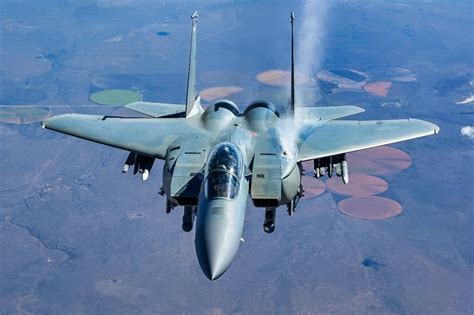
This evolving partnership between stealth fighters and heavily armed support aircraft reflects the changing structure of modern air combat. Stealth aircraft penetrate defenses and identify targets, while supporting fighters launch large-scale missile attacks from safer distances.
The continued relevance of these aircraft highlights an important reality: modern warfare is no longer about individual platforms operating independently. Success increasingly depends on how effectively aircraft integrate into larger combat ecosystems involving AWACS aircraft, drones, satellites, cyber operations, and electronic warfare systems.
Sixth-Generation Fighters And The Future Of Air Combat
The next revolution in military aviation is already underway. Sixth-generation fighter programs being developed by the United States, Europe, Japan, and other nations aim to move beyond even the impressive capabilities of today’s stealth aircraft.
Programs such as the American Next Generation Air Dominance (NGAD) initiative and Europe’s Future Combat Air System (FCAS) envision aircraft acting less like traditional fighters and more like airborne battle management systems. Artificial intelligence, autonomous drones, advanced networking, and machine-assisted decision-making will become central features of future combat operations.
These aircraft are expected to coordinate entire swarms of unmanned systems capable of reconnaissance, electronic attack, missile interception, and precision strike missions. Instead of one pilot controlling a single aircraft, future aviators may command multiple autonomous combat assets simultaneously.
The implications are enormous. Traditional dogfighting could become increasingly rare as long-range sensors, AI-assisted targeting, and unmanned systems dominate future battlefields. The side capable of processing information faster and distributing it more effectively will hold the decisive advantage.
Stealth alone will no longer guarantee survival. Future combat environments will depend on electronic warfare resilience, cyber protection, distributed sensing, and autonomous coordination between manned and unmanned platforms.
The most feared military aircraft of tomorrow may not even resemble conventional fighters as they exist today. They will likely function as command centers capable of orchestrating entire aerial ecosystems while remaining difficult to detect, disrupt, or destroy.
That transformation is already beginning. The F-35, F-22, J-20, and Su-57 are not merely advanced fighter jets. They are the first visible step into a new era where information dominance defines military power more decisively than speed, altitude, or maneuverability ever could.