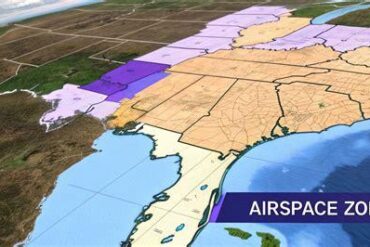
The Federal Aviation Administration has abruptly imposed a 10-day airspace shutdown over El Paso, Texas, citing serious security concerns and designating the affected zone as National Defense Airspace. The restriction, which also extends into neighboring Santa Teresa, New Mexico, halts virtually all civilian flight activity in and out of the region, disrupting operations at one of the busiest airports in the American Southwest.
The temporary flight restriction (TFR) took effect at 11:30 pm Mountain Time on February 10 and will remain in place through late February 20. During this period, commercial flights, cargo operations, and general aviation movements are prohibited from operating within the designated airspace. The FAA’s language leaves little ambiguity about the gravity of the situation: aircraft that fail to comply may be intercepted, detained, and potentially met with deadly force if deemed an imminent threat.
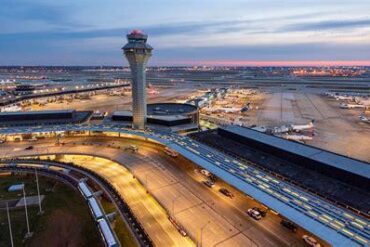
For a metropolitan area ranked as the 23rd-largest city in the United States, the implications are immediate and far-reaching. El Paso International Airport (ELP) handled more than four million passengers in 2024, making it a crucial transportation artery for both regional and national connectivity.

A Sudden And Sweeping Airspace Lockdown
The FAA’s corresponding NOTAM (Notice to Air Missions) formally classifies the restricted zone as National Defense Airspace, a designation rarely applied outside of extraordinary circumstances. Such classification signals heightened federal sensitivity and authorizes expanded enforcement protocols.
According to the NOTAM, pilots who do not strictly adhere to the restriction “may be intercepted, detained and interviewed by law enforcement/security personnel.” The document further warns that the US Government may use deadly force against airborne aircraft if they are determined to pose an imminent security threat. This phrasing underscores the severity of the action and reflects a zero-tolerance posture toward non-compliance.
The closure is comprehensive. No passenger services are permitted. No cargo aircraft may depart or arrive. General aviation pilots are equally barred from operating within the defined airspace. Unlike limited TFRs often carved out for VIP travel or temporary security events, this measure appears absolute, with no publicized exemptions.
Online tracking platforms such as FlightAware initially registered only minimal cancellations in the immediate aftermath. However, as airlines adjust schedules to accommodate the prolonged shutdown, disruptions are expected to escalate sharply in the coming days.
Geographic Scope: Beyond El Paso’s Runways
The restricted airspace does not stop at the perimeter of El Paso International Airport. Local reporting indicates that the closure extends into portions of southern New Mexico, including airspace near Santa Teresa. While the region is also home to Doña Ana County International Jetport, that facility does not currently handle scheduled commercial passenger flights, offering no alternative relief for stranded travelers.
This cross-state airspace designation reinforces the seriousness of the federal response. Airspace restrictions of this breadth are typically reserved for situations involving national security, intelligence activity, or immediate threat assessments. Though officials have not publicly detailed the underlying security trigger, the sweeping geographic reach suggests that the concern extends beyond routine operational risk.
Airlines Facing Operational Turbulence
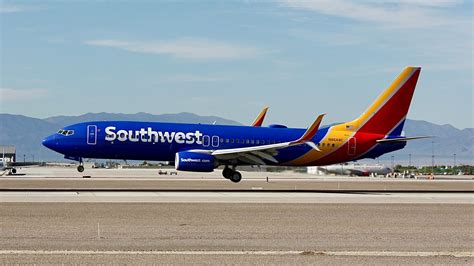
El Paso International Airport functions as a strategic node for several major US carriers. The largest operator at ELP is Southwest Airlines, which accounts for roughly 45% of scheduled departures this month. Cirium scheduling data shows 592 out of 1,314 planned February departures assigned to Southwest, with Dallas Love Field (DAL) serving as its most prominent route.
American Airlines, United Airlines, and Delta Air Lines all maintain a presence at the airport. American has scheduled 368 departures this month, all operated by regional partners. United has penciled in 223 departures, utilizing a mix of regional and mainline aircraft, while Delta has scheduled 56 mainline-operated flights. Frontier Airlines and Alaska Airlines round out the roster with 50 and 25 scheduled departures respectively.
With the airspace closure now in force, these carriers face the logistical challenge of repositioning aircraft, rebooking passengers, and adjusting crew assignments. Airlines typically rely on tightly coordinated fleet rotations, and a sudden 10-day shutdown disrupts not only local traffic but network-wide scheduling efficiency.
Passengers have been urged to contact their airlines directly for updated information. While some flights may initially remain listed as scheduled, operational realities will likely compel widespread cancellations or rerouting strategies.
National Defense Airspace: What It Means
The designation of National Defense Airspace transforms the regulatory framework governing the affected zone. Unlike standard temporary restrictions, this classification implies coordination between the FAA and broader federal security apparatus, potentially including the Department of Defense.
Under such restrictions, unauthorized aircraft may be subject to military interception procedures, which can include visual identification, radio contact attempts, escort maneuvers, and escalation if necessary. The explicit mention of deadly force, while rarely exercised, serves as a deterrent and emphasizes the seriousness of compliance.
Historically, similar airspace controls have been implemented in response to credible threats or intelligence assessments indicating heightened vulnerability. The absence of detailed public explanation is not unusual in such scenarios, as operational security often limits disclosure.
Economic And Regional Impact
El Paso’s geographic location makes it a critical gateway between Texas, New Mexico, and northern Mexico. The airport supports business travel, military movement connected to nearby installations, cross-border commerce, and tourism. A 10-day cessation of air operations introduces ripple effects across hospitality, logistics, and regional supply chains.
Hotels, rental car agencies, and local businesses dependent on airport traffic may see abrupt declines in activity. Cargo restrictions can further complicate time-sensitive shipments, particularly in sectors reliant on air freight for rapid delivery.
Although the restriction is temporary, even short-term closures can generate lasting operational backlogs. Airlines must absorb costs associated with passenger reaccommodation, fuel repositioning, and crew reassignment. The cumulative financial impact may extend well beyond the immediate shutdown window.
Awaiting Federal Clarification
The City of El Paso has stated that it is “pending additional guidance” from federal authorities. For now, airlines and passengers remain in a holding pattern, awaiting clearer signals about whether the restriction will remain precisely 10 days or be subject to adjustment.
The FAA’s decisive action underscores the primacy of security in American airspace governance. While commercial disruption is significant, the federal stance indicates that the underlying concern is considered sufficiently serious to warrant extraordinary measures.
As February 20 approaches, the aviation industry will watch closely for signs of reopening. Until then, El Paso’s skies remain under one of the most stringent airspace controls currently in effect in the United States.