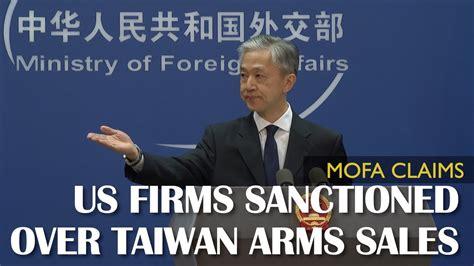
The geopolitical friction between China and the United States has once again intensified, as Beijing responded with a new wave of sanctions against 20 American defense companies and 10 top executives. This move comes in direct reaction to Washington’s historic $11.1 billion arms package for Taiwan—a deal Taipei hailed as the largest-ever military agreement between the island and the United States. While the sanctions are more symbolic than practical, they reflect China’s hardened posture over the Taiwan issue and its intent to project strength in the escalating great-power rivalry.
$11.1 Billion Arms Deal Triggers Strategic Flashpoint
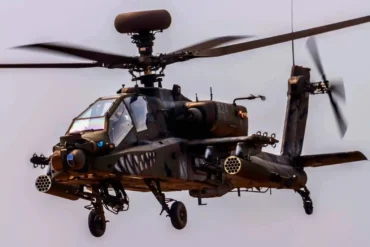
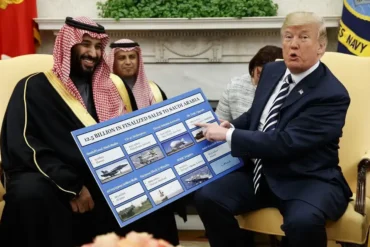
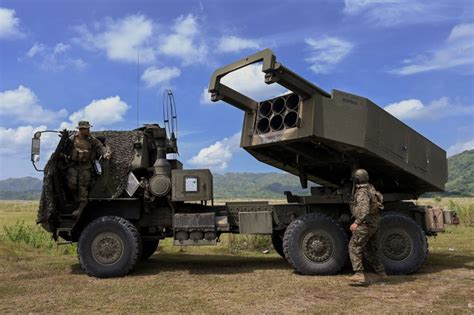
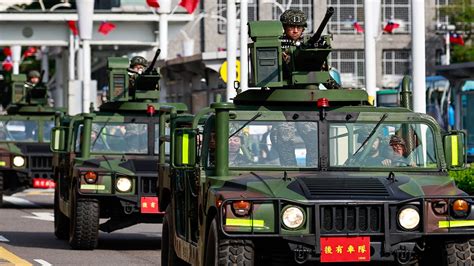
Taiwan’s Ministry of National Defense recently announced that the United States, under the Trump administration, has agreed to proceed with a record $11.1 billion weapons package. The military hardware included in this deal is substantial: HIMARS mobile rocket launchers, Javelin and TOW anti-tank missiles, self-propelled howitzers, combat and surveillance drones, and extensive support for existing military systems.
This weapons cache, described as “Ukraine-tested,” is not just a symbolic gesture of support but a tangible upgrade to Taiwan’s defense capabilities. The arms sale has provoked sharp condemnation from Beijing, with the Chinese Foreign Ministry stating that the deal “seriously violates the one-China principle and the three China-US joint communiques.”
Beijing’s Retaliation: Sanctions as a Political Instrument
In a swift response, China unveiled a comprehensive sanctions list targeting 20 U.S. defense contractors and 10 senior executives. This includes well-known firms such as Boeing Defense, Northrop Grumman, L3Harris Maritime Services, and Red Cat Holdings, among others. These sanctions involve:
- Freezing of movable and immovable assets within China.
- Complete bans on Chinese companies and individuals doing business with the sanctioned firms.
- Prohibitions on all exports and imports involving the listed companies.
Named executives such as Palmer Luckey, founder of Anduril Industries, and John Cuomo, CEO of VSE Corporation, are now barred from entering mainland China, Hong Kong, or Macau. These high-profile travel bans underline the political nature of the sanctions, more than their economic effectiveness.
Military Pressure Mounts as Reunification Deadline Looms
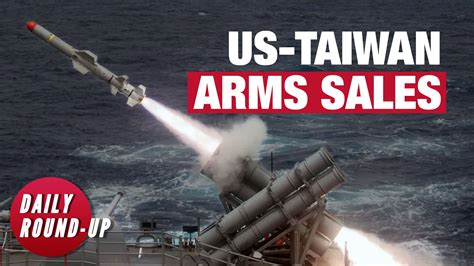
China’s response to the arms deal is not limited to economic measures. Military intimidation has also ramped up. Beijing has increased People’s Liberation Army (PLA) drills around Taiwan, making no secret of its ambition to reunify Taiwan with the mainland—by force if necessary.
A recent Pentagon report suggests that China aims to have the PLA achieve the capability to secure a “strategic decisive victory” over Taiwan by 2027. The document emphasizes that the PLA is refining “multiple military options” to force reunification, marking a potential countdown to conflict.
Are These Sanctions Effective? A Reality Check
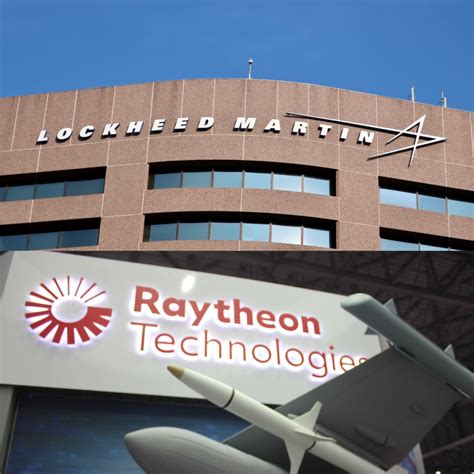
Despite their dramatic headlines, these sanctions lack teeth in disrupting American defense operations. The reality is that companies like Lockheed Martin, Raytheon, and Northrop Grumman have little to no commercial dealings with China. They do not sell military hardware to the Chinese market, and existing U.S. laws tightly restrict such exports.
The banned executives are also unlikely to have personal or professional ties with Chinese entities. Denial of visas, while symbolically harsh, has no measurable impact on their daily operations. Furthermore, most of these companies have no physical or financial footprint in China.
This cycle of sanctions has also played out before. Since 2023, China has imposed at least eight rounds of sanctions in response to arms sales to Taiwan. In February 2023, Lockheed Martin and Raytheon were sanctioned. In 2024, China repeated the pattern four times, including a December crackdown on 13 U.S. firms. The recurrence underscores one truth: China’s sanctions are ritualistic rather than transformative.
Strategic Messaging Over Economic Leverage
While lacking economic leverage, the sanctions serve other strategic goals. Firstly, they act as diplomatic signaling. China frames U.S. arms sales to Taiwan as blatant interference in its internal affairs, casting itself as the guardian of national sovereignty and territorial integrity.
Secondly, the sanctions are propaganda tools, aimed at internal audiences. By targeting U.S. defense firms, Beijing reinforces the narrative that it is willing and able to push back against Washington’s “hegemonic behavior.” This rhetoric resonates with both mainland citizens and Taiwanese observers, demonstrating China’s willingness to escalate tensions to safeguard its core interests.
Thirdly, Beijing uses these sanctions as deterrent signaling to other nations. While the U.S. may be unfazed by these symbolic actions, smaller countries considering arms deals or strategic alliances with Taiwan may think twice before provoking China.
The One-China Principle: A Flashpoint in Global Diplomacy
The heart of the dispute lies in the One-China principle, under which Beijing insists that Taiwan is an inseparable part of its territory. The United States officially acknowledges this stance but continues to support Taiwan under the Taiwan Relations Act, which authorizes arms sales for self-defense purposes.
This dual-track diplomacy has increasingly agitated Beijing, which views U.S. actions as a betrayal of diplomatic commitments made in the 1972, 1979, and 1982 U.S.-China joint communiqués. China’s frequent invocation of these agreements in sanction announcements signals an ongoing effort to frame the Taiwan issue within an internationally recognized legal context.
Taiwan: The Unspoken Pivot of U.S.-China Relations
At the center of this storm is Taiwan—a democratic island that Beijing views as a breakaway province and Washington sees as a critical strategic partner in the Indo-Pacific. The island’s geopolitical significance is amplified by its advanced semiconductor industry and strategic location in East Asian shipping lanes.
For the United States, defending Taiwan is increasingly seen not only as a matter of honor but also as a linchpin of regional security. For China, reclaiming Taiwan is central to Xi Jinping’s national rejuvenation agenda. This zero-sum equation means every military sale, every diplomatic gesture, and every executive sanction brings the two superpowers closer to confrontation.
Conclusion: Sanctions Without Substance, Messages With Meaning
China’s latest sanctions package, targeting an expanded list of U.S. defense companies and executives, may not disrupt any real business activity—but they carry symbolic weight. These sanctions function as diplomatic and strategic posturing, enabling China to reaffirm its red lines on Taiwan, signal defiance to foreign actors, and stoke nationalist sentiment at home.
As the 2027 military unification deadline inches closer and Taiwan becomes ever more entrenched as a U.S. security partner, the strategic triangle between Beijing, Taipei, and Washington will remain fraught. These sanctions may not change U.S. policy, but they reaffirm the high stakes involved in one of the world’s most volatile flashpoints.