Russia’s deployment of the R-77M air-to-air missile on its frontline Su-35 and stealth Su-57 fighters has added a new dimension to the regional arms race in Asia. Featuring extended range, superior target-tracking, and enhanced resistance to electronic warfare, the R-77M is seen as a technological leap aimed at neutralizing adversary systems like China’s PL-15 missile. The move not only intensifies Moscow’s position in the Ukraine war but also sends strategic ripples across the Indo-Pacific — particularly towards India, which now finds itself at a critical crossroads.
Russia Unleashes the R-77M: Next-Gen Air Dominance
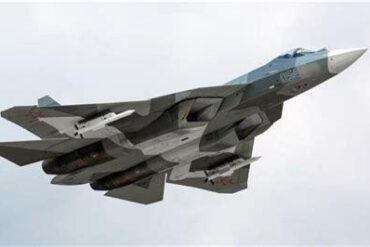
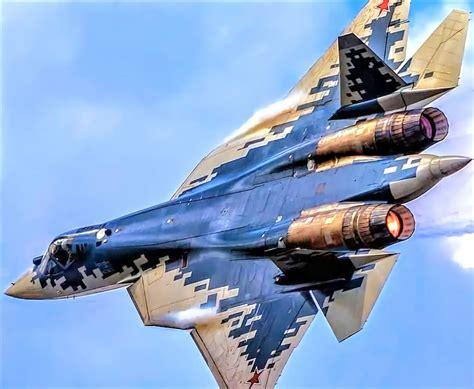
The R-77M, now combat-proven over Ukraine, represents a major leap from its predecessor. Outfitted with an active radar seeker, dual-pulse motor, and robust anti-jamming capabilities, this missile maintains target lock even under aggressive electronic countermeasures. Russia has reportedly begun full integration of the R-77M across its air force’s elite aircraft, making it standard for the Su-35S Flanker and the fifth-generation Su-57 Felon.
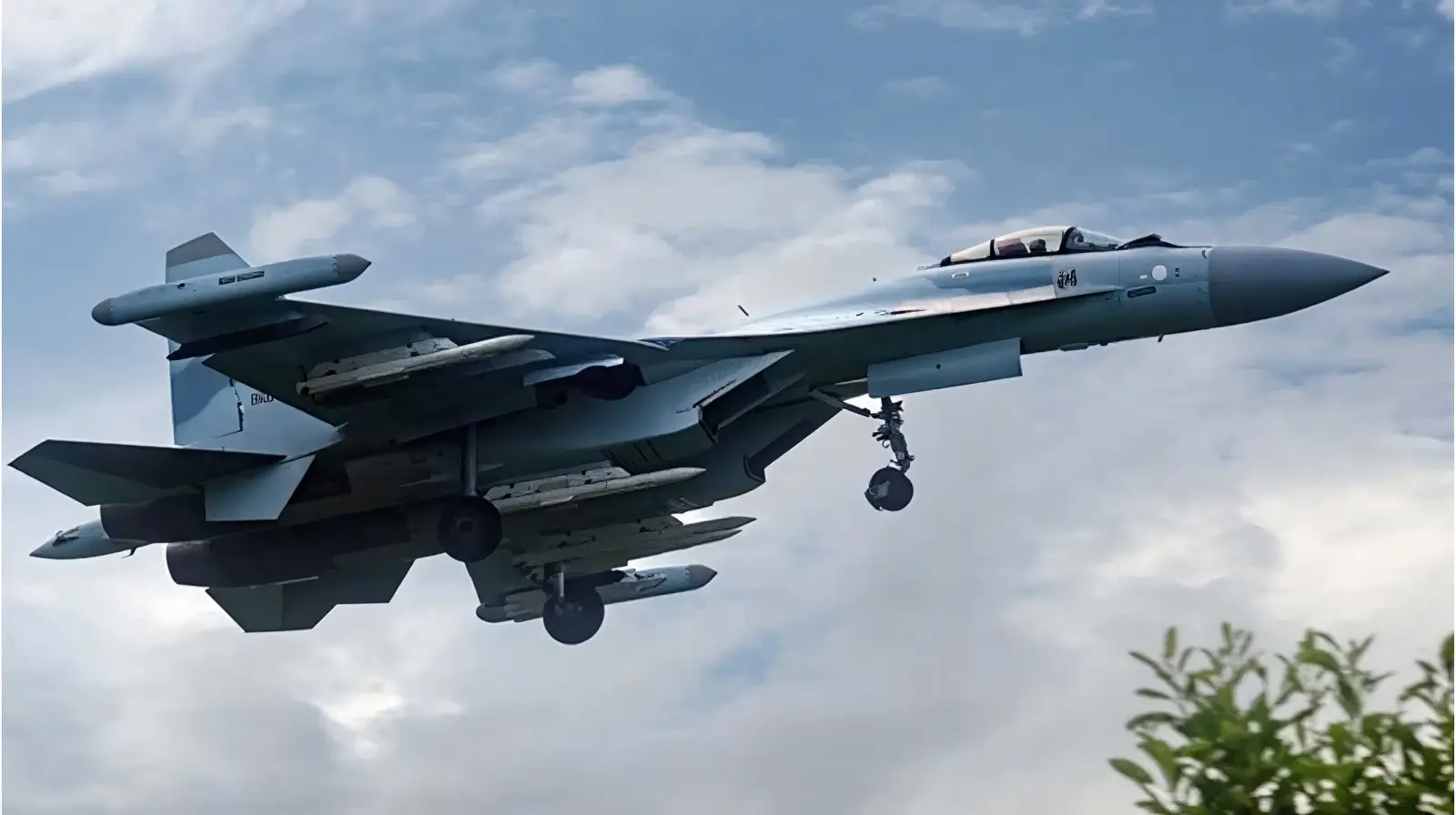
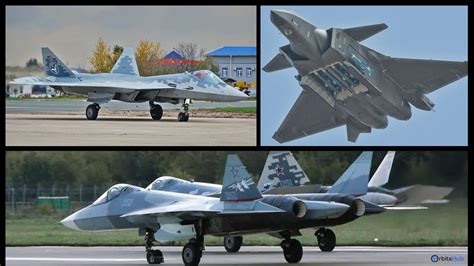
The missile’s internal carriage within the Su-57’s weapons bay is especially critical. It ensures the stealth fighter maintains its low radar cross-section, giving it a strategic edge in contested airspace. Unlike legacy munitions that betray an aircraft’s radar profile, the R-77M enhances both survivability and lethality.
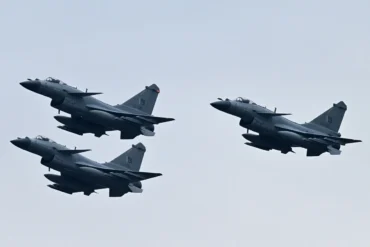
The older R-77 was already an effective medium-range missile used widely by Russia and India. However, the R-77M stretches its reach from 110 km to 190 km, potentially outmatching any comparable system in the region. By comparison, the Chinese PL-15, currently deployed on Pakistan’s J-10C and JF-17, claims a range of 200–300 km — a figure many Western analysts dispute, estimating it at 145 km.
India’s Air Combat Posture Faces a Turning Point
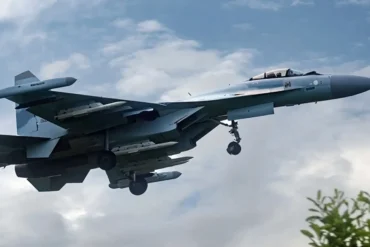
India, already a user of the original R-77 on its Sukhoi-30MKI fleet, is now being courted by Moscow to adopt the Su-35, the Su-57, and the R-77M. The decision comes at a crucial moment as India modernizes its air force amid rising tensions with both Pakistan and China. Russia’s pitch is being seen as a strategic chess move ahead of President Vladimir Putin’s expected visit to New Delhi later this year.
Indian Air Force (IAF) planners are fully aware that the battlefield has evolved. While India’s 260-strong Su-30MKI fleet forms the backbone of its air dominance, its air-to-air missile suite lags behind in range and sophistication. The R-77M could close that gap dramatically, particularly against threats from Pakistan’s J-10C and China’s stealth-capable J-20.
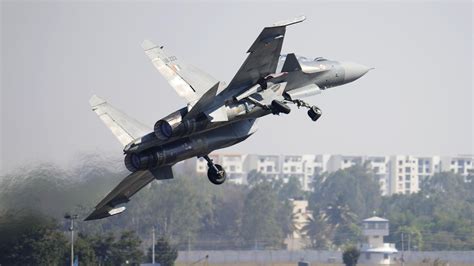
The ability to neutralize threats before they launch their own weapons — known as ‘first-look, first-shot, first-kill’ capability — is essential in modern aerial warfare. The R-77M’s extended reach and precision-guided strike profile bolster this tactical doctrine. It allows Indian pilots to engage hostiles while remaining outside their kill zones, shifting the equation in India’s favor.
The Su-35 and Su-57: More Than Just a Platform Offer
Russia’s proposal includes not only missiles but also aircraft. The Su-35, a supermaneuverable, twin-engine multirole fighter, comes with AL-41F1S engines, an advanced IRBIS-E radar, and upgraded electronic warfare suites. The Su-57, meanwhile, is positioned as Russia’s stealth answer to the American F-22 and Chinese J-20. India had once been a part of the joint Fifth Generation Fighter Aircraft (FGFA) program but exited due to dissatisfaction with the Su-57’s stealth features and radar performance.
However, the Su-57 has since undergone considerable upgrades. It now reportedly features improved low observability, new generation N036 Belka radar, and compatibility with high-speed missiles like the R-77M and future Kinzhal-type hypersonic weapons. Integrating these platforms into the IAF would allow India to leapfrog its regional competitors, at least in specific areas of air dominance.
Counterweights and Indigenous Ambitions
Despite the allure, there are compelling reasons India might hesitate. The Tejas Mk2 and the upcoming Advanced Medium Combat Aircraft (AMCA) are part of India’s ambitious drive for self-reliance in defense technology. Accepting Russian platforms could divert resources and reduce momentum in these indigenous programs.
Moreover, India’s recent defense partnerships with the United States, including co-development agreements and engine transfers for the Tejas Mk2 (GE-404 engines), signal a shift away from heavy Russian dependence. Diversification is part of a broader strategy to avoid overreliance on any one supplier, especially considering past delays in spare parts and logistics from Moscow.
Also, with European Meteor missiles already available via the Rafale fleet, some within the IAF argue that there is no urgency to adopt another medium-to-long-range air-to-air missile system — especially from a country currently under international sanctions and scrutiny.
R-77M vs PL-15: The Asia-Pacific Missile Race
The showdown between the R-77M and the PL-15 is more than technical; it’s strategic. The PL-15 is China’s premier beyond-visual-range missile and is credited with giving Beijing an edge in the skies over the South and East China Seas. With its claimed dual-pulse motor and AESA radar seeker, the PL-15 is no slouch — but the R-77M introduces a combat-tested alternative backed by real-world performance.
Crucially, the R-77M is available today. It is being used in live conflict situations over Ukraine, offering critical feedback and evolutionary refinements — something the PL-15 lacks due to its limited operational deployment.
Should India choose to procure and integrate the R-77M, it could dramatically change the air war calculus in the region. With a wider engagement envelope, better ECM immunity, and stealth integration capabilities, the R-77M is not just a missile but a strategic multiplier.
Strategic Timing: Putin’s Visit and India’s Dilemma
All eyes now turn to Putin’s upcoming visit to India, expected to include defense cooperation at the top of the agenda. The timing is critical. India is currently recalibrating its defense procurement strategy in light of budgetary constraints, geopolitical realignments, and a stronger push for ‘Make in India.’ Russia’s package deal — possibly combining Su-35s, Su-57s, and the R-77M — may be tempting, especially if offered with localized assembly or technology transfer.
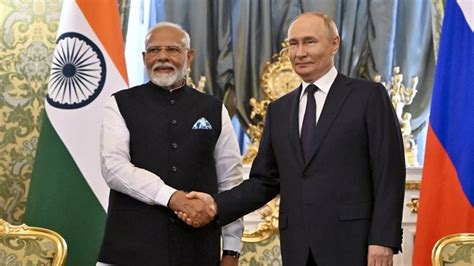
However, any procurement would need to be carefully weighed against operational doctrine, logistical sustainability, and long-term strategic autonomy. India must also consider the implications for interoperability with its Western partners and future multilateral engagements.
Final Word: A Defining Choice Looms
The emergence of the R-77M missile system as a formidable answer to China’s PL-15 adds an explosive new layer to South Asia’s aerial dynamics. Russia’s decision to arm its Su-57 and Su-35 fighters with this missile reaffirms its intent to assert technological dominance, not only in Ukraine but globally.
For India, the offer is not merely transactional. It is a test of vision — whether to double down on indigenous platforms and Western cooperation, or to seize an opportunity for immediate capability enhancement through a trusted, if geopolitically complex, supplier.
The skies are changing. The missiles are faster. The stakes are higher. In this new era of long-range kill chains and stealth-first doctrine, India must choose its trajectory wisely.