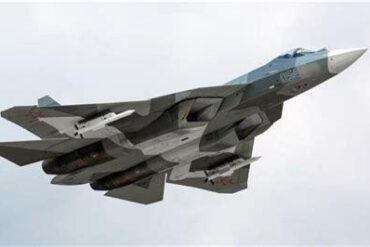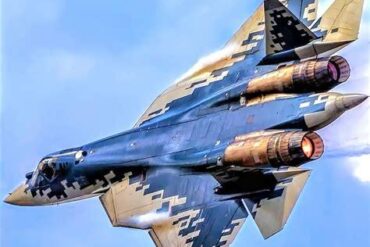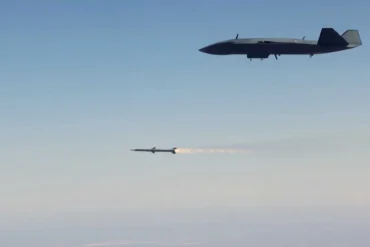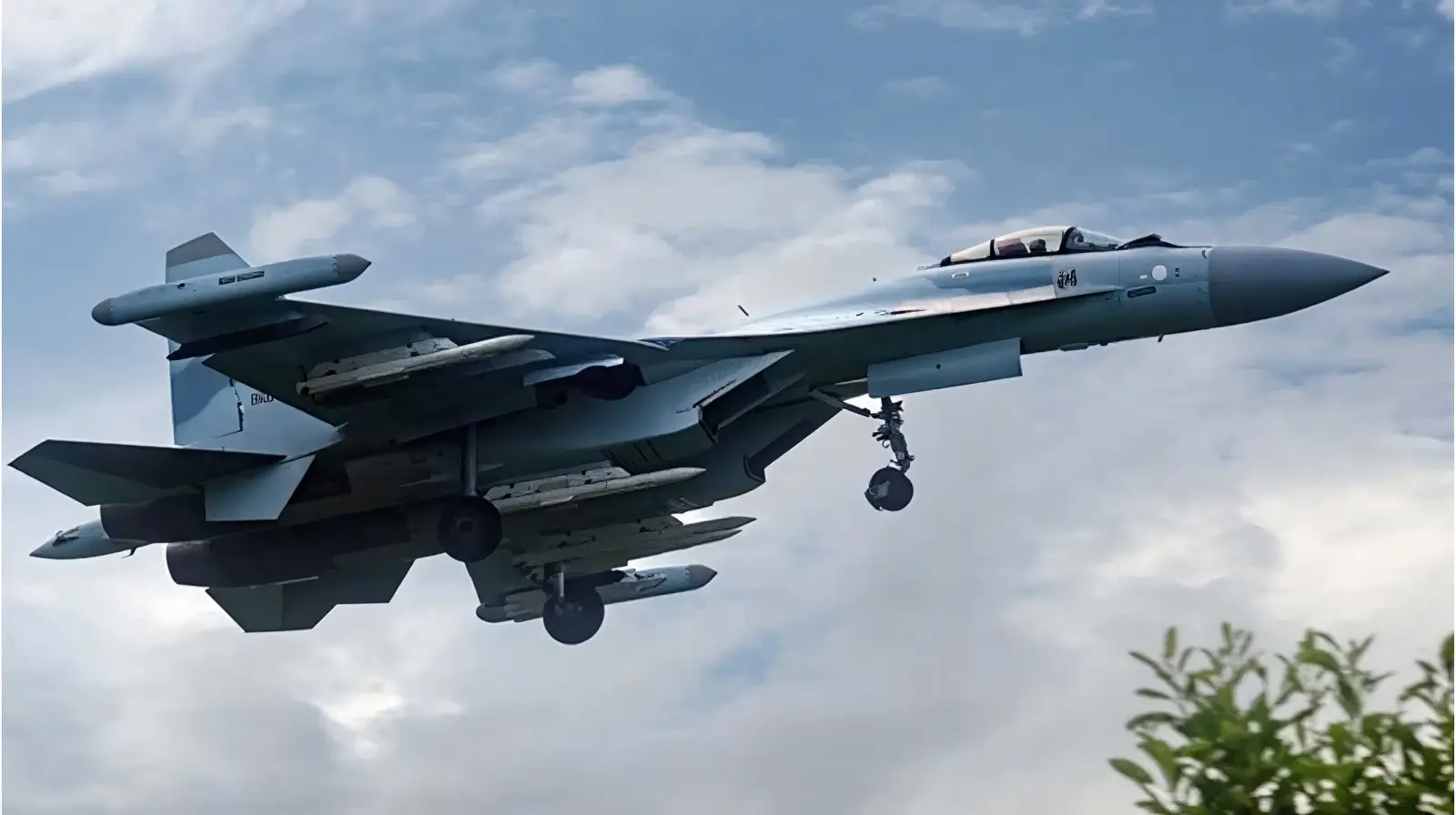
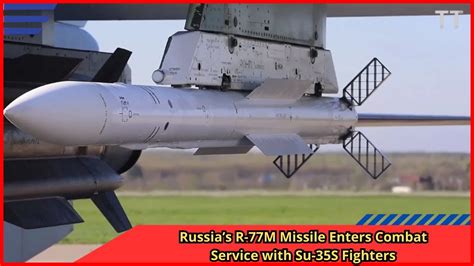
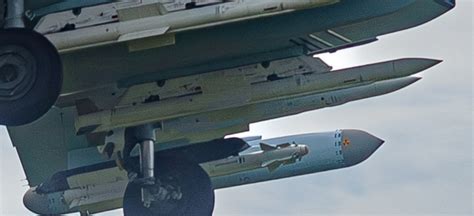
On July 24, 2025, the Russian Air Force officially demonstrated its operational use of the R-77M air-to-air missile during active combat missions in Ukraine. This advanced weapon system, also referred to as K-77M or Izdelie 180, was spotted mounted under the wing of a Su-35S fighter, confirming that Russia has moved from trials to frontline deployment. This deployment marks a critical leap in Russia’s air-to-air combat capabilities, signaling a shift in the aerial balance over Ukrainian skies.
R-77M: A Complete Overhaul of the R-77 Missile Family
The R-77M is not a minor upgrade but a comprehensive redesign of the original R-77 missile, which first entered service in the 1990s. Developed by the Vympel Design Bureau under the Tactical Missiles Corporation, this missile was specifically crafted to meet the requirements of fifth-generation fighters like the Su-57 while maintaining compatibility with modernized fourth-generation aircraft such as the Su-35S and Su-30SM2. Unlike its predecessors, the R-77M ditches the lattice fin control system—long criticized for unreliability and radar signature issues—in favor of cropped cruciform stabilizers. This modification reduces drag, enhances stealth properties, and allows for internal carriage within the Su-57’s weapons bays.
Advanced Propulsion and Extended Engagement Range
One of the R-77M’s most significant enhancements is its dual-pulse solid-fuel rocket motor, replacing the single-pulse engines of earlier models. This dual-pulse configuration provides controlled thrust management, extending range and sustaining speed during the terminal phase of engagement. Russian sources claim the missile can reach 190 kilometers against high-altitude targets, though real-world performance depends on launch altitude, aircraft speed, and trajectory.
The missile’s aerodynamic design incorporates a lift-generating fuselage and low-chord wings, allowing for greater maneuverability at high speeds. It reportedly achieves sustained speeds of 3,500 km/h and peak speeds of up to 5,100 km/h, with the ability to intercept targets at altitudes as high as 30,000 meters while withstanding 25–27 Gs of overload.
Advanced Seeker and Guidance Systems
The R-77M is equipped with the 9B-1348M active electronically scanned array (AESA) radar seeker, developed by the Agat Research Institute. This seeker expands the missile’s field of view, enabling rapid target acquisition even against maneuvering opponents. Additionally, some R-77M variants reportedly employ hybrid guidance modes—combining active, passive, and semi-active homing—allowing them to leverage external radar sources such as the N011M Bars-R, N035 Irbis-E, and N036 Belka systems for cooperative engagements.
This guidance sophistication not only enhances resistance to electronic countermeasures but also allows the missile to track and engage radar-emitting sources in passive mode, making it highly effective in suppression of enemy air defenses (SEAD) roles.
Compatibility with Russian Combat Aircraft
The R-77M’s design ensures compatibility across multiple platforms, including:
- Su-35S (seen operationally carrying the missile)
- Su-30SM2
- Su-57 (optimized for internal bay carriage)
- MiG-31BM
- Potential future integration with the Su-75 Checkmate
Its deployment on the Su-35S represents a notable development in Russia’s ability to maintain high-altitude patrols and conduct long-range standoff engagements, effectively threatening Ukrainian aircraft such as MiG-29s and even incoming Western-supplied F-16s.
Implications for the Ukraine Conflict
The confirmed use of the R-77M significantly complicates Ukrainian Air Force operations. Ukrainian sources have already reported missile debris matching the R-77M’s configuration, validating Russian claims of its battlefield use. With a range nearly double that of earlier R-77 variants, Ukrainian MiG-29s and Su-27s—lacking comparable standoff missile technology—face heightened risk. The missile’s enhanced seeker also poses challenges to Ukrainian electronic warfare systems, demanding upgrades to jamming and radar countermeasure capabilities.
Western defense analysts, such as Douglas Barrie of the International Institute for Strategic Studies, have described the R-77M as a “significant leap forward” for Russian aerial combat capabilities. Meanwhile, the U.S. Defense Intelligence Agency has noted that such advancements, combined with Russia’s reported research into nuclear-tipped air-to-air weapons, underline Moscow’s commitment to maintaining air dominance despite Western support for Ukraine.
Comparison to Western Missile Systems
While the R-77M does not yet match the MBDA Meteor—a ramjet-powered missile with no-escape zones exceeding 100 km—it brings Russia closer to this benchmark. Furthermore, reports suggest that a future variant, known as the R-77ME (Izdeliye 180-PD), could incorporate ramjet propulsion for Meteor-level performance, though this has not been confirmed in active service.
The R-77M’s blend of range, speed, and advanced guidance positions it as one of the most capable beyond-visual-range (BVR) weapons in the Russian arsenal, reducing the engagement advantage Western fighters have long enjoyed.
Strategic Impact and Future Outlook
The operational deployment of the R-77M represents more than just an incremental capability improvement—it reflects a strategic shift in Russia’s air-to-air doctrine. By expanding the effective engagement range of its fighter fleet, Moscow strengthens its ability to control contested airspace over Ukraine and project aerial dominance in future conflicts.
Analysts predict that the integration of R-77M with next-generation aircraft like the Su-75 and potential fielding of the ramjet-powered R-77ME could reshape regional air combat dynamics well into the next decade. Additionally, Russian sources claim the missile may be capable of intercepting cruise missiles and even enemy air-to-air missiles, expanding its utility into defensive counter-air roles.
As the Ukraine war evolves, the R-77M’s presence underscores Russia’s commitment to leveraging long-range precision weaponry to outmatch NATO-supplied platforms. Its impact on Ukrainian air operations, especially with the anticipated arrival of Western F-16AM and Mirage 2000-5F fighters, will likely remain a focal point in the aerial dimension of this conflict.
Conclusion
The R-77M air-to-air missile represents a critical evolution in Russia’s aerial warfare capabilities, combining extended range, advanced seeker technology, and multi-platform compatibility. Its confirmed operational use over Ukraine highlights Moscow’s push to maintain air superiority in a highly contested battlespace. As the missile continues to enter frontline service and potentially evolves into more advanced variants, it will remain a cornerstone of Russia’s air combat strategy through the remainder of the decade.