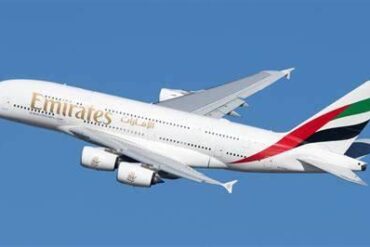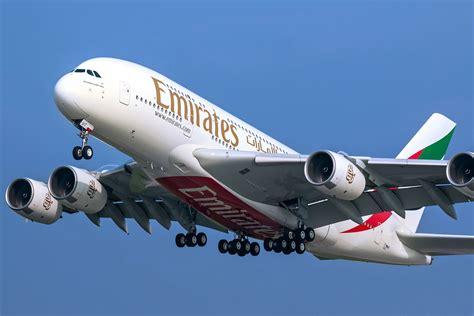
Emirates has made one of the boldest fleet decisions in modern aviation by purchasing 29 Airbus A380 superjumbos outright during the most profitable financial year in its history. While much of the airline industry has moved away from four-engine giants in favor of smaller and more fuel-efficient twinjets, the Dubai-based carrier is reinforcing its commitment to the world’s largest passenger aircraft with remarkable confidence.
The move came during Emirates’ 2025-26 financial year, when the airline posted a staggering $6.2 billion profit before tax, cementing its position as the world’s most profitable airline for the second consecutive year. Instead of retreating amid global uncertainty and regional instability, Emirates used its immense cash reserves to secure ownership of aircraft that were previously leased, ensuring the A380 remains central to its strategy well into the next decade.
For Emirates, this was not simply an accounting exercise. It was a strategic declaration that the Airbus A380 still has a future in high-density global aviation when operated at scale and supported by the right network.
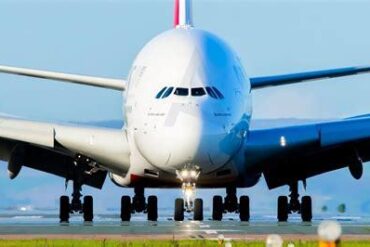
The airline already operates the world’s largest A380 fleet, with more than 90 aircraft active and dozens more stored or reserved for spare parts support. By transitioning leased jets into owned assets, Emirates gains greater operational flexibility while significantly reducing long-term leasing costs.
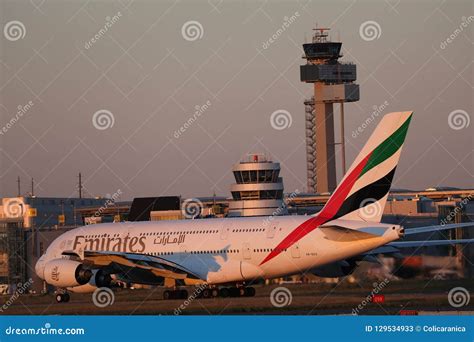
Emirates Bought 29 Airbus A380s In A Single Year
According to the airline’s annual report, Emirates acquired 29 Airbus A380s and five Boeing 777 aircraft as their lease agreements expired. Rather than returning the aircraft to leasing companies, the carrier exercised its financial strength to absorb the jets directly into its owned fleet.
The decision reflects the unique economics of Emirates’ business model. Few airlines possess the route structure, passenger demand, and hub capacity necessary to maximize the A380’s potential. Emirates, however, built much of its long-haul identity around the aircraft. At Dubai International Airport, where slot availability remains constrained and demand continues to surge, the ability to transport more than 500 passengers on a single flight remains enormously valuable.
Although Emirates did not disclose the exact purchase price of all 29 aircraft, the airline revealed that it invested approximately $4.9 billion across aircraft, infrastructure, equipment, and technology during the fiscal year. Earlier deals suggest the airline paid roughly $45 million per A380, an extraordinary contrast to the aircraft’s original list price of over $400 million during its production years.
That sharp depreciation reflects broader industry skepticism toward the superjumbo. Yet Emirates sees opportunity where others see obsolescence. As airlines retired and dismantled their A380 fleets after the pandemic, Emirates quietly expanded its control over the remaining viable airframes and spare parts ecosystem.
Why Emirates Refuses To Give Up On The Superjumbo
The Airbus A380 officially ended production in 2021 after only 251 aircraft were built. Most global airlines concluded that the aircraft was too large, too expensive, and too inflexible for modern travel patterns. Air France retired its fleet early. Lufthansa temporarily grounded many of its jets. Thai Airways, Malaysia Airlines, and others struggled to justify operations.
Emirates went in the opposite direction.
President Sir Tim Clark has repeatedly argued that the A380 remains unmatched on trunk routes connecting major global hubs. For Emirates, the aircraft enables massive passenger throughput while delivering a premium onboard experience that smaller aircraft struggle to replicate.
Features such as the onboard shower spa, upper-deck lounge bar, expansive premium cabins, and quieter passenger environment transformed the A380 into a flagship product synonymous with Emirates itself. The airline has invested billions in maintaining and modernizing these aircraft rather than replacing them prematurely.
The carrier’s enormous retrofit program illustrates that commitment clearly. Emirates plans to refurbish 215 aircraft, including A380s and Boeing 777s, equipping them with refreshed interiors and expanded premium economy cabins. So far, 91 aircraft have completed the overhaul process.
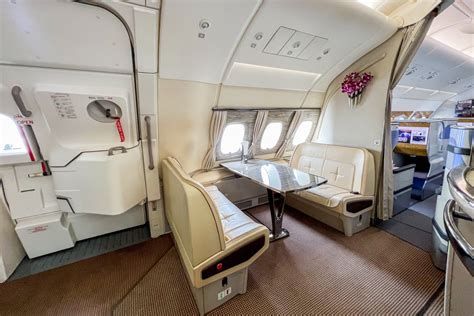
This modernization effort is not cosmetic. It is designed to extend aircraft service lives into the 2040s while keeping passenger experience competitive against newer aircraft types.
Spare Parts Scarcity Is Changing The A380 Market
As global A380 fleets shrink, spare parts availability has become increasingly important. More than 30 Airbus A380s have already been scrapped worldwide, representing over 12% of all aircraft ever produced. Engines, landing gear, avionics components, and structural parts are becoming more valuable as the active fleet contracts.
Emirates anticipated this challenge years ago.
Several grounded A380s within its fleet are now expected to serve primarily as donor aircraft for spare parts support. Owning additional airframes outright provides Emirates with strategic protection against future maintenance bottlenecks and supply chain disruptions.
This is particularly critical because Emirates intends to keep the A380 flying until at least 2040-2041, far longer than most aviation analysts once predicted.
The airline’s approach mirrors strategies previously used during the Boeing 747 era, when carriers preserved aging aircraft as parts reserves to sustain large fleets economically over extended periods.
Record Revenue Despite Regional Instability
Emirates’ record financial performance becomes even more striking considering the geopolitical turbulence that emerged late in the reporting period.
The 2026 Iran crisis created significant operational complications across the Gulf region. Emirates faced drone and rocket threats near Dubai International Airport, along with costly rerouting measures and schedule disruptions. Fuel prices also remained volatile throughout the year.
Despite these pressures, the Emirates Group generated a record $41 billion in annual revenue, driven by strong passenger demand and resilient cargo performance. The airline reported that the first 11 months of the year consistently exceeded internal expectations before geopolitical tensions intensified.
Operating costs rose by only 2%, while the company’s fuel hedging strategy helped cushion exposure to energy market swings. Emirates stated it remains well hedged on fuel through the 2028-29 period, providing additional financial stability.
The airline has also restored approximately 96% of its pre-disruption network, signaling that international demand through Dubai continues to rebound aggressively.
Emirates Expands Beyond The A380 While Keeping It Central
Although the A380 remains the airline’s flagship, Emirates is simultaneously preparing for the next generation of fleet growth.
The carrier received its first Airbus A350-900 in late 2024 and now operates 19 examples, with 15 arriving during the past year alone. These aircraft already serve more than 20 destinations and provide greater flexibility on medium and long-haul routes where the A380 would be oversized.
At the 2025 Dubai Airshow, Emirates also expanded its massive Boeing 777X order book with an additional 65 aircraft. Its future fleet pipeline now exceeds 360 aircraft, including 270 Boeing 777Xs, 54 Airbus A350s, and 35 Boeing 787s.
Yet even with these advanced aircraft entering service, the A380 remains central to Emirates’ long-term network planning.
The airline aims to operate up to 110 active A380s by 2026, reinforcing the superjumbo’s role as the backbone of Emirates’ high-capacity strategy. Few aircraft symbolize global aviation ambition quite like the A380, and no airline embraced that vision more completely than Emirates.
While many carriers treated the superjumbo as a failed experiment, Emirates transformed it into a profitable global icon. Its latest acquisitions prove the airline still believes the age of the double-decker is far from over.