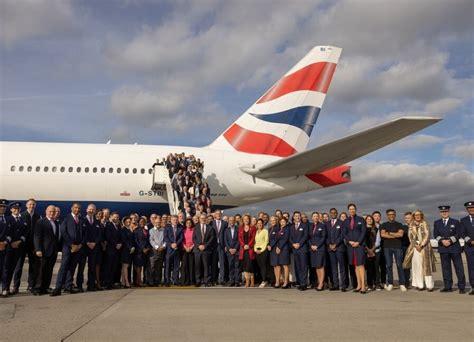
British aviation strategy has taken a decisive turn, and the latest move by British Airways signals a bold commitment to one of the world’s fastest-growing aviation markets. In a development that has caught industry watchers off guard, the airline is introducing a double daily service between London Heathrow and Bengaluru, marking a historic first for the route and redefining its long-haul priorities.
This expansion is not merely about adding frequency—it reflects a deeper recalibration of network strategy, competitive positioning, and demand forecasting in a region where growth shows no signs of slowing.
A Historic Shift in London–Bengaluru Connectivity
Since launching nonstop flights to Bengaluru in 2005, British Airways has maintained a steady but conservative presence on the route. For nearly two decades, the airline capped its service at one daily flight. That ceiling is now being decisively broken.
Starting June 1, the airline will operate two daily flights, effectively doubling capacity and unlocking new scheduling flexibility for both business and leisure travelers. The move also elevates India to one of the airline’s most important long-haul markets, second only to its top-performing regions.
The revised schedule introduces a carefully staggered departure structure from London Heathrow Airport, enabling smoother connections across transatlantic routes and beyond. Early morning and afternoon departures are timed to maximize connectivity with major North American destinations, reinforcing Heathrow’s role as a global transit hub.
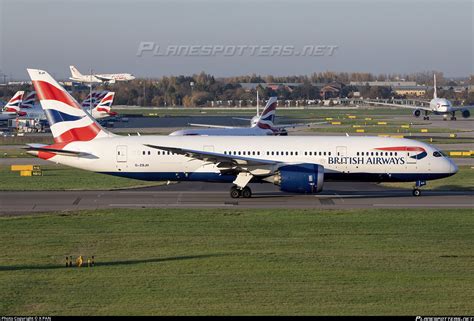
Why Bengaluru Is Driving This Expansion
The choice of Bengaluru is far from arbitrary. Often dubbed the “Silicon Valley of India,” the city has emerged as a powerhouse of technology, innovation, and international business. Demand for premium travel—particularly among corporate travelers—has surged, making it one of the most lucrative routes in the airline’s Indian portfolio.
Recent passenger data underscores this momentum. Approximately 320,000 round-trip passengers traveled between London and Bengaluru in 2025 alone, positioning it as the third-busiest India route from the UK capital. Even more striking is the growth trajectory: traffic has risen by 24% year-over-year and an impressive 61% compared to 2023 levels.
Unlike many long-haul routes where price sensitivity dominates, Bengaluru stands out for its strong yield performance. Average fares remain significantly higher than comparable routes, driven by a mix of corporate demand and long-haul connectivity needs. This makes increased frequency not just viable, but strategically essential.
Competitive Pressure From Rivals and Gulf Carriers
British Airways is not expanding in isolation. The competitive landscape is intensifying rapidly, particularly with Virgin Atlantic ramping up its own Bengaluru operations to as many as 13 weekly flights. Meanwhile, Gulf carriers—long dominant in connecting traffic between Europe, India, and North America—continue to recover from operational disruptions and geopolitical constraints.
By doubling its frequency, British Airways is positioning itself to capture a larger share of premium and transit passengers, especially those traveling between the United States and India. Heathrow’s connectivity advantage plays a crucial role here, with tens of thousands of passengers already transiting through the airport en route to major US cities.
Destinations such as New York, Dallas, Chicago, and Washington remain key feeders into the Bengaluru route, reinforcing the airline’s strategy of leveraging its transatlantic strength to support long-haul expansion into Asia.
A Broader Network Realignment in Motion
This move is part of a wider restructuring effort across the British Airways network. While the airline is adding new routes and boosting frequencies in high-demand markets, it is also trimming underperforming services. More than 20 routes have been discontinued since early 2025, with some shifted between London airports and others removed entirely.
The recent decision to end services to Jeddah highlights this selective approach. Rather than spreading capacity thinly, the airline is concentrating resources where demand is strongest and yields are highest.
India, clearly, sits at the center of this recalibration.
Record-Breaking Capacity to India
With the introduction of double daily Bengaluru flights, British Airways is set to operate nine daily services between Heathrow and India during peak periods in June. This represents a new record for the airline and a significant increase from both pre-pandemic and recent post-pandemic levels.
The broader schedule includes:
- Three daily flights to Mumbai
- Two daily flights each to Bengaluru and Delhi
- One daily flight each to Chennai and Hyderabad
This scale of operation underscores the airline’s confidence in sustained demand growth and its commitment to strengthening ties between the UK and India.
The Bigger Picture: A Market in Transformation
The London–India aviation corridor is undergoing a profound transformation. Passenger volumes have surged to nearly 3.8 million annually, with a growing share opting for nonstop flights over traditional one-stop itineraries through Gulf hubs.
This shift is being accelerated by increased capacity from multiple carriers, including Air India and new entrants like IndiGo into long-haul markets. The result is a more competitive environment where frequency, convenience, and pricing all play pivotal roles.
For travelers, this means greater choice and improved connectivity. For airlines, it raises the stakes considerably.
A Strategic Bet With Long-Term Implications
Doubling flights to Bengaluru is more than a tactical adjustment—it is a strategic bet on the future of global aviation demand. By aligning capacity with high-growth markets and optimizing connectivity through Heathrow, British Airways is positioning itself to remain competitive in an increasingly crowded field.
The decision reflects a clear understanding of where long-haul aviation is headed: toward high-frequency, high-yield routes anchored by global business hubs. And in that equation, Bengaluru has firmly secured its place.
As the skies between London and India grow busier, one thing is certain—this is no temporary surge. It is the beginning of a new era in long-haul connectivity, and British Airways intends to lead from the front.