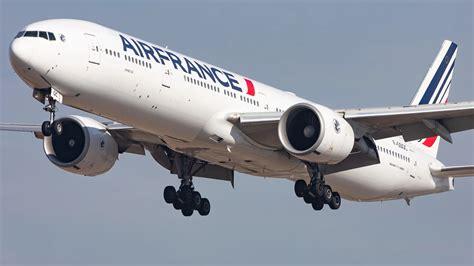
An Air France long-haul flight bound for Detroit was dramatically diverted to Canada after authorities discovered that a passenger from the Democratic Republic of Congo had boarded the aircraft despite strict US Ebola-related entry restrictions. The incident immediately triggered public health protocols, border security coordination, and renewed scrutiny over how international airlines screen passengers during disease outbreaks.
The flight, operating as Air France 378 from Paris Charles de Gaulle Airport to Detroit Metropolitan Wayne County Airport, had already crossed part of the Atlantic Ocean when officials realized the traveler should never have been permitted onto the US-bound service. The diversion forced the Boeing 777-200ER to abandon its original route and land instead in Montreal, where Canadian health authorities intervened.
The episode unfolded against the backdrop of a growing Ebola outbreak in Central Africa that has already claimed more than 100 lives and raised international concern. With suspected cases climbing into the hundreds and vaccine development still far from widespread deployment, governments have intensified border controls to prevent potential transmission through international travel networks.
Airlines operating transatlantic services are now facing increasing pressure to verify passenger eligibility before departure, especially on routes entering the United States. In this case, one screening failure caused operational disruption across multiple countries and prompted immediate government action.
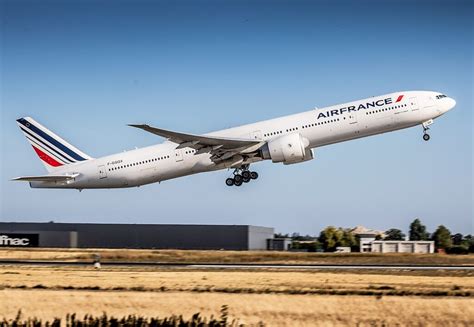
Air France Flight 378 Forced To Divert Mid-Atlantic
According to flight tracking data from Flightradar24, Air France Flight 378 departed Paris slightly behind schedule at 4:03 PM local time. The aircraft involved, a Boeing 777-200ER registered F-GSPF, climbed normally to its cruising altitude of approximately 38,000 feet and proceeded westbound across the Atlantic Ocean.
At some point during the crossing, airline personnel or border authorities identified that one passenger onboard had recently traveled from the Congo, a country subject to temporary US entry restrictions because of the Ebola outbreak. Under those emergency rules, travelers from Congo, South Sudan, and Uganda were prohibited from entering the United States for 30 days unless they held US citizenship.
US Customs and Border Protection later stated plainly that the individual “should not have boarded” the aircraft in the first place. The wording reflected growing frustration among authorities who expected airlines to enforce the travel limitations before departure.
Once the issue was identified, the aircraft altered course near Newfoundland and redirected toward Montreal. Instead of continuing toward Detroit, the widebody jet descended into Canada under coordination with public health and immigration officials.
The diversion illustrated how quickly a routine international flight can become a multinational public health incident when infectious disease restrictions are involved.
Passenger Removed In Montreal After Health Assessment
The Boeing 777 landed safely in Montreal at approximately 5:15 PM local time. Canadian authorities immediately boarded the aircraft and removed the traveler for medical evaluation by the Public Health Agency of Canada.
Officials later confirmed the passenger did not display symptoms associated with Ebola. After assessment, the individual was placed on a return flight to Paris rather than continuing toward the United States.
Although the traveler reportedly showed no signs of illness, the incident still triggered serious concern because Ebola carries a high fatality rate and requires aggressive containment measures during outbreaks. Governments typically implement strict travel monitoring procedures even for asymptomatic individuals who recently visited affected regions.
The response in Montreal demonstrated the layered international coordination now common during infectious disease events. Airline operations centers, border agencies, airport authorities, and health departments all became involved within hours of the discovery.
For passengers onboard the diverted aircraft, the incident also created significant uncertainty. Travelers expecting a nonstop arrival in Detroit instead found themselves temporarily stranded in Canada while authorities completed health and immigration procedures.
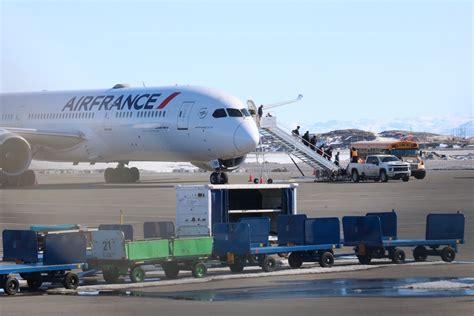
Boeing 777 Continued To Detroit After Delay
After the passenger was removed and authorities cleared the aircraft, Air France resumed the journey to Detroit. The Boeing 777 departed Montreal at approximately 6:39 PM for the short hop to Michigan.
The aircraft eventually landed at Detroit Metropolitan Wayne County Airport at 8:08 PM, arriving roughly one hour and fifty minutes behind schedule.
The jet involved in the incident is one of Air France’s older but still active Boeing 777-200ER aircraft. Delivered in March 1999, the aircraft carries the nickname “Compiegne” and accommodates 312 passengers across three cabin classes.
Its configuration includes:
- 28 business class seats
- 24 premium economy seats
- 260 economy seats
Powered by two General Electric GE90 engines, the aircraft remains a core component of Air France’s long-haul fleet despite its age.
While the diversion itself ended safely, the operational impact was significant. Fuel planning, crew scheduling, passenger connections, airport gate coordination, and customs arrangements all had to be adjusted in real time.
Such diversions are expensive for airlines, particularly on international routes involving large twin-engine aircraft. Even a relatively short unscheduled stop can create cascading disruptions across multiple flights and crew rotations.
Ebola Outbreak Prompts Tougher US Aviation Measures
The diversion quickly influenced broader US aviation policy. Following the incident, a new notice submitted to the Federal Register announced tighter arrival rules for travelers who had recently visited Ebola outbreak zones.
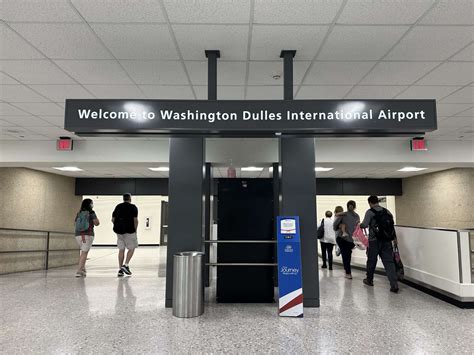
Under the updated measures, flights carrying US-bound passengers from affected regions must now land at Washington Dulles International Airport. Authorities said the decision would centralize public health resources and improve monitoring capabilities.
The move reflects how aviation remains deeply intertwined with global health security. Modern air travel allows passengers to cross continents in hours, meaning infectious diseases can potentially spread internationally faster than ever before.
Governments therefore rely heavily on airlines as the first layer of screening enforcement. Carriers are expected to verify travel histories, visa eligibility, and health-related restrictions before passengers board international flights.
When those systems fail, consequences can escalate rapidly, as demonstrated by the Air France diversion.
International Airlines Face Growing Pressure Over Passenger Screening
The incident has reignited debate about airline responsibility during global health emergencies. While governments issue travel restrictions, airlines are often left to execute the practical enforcement process at airport check-in counters thousands of miles away from their destination countries.
Mistakes can carry serious consequences, ranging from costly diversions to diplomatic complications and public anxiety.
For Air France, the Montreal diversion ended without illness or emergency medical treatment. Yet the event still exposed vulnerabilities in how rapidly evolving travel restrictions are communicated and enforced across international aviation systems.
As Ebola containment efforts continue, airlines worldwide are expected to tighten passenger verification procedures even further. The incident involving Flight 378 may ultimately become a defining example of how a single boarding error can disrupt an entire international operation and reshape aviation health protocols overnight.