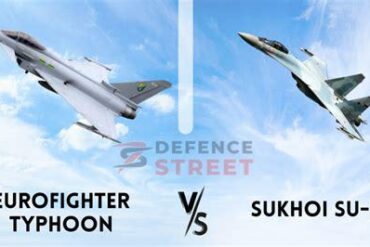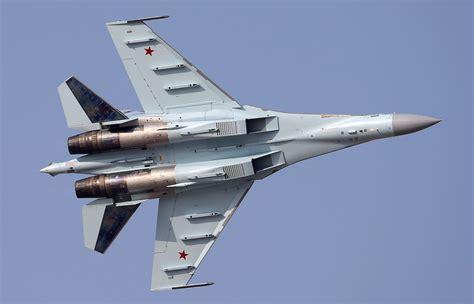
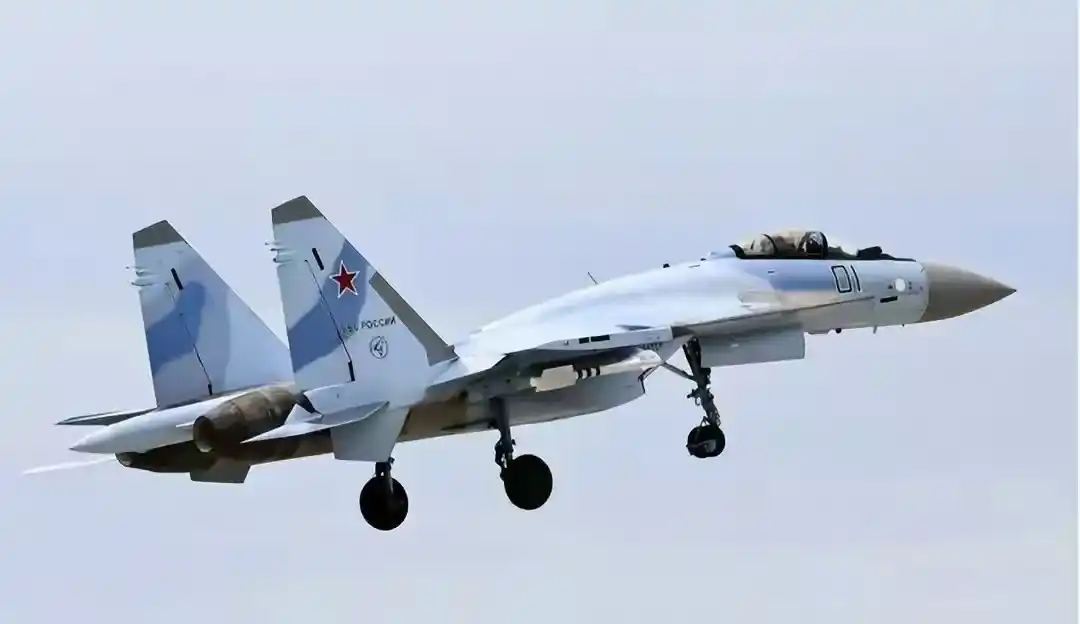
The Sukhoi Su-35 stands as a formidable testament to Russia’s enduring commitment to air superiority and technological advancement. As a deep evolution of the Su-27 Flanker, the Su-35 blends legacy airframe performance with modern avionics, sensor fusion, and propulsion systems, placing it in the elite tier of 4.5-generation multirole fighters. Officially entering service in February 2014, it has since proven its mettle across multiple theaters, including Syria and Ukraine, while drawing interest from key global players such as China, Iran, and Algeria.
Origins and Evolution: From Su-27M to Su-35S
The development of the Su-35 traces back to the Su-27M program of the early 1980s, an ambitious effort to overcome the limitations of the original Flanker. Initiated in 1982, the project’s aim was to produce a more agile, multirole-capable fighter. The first prototype flew on 28 June 1988, featuring prominent canards, an early relaxed-stability fly-by-wire system, and the N011 Bars radar that could track 15 targets and engage six simultaneously.
Sukhoi’s innovation drive continued into the 1990s, culminating in the experimental Su-37 demonstrator, which flew in 1996 and introduced thrust vectoring and advanced control laws. Despite technical promise, the Russian Air Force lacked funds to procure large numbers. Thus, the designation Su-35 was adopted post-Soviet era to attract foreign buyers with a modernized variant of the Su-27M.
Modernization and the Rise of the Su-35S
A new chapter began in 2003 with the T-10BM program, representing a comprehensive redesign of the platform to meet 21st-century air combat standards. The final product, dubbed the Su-35S for domestic use, eliminated the canards to reduce radar cross-section, introduced a glass cockpit with dual 9×12-inch LCDs, and implemented a hands-on-throttle-and-stick (HOTAS) interface for pilot-centric control.
Its beating heart is the N035 Irbis-E radar, a powerful Passive Electronically Scanned Array (PESA) system capable of detecting airborne targets at up to 400 kilometers, tracking 30, and engaging eight simultaneously. It is supplemented by the OLS-35 infrared search and track (IRST) sensor, enabling passive detection of stealth or non-radar-visible threats. To further bolster survivability, the Su-35S incorporates the L175M Khibiny-M electronic countermeasures suite, allowing it to jam or spoof enemy sensors.
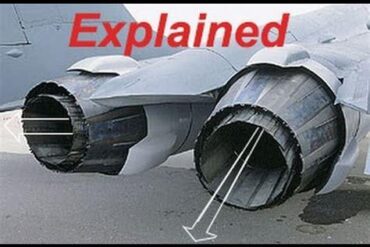
Under the hood, the twin AL-41F1S engines with thrust vectoring offer not just superior thrust-to-weight ratios but extraordinary maneuverability. These engines enable supercruise and post-stall maneuvers that defy conventional aerodynamic limits, reinforcing the aircraft’s branding as supermaneuverable.
Testing, Production, and Serial Induction
The modern Su-35 entered flight testing on 19 February 2008, with the first prototype Su-35-1 completing a 55-minute sortie from Zhukovsky. This was followed by additional prototypes, including a second airframe that flew on 2 October 2008. Despite the loss of a fourth prototype in a 2009 ground accident, progress was swift. At the MAKS 2009 air show, the Russian Defence Ministry signed a US$2.5 billion deal for 48 Su-35S fighters.
By May 2011, the first production Su-35S had completed its maiden flight. Over the next decade, output steadily increased, culminating in the delivery of the 100th Su-35S in December 2018. Final assembly continues at the Komsomolsk-on-Amur Aircraft Plant (KnAAPO).

Operational History: Syria, Ukraine, and Beyond
The Su-35 officially joined active duty in February 2014, initially fielded by Russian units at Akhtubinsk, Lipetsk, and Centralnaya Uglovaya. Its debut in real-world combat came in January 2016, when it was deployed to the Hmeymim Air Base in Syria. There, it carried out escort duties, strike missions with guided and unguided munitions, and interceptions of foreign aircraft.
The Su-35S demonstrated effective air-to-air performance, notably confronting Turkish F-16s on 20 August 2019, and Israeli aircraft in operations from September to December 2019.
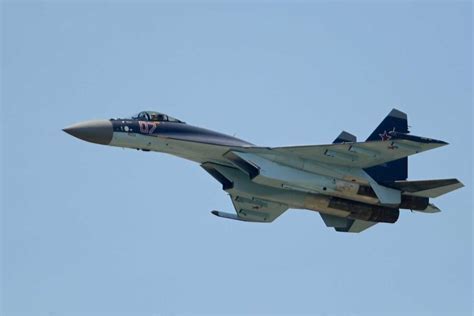
In the high-stakes airspace over Ukraine (2022–2024), the Su-35S has served as Russia’s frontline air-superiority fighter, undertaking combat air patrols and engaging enemy aircraft. By mid-2023, it was credited with at least seven air-to-air kills, including enemy fighters and a rotary-wing aircraft. Nevertheless, combat has not been without losses—several Su-35S were reportedly shot down by Ukrainian air defenses and even by friendly fire incidents between April 2022 and September 2023. Two additional losses were claimed by Ukraine in February 2024.
Exports and Strategic Alliances
The Su-35S has also found traction internationally. China, eager to supplement its growing J-20 fleet, was the first foreign customer. A US$2 billion deal signed in late 2015 led to the delivery of 24 aircraft between 2016 and 2018. These fighters entered service in April 2018 and were based in Guangdong province, likely to counter regional threats in the South China Sea.
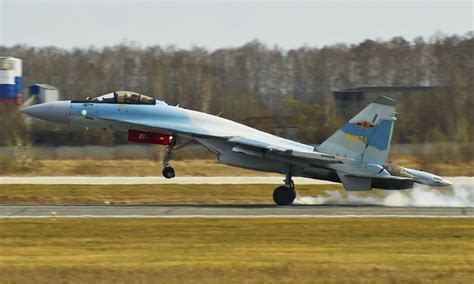
Iran has emerged as a recent buyer. While training began discreetly in spring 2022, the sale was publicly acknowledged by Iranian media in December 2022. A controversial claim of an April 2024 order for 24 aircraft was officially denied, but a senior IRGC commander confirmed the acquisition program in January 2025, aligning with Tehran’s strategic ambitions amid rising tensions in the Middle East.
Algeria, too, has shown serious interest, requesting a test unit in February 2016. Its procurement may dovetail with its broader defense partnership with Moscow.
Near-Misses and Failed Deals
Not every Su-35 sales pitch has succeeded. In the early 2000s, Brazil evaluated the Su-27M for its F-X program but eliminated the design in 2008 during the F-X2 competition in favor of the Saab Gripen. Similarly, India considered the Su-35 as a candidate for its MMRCA 2.0 program, though deliberations continue as New Delhi balances U.S., European, and Russian offers.
The Egyptian saga further illustrates the Su-35’s complex export journey. Reports emerged in March 2019 that Cairo signed a $2 billion deal for more than 24 fighters. Despite denials from Rosoboronexport, production reportedly began in May 2020, yet no confirmed deliveries have occurred, raising questions about contractual fallout or external pressures.
Capabilities and Technical Specifications
The Su-35S sits at the cutting edge of fourth-generation fighter design. Below are its key specifications:
- Length: 21.9 meters
- Wingspan: 15.3 meters
- Max Takeoff Weight: 34,500 kg
- Engines: 2 × AL-41F1S with thrust vectoring (14,500 kgf each)
- Max Speed: Mach 2.25
- Combat Radius: ~1,600 km
- Service Ceiling: 18,000 meters
- Radar Range: Up to 400 km (Irbis-E)
- Weapons: 12 hardpoints, up to 8,000 kg payload
- ECM: L175M Khibiny-M suite
What distinguishes the Su-35 is not just its kinematic performance, but its ability to operate across electronic warfare, beyond-visual-range (BVR), and infrared spectrums—making it a versatile and lethal platform in modern air conflict.
Strategic Significance and the Future
The Su-35 represents both a culmination and a transition point for Russian fighter development. It bridges the legacy of Su-27 air dominance with next-generation capabilities, serving as a technological and operational forerunner to the Su-57 Felon. While lacking full stealth, its blended radar signature reduction, long-range engagement envelope, and electronic warfare suite grant it formidable survivability against modern threats.
As global air forces look to hedge against American and Chinese stealth proliferation, the Su-35 continues to appeal to nations seeking strategic autonomy, affordable high-end performance, and multipurpose roles from a single airframe.
Its legacy is already etched into airpower history—not only as Russia’s top non-stealth fighter but as a bridge between eras of aerial warfare.