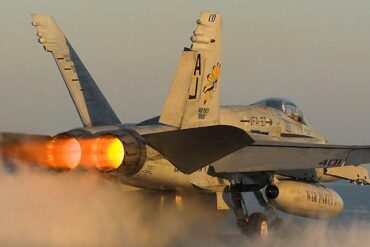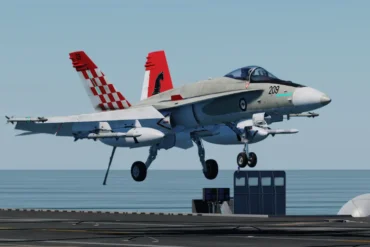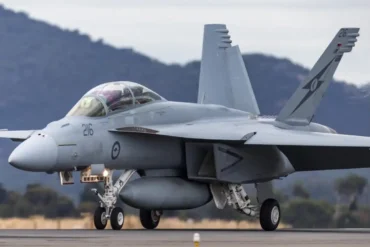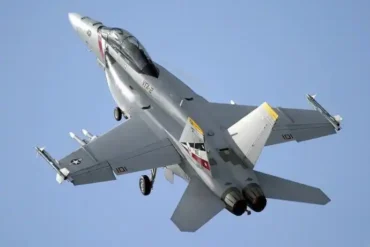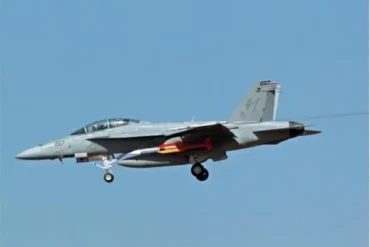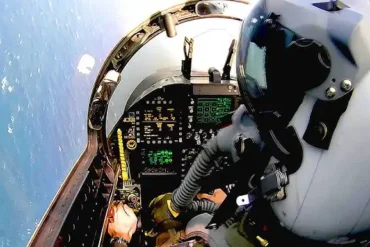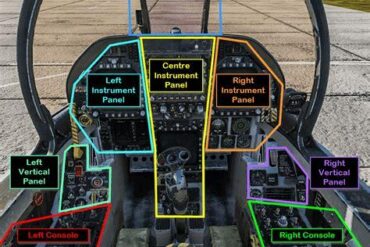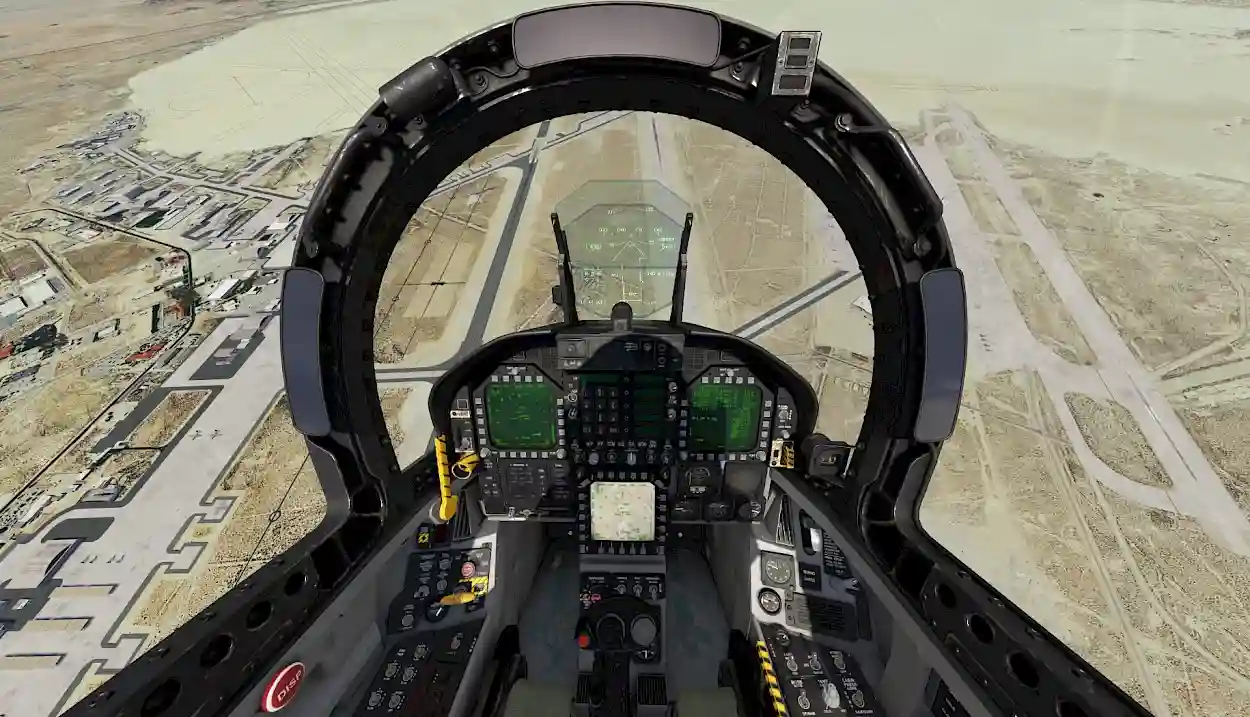
The F/A-18C Hornet is a twin-engine, multi-role combat aircraft developed by McDonnell Douglas in the 1970s and introduced into active service in 1983. This highly maneuverable and powerful fighter is equipped with advanced fly-by-wire (FBW) controls, sophisticated avionics, and an ergonomically designed cockpit that enhances pilot efficiency and situational awareness. In this article, we will delve into the detailed workings of the F/A-18C cockpit, including its flight controls, display systems, and operational capabilities.
Flight Controls Overview
The F/A-18C Hornet employs an advanced fly-by-wire system that electronically transmits pilot inputs to control surfaces. This system provides exceptional maneuverability, allowing for high-G turns and superior combat performance.
Primary Flight Controls
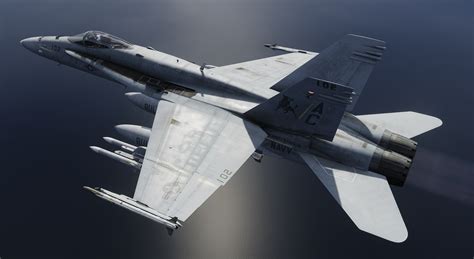
- Tailerons: Two large stabilizers at the rear function as both elevators and ailerons.
- Symmetrical deflection controls pitch.
- Asymmetrical deflection induces roll.
- Ailerons: Located on the wings, aiding roll control.
- Leading Edge and Trailing Edge Flaps: Adjust aerodynamic flow and enhance maneuverability.
- Vertical Stabilizers and Rudders:
- Symmetric deflection = normal rudder operation.
- Coordination with ailerons = increased roll rate.
- Simultaneous inward/outward movement = enhanced elevator authority.
Fly-By-Wire (FBW) Control System
The FBW system in the F/A-18C ensures that pilot inputs are processed electronically, optimizing control response. Key features include:
- G-load Targeting: Stick movement commands G-load rather than direct surface deflection.
- Range: -3G to +7.5G.
- Automatic Stability Management: Prevents departure from controlled flight.
- Approach Mode: Adjusts angle of attack (AOA) for precision landings.
Flaps and Slats Control
The pilot can select three flap positions:
- AUTO: System-controlled, adapting to speed, G-load, and AOA.
- HALF: Optimized for takeoff and approach.
- FULL: Used for landing, ensuring maximum lift.
Cockpit Display Systems
The F/A-18C cockpit features an advanced multi-display interface for tactical and navigational data visualization.
Head-Up Display (HUD)
- Provides critical flight data directly in the pilot’s line of sight.
- Displays airspeed, altitude, AOA, G-load, Mach number, and navigation cues.
- Features ILS guidance, waypoint indicators, and targeting symbols.
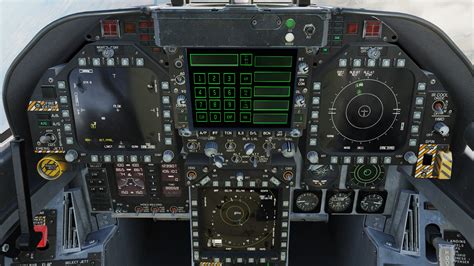
Digital Display Indicators (DDI) and Multi-Purpose Color Display (MPCD)
The two DDIs and MPCD provide extensive aircraft systems monitoring and tactical information.
- Left & Right DDIs: Show critical pages like:
- Radar (ATTK RDR)
- Stores Management (STORES)
- Electronic Warfare (EW)
- MPCD:
- Displays a moving map
- Houses navigation and system diagnostics
Up Front Controller (UFC)
Centralized control panel for:
- Autopilot (A/P)
- Tactical Air Navigation (TACAN)
- Instrument Landing System (ILS)
- Communication (COMM)
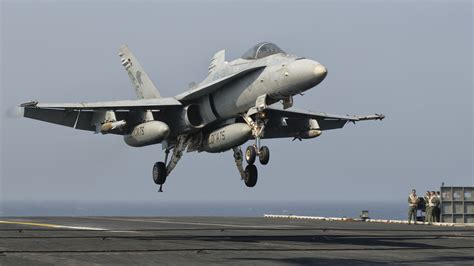
Approach Mode and Carrier Landings
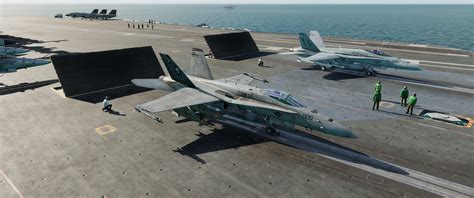
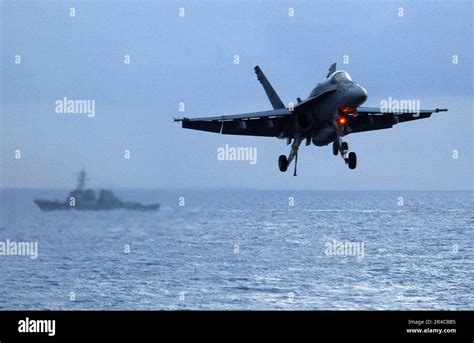
When preparing for landing, the Approach Mode of the fly-by-wire system adjusts for precision control.
- AOA Indexer: Indicates ideal approach attitude.
- Throttle Inputs: Control descent rate rather than pitch.
- “E-Bracket”: Guides the pilot to optimal landing attitude.
Defensive and Offensive Avionics
The F/A-18C cockpit integrates various offensive and defensive systems to support combat operations.
Electronic Warfare (EW) System
- Monitors radar threats and suggests countermeasures.
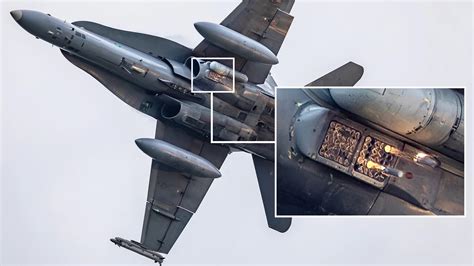
- Chaff and flare dispensers for missile evasion.
Weapons and Targeting Systems
- Stores Management System (SMS): Configures missiles, bombs, and gun rounds.
- Radar Display (ATTK RDR): Provides air-to-air and air-to-ground targeting.
- Tactical Situation Awareness (SA) Display: Enhances pilot battlefield awareness.
Airbrake System
The airbrake (speed brake) provides rapid deceleration during flight and landing approaches.
- Controlled via throttle-mounted switch.
- Automatically retracts when flaps are deployed.
FAQ Section
1. What makes the F/A-18C Hornet cockpit unique?
The F/A-18C cockpit features an advanced HUD, digital multi-function displays (DDIs), and an MPCD for complete situational awareness. The fly-by-wire system allows precise handling, and the UFC centralizes aircraft control inputs.
2. How does the fly-by-wire system improve maneuverability?
The FBW system electronically processes pilot inputs, ensuring optimal G-load distribution, stall prevention, and automatic flight stability, allowing the F/A-18C to perform high-G combat maneuvers effortlessly.
3. What role do the DDIs play in flight operations?
The Digital Display Indicators (DDIs) provide essential combat, navigation, and aircraft system information, allowing pilots to manage radar, weapons, and defensive systems efficiently during missions.
The F/A-18C Hornet cockpit is a state-of-the-art combat interface, blending automation, pilot-centric design, and cutting-edge avionics to ensure maximum performance in modern warfare.