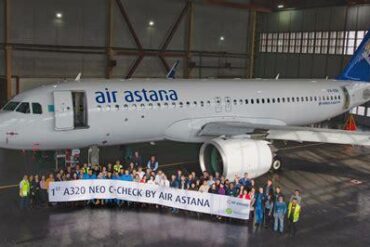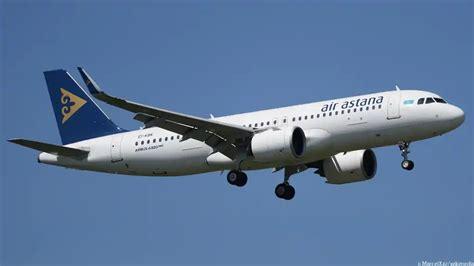
Kazakhstan’s national carrier, Air Astana, has undergone a remarkable transformation from a modest post-Soviet startup into the most dominant airline in Central Asia and the Caucasus. With a market share exceeding 69% domestically and 40% intra-regionally, the airline’s trajectory mirrors the broader aspirations of Kazakhstan to position itself as a global connector between East and West.
Founded in August 2001 and officially launching operations in May 2002, Air Astana was born from a unique public-private partnership between Samruk Kazyna (Kazakhstan’s sovereign wealth fund) and BAE Systems, a major British defense contractor. Its origin story was not without turbulence, facing domestic political skepticism and media resistance. Nonetheless, through strategic leadership and careful fleet management, it emerged as a trailblazer in a region long marred by aviation uncertainty.
The Foundation Years and Strategic Growth (2001–2005)
Air Astana’s early years were marked by ambition and pragmatism. Despite being conceived as a domestic carrier, the airline had global ambitions from the start. Its first president, Lloyd Paxton, laid the groundwork by leasing a mixed fleet: Boeing 737s, 757s, and Fokker 50s. These aircraft allowed rapid route deployment, bridging Kazakhstan with key regional hubs like Dubai, Istanbul, Moscow, and Beijing.
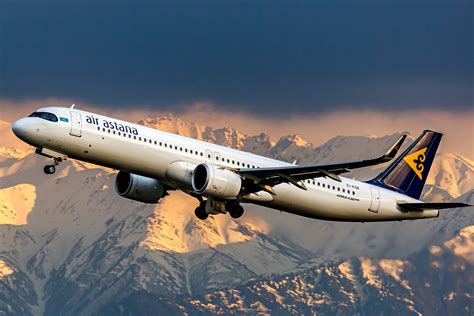
After Air Kazakhstan declared bankruptcy in 2004, Air Astana capitalized on the vacuum, expanding its international presence aggressively. However, internal disagreements on hub strategy prompted a change in leadership. In October 2005, Peter Foster, formerly of Cathay Pacific, took the helm. His appointment marked the beginning of a long-term strategy that emphasized safety, profitability, and international credibility.
Profitability, Safety, and European Recognition (2006–2016)
From 2006 onward, Air Astana began turning heads across the aviation world. Consistently profitable, the airline ranked among the top 20 carriers globally by net margin from 2010 to 2012. But profitability alone wasn’t the only benchmark. During this time, Kazakhstan’s aviation sector faced international scrutiny.
In April 2009, an ICAO audit deemed Kazakhstan’s Civil Aviation Committee non-compliant. As a result, all Kazakh carriers were banned from EU airspace—except Air Astana. Its exemption was achieved by registering aircraft in Aruba and implementing world-class safety management systems. Gradually, these restrictions were lifted: Boeing and Airbus limitations ended in 2012, and Embraer caps followed in 2015.
The airline used this regulatory goodwill to increase capacity and frequency across Europe. By 2015, routes like Astana–Frankfurt, Atyrau–Amsterdam, and Astana–Paris became mainstays of its international portfolio.
Innovation, New Fleets, and Low-Cost Disruption (2016–2019)
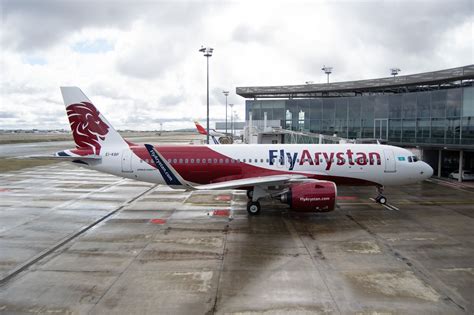
Air Astana’s ambition was not limited to full-service offerings. In 2018, it launched a low-cost carrier: FlyArystan. Operating under the parent company’s AOC but with distinct management, FlyArystan offered stripped-down fares while leveraging the infrastructure, maintenance, and operational standards of its parent.
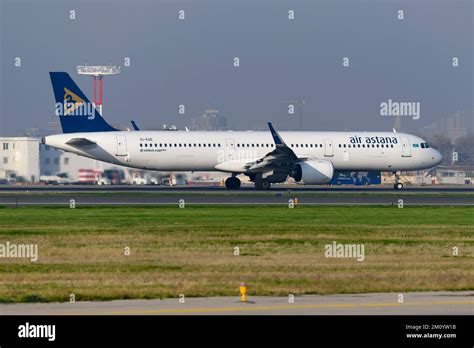
Meanwhile, Air Astana continued fleet renewal. The Airbus A321neo, A321LR, and Embraer E190-E2 allowed it to reach longer routes efficiently. A notable addition was an E190-E2 in a Snow leopard livery, a nod to Kazakhstan’s endangered wildlife. In 2018, it opened a state-of-the-art Aviation Technical Centre in Astana to handle heavy maintenance, asserting operational self-sufficiency.
Crisis Management and Resurgence (2020–2023)
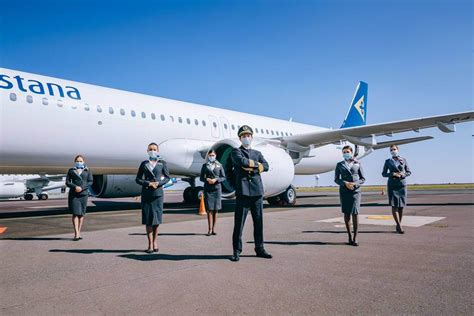
The COVID-19 pandemic disrupted even the most prepared carriers. Between March and April 2020, Air Astana grounded 95% of flights. However, domestic services resumed by May, and international flights followed in June. The airline’s robust safety protocols earned it a 5-Star COVID-19 Safety Rating from Skytrax and a Diamond status from APEX.
In February 2022, amid geopolitical chaos during the Ukraine crisis, Air Astana demonstrated humanitarian leadership by evacuating Kazakh citizens via repatriation flights from Katowice. CEO Peter Foster personally traveled to Kyiv to organize operations—highlighting a level of commitment rarely seen at the executive level.
In March 2022, all flights to and over Russia were suspended due to insurance issues, prompting a strategic rerouting of services and further reinforcing the airline’s resilience under pressure.
Modernization and Global Integration (2024–2025)
In 2024, Air Astana completed its Initial Public Offering (IPO), listing on the London Stock Exchange and domestic markets. This bold financial move underscored its intent to become not only a regional leader but a globally integrated aviation player.
The company further solidified its infrastructure with the opening of a Flight Training Centre at Astana Airport, featuring an L3 Harris Reality Seven full-flight simulator. It completed a 12-year C-Check on an Airbus A321, reflecting maturity in internal technical capabilities.
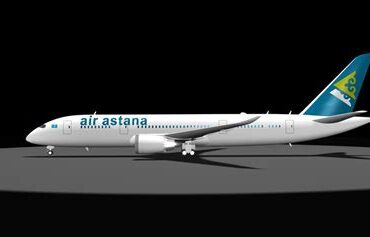
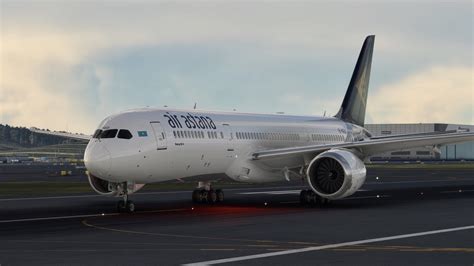
Fleet modernization continues into 2025 with the anticipated arrival of three Boeing 787-9 Dreamliners, pushing the airline into true long-haul intercontinental territory. The current fleet includes 60 aircraft: A320 family (ceo and neo), A321LRs, B767s, and Embraer E2s. FlyArystan manages a growing sub-fleet of A320ceos and neos.
FlyArystan: Kazakhstan’s Low-Cost Aviation Revolution
Launched in May 2019, FlyArystan became a transformative force in Central Asia’s budget aviation scene. It helped Kazakhstan become the fastest-growing domestic aviation market in 2021, with FlyArystan seeing a 553% surge in passengers that year alone.
By 2024, FlyArystan was spun off as a separate entity, with its own Air Operator Certificate (AOC). Offering 180-seat configurations on A320s, FlyArystan now serves both domestic and regional international markets, including routes like Almaty–Novosibirsk and Kutaisi in Georgia.
Global Reach and Network Strategy
Air Astana’s destination matrix now spans Europe, Central Asia, the Middle East, South Asia, and parts of Southeast Asia. Lifestyle routes—destinations for leisure travelers—have become key components, with popular options including Male (Maldives), Colombo, Phuket, and Sharm El Sheikh.
Its European operations remain robust, with frequent service to London, Frankfurt, Amsterdam, and Paris. New Middle Eastern routes include Abu Dhabi, Jeddah, and Medina, while codeshares with Japan Airlines and Etihad Airways enhance connectivity to East Asia and the Gulf.
Corporate Development and Workforce Investment
As of 2025, Air Astana employs over 6,500 staff, including 600 EASA-licensed pilots, many of whom graduated from rigorous ab initio programs in the US and EU. Cabin crew, predominantly Kazakh, receive international-standard hospitality and safety training. Management includes both Kazakh and foreign professionals, with leadership development programs in partnership with the Henley Business School.
This structured investment in human capital has cultivated a service culture that consistently earns praise. From 2012 through 2024, Air Astana was awarded Best Airline in Central Asia and India (Skytrax), and FlyArystan won Best Low-Cost Airline Central Asia and CIS in 2023 and 2024.
In-Flight Experience and Services
Air Astana’s service levels remain a highlight. The fleet offers Business and Economy cabins, with Economy Sleeper options available on A321LRs. All aircraft (except the retiring Embraer E2s) are equipped with individual RAVE entertainment systems, delivering an upgraded travel experience even in economy.
Its Nomad Club frequent flyer program includes partnerships with Lufthansa’s Miles & More and Asiana Club, offering tiered benefits across multiple alliances. The airline’s emphasis on hospitality, punctuality, and comfort has made it a carrier of choice for both regional business travelers and long-haul tourists.
Final Thoughts
With its strong financial performance—$900.6 million in revenue in the first nine months of 2023, and a post-pandemic recovery that few regional carriers could match—Air Astana stands at a strategic inflection point. As Kazakhstan seeks to diversify its economy and promote global connectivity, its flag carrier is more than an airline: it is a national symbol of ambition, capability, and modernity.
Having already weathered economic crises, political turmoil, and global pandemics, Air Astana’s forward momentum looks unstoppable. With the imminent arrival of long-range widebodies and a renewed focus on digital transformation, the next chapter of this airline’s journey may well see it rise from regional dominance to global recognition.