In the intricate world of aeronautical engineering, few components are as fundamental to flight safety and operational accuracy as the pitot-static system. This vital system acts as the core sensor network that enables pilots to read essential flight data such as airspeed, altitude, vertical speed, and Mach number. Despite its simplicity in principle, the pitot-static system plays a pivotal role in both manual and automated flight operations.
Understanding its function, architecture, and potential failure modes is critical for aviation professionals, from pilots and engineers to system designers. This article explores the design, operation, and redundancy measures embedded in pitot-static systems, while highlighting their contribution to flight safety and instrument accuracy.
The Architecture of the Pitot-Static System
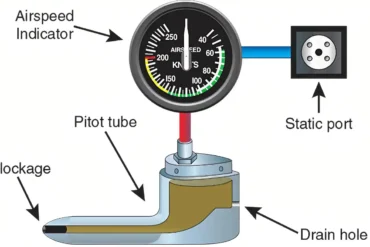
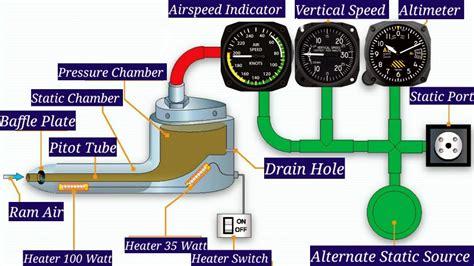
At its core, the pitot-static system measures two distinct pressures: static pressure and pitot pressure (also known as total pressure). These values, either independently or in combination, feed into several aircraft instruments.
-
Static pressure: The ambient atmospheric pressure unaffected by the aircraft’s motion.
-
Pitot pressure: A combination of static pressure and dynamic pressure caused by the forward motion of the aircraft.
These pressures are captured through strategically placed sensors:
-
Static ports for static pressure
-
Pitot tubes for pitot pressure
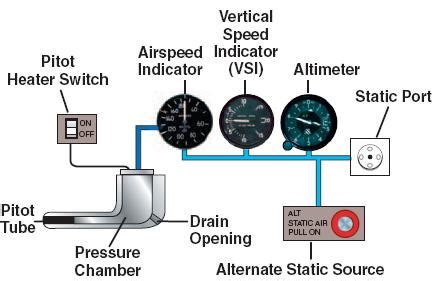
These inputs are relayed to flight instruments such as the altimeter, airspeed indicator (ASI), vertical speed indicator (VSI), and the Machmeter. In modern airliners, the outputs also serve systems like the Autopilot, Flight Management System (FMS), and the Air Data Computer (ADC).
Static Pressure: Source of Altitude and Vertical Speed
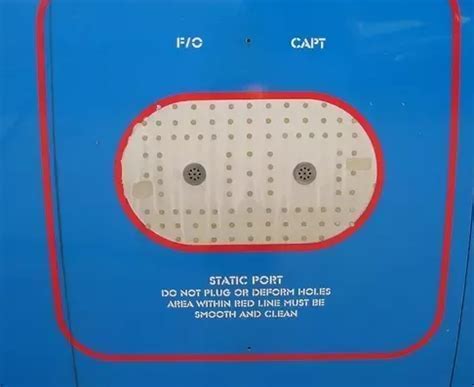
Static pressure is collected through vents typically placed on both sides of the aircraft fuselage. These vents are carefully located at aerodynamically neutral points to ensure the accuracy of pressure readings during various flight attitudes.
The static vents connect to a common static line. This dual-vent approach helps cancel out positional error due to asymmetric airflow. High-precision calibration during aircraft certification ensures that any remaining errors fall within acceptable limits.
To enhance system redundancy and reliability, commercial aircraft are equipped with at least two independent static systems. This redundancy ensures that a blocked or malfunctioning port does not compromise critical flight data.
When aircraft are parked, static ports are often plugged to avoid insect entry or moisture contamination. For in-flight protection, many static vents are equipped with electrical heating elements, ensuring continued performance in icing conditions.
Pitot Pressure: Measuring Forward Motion
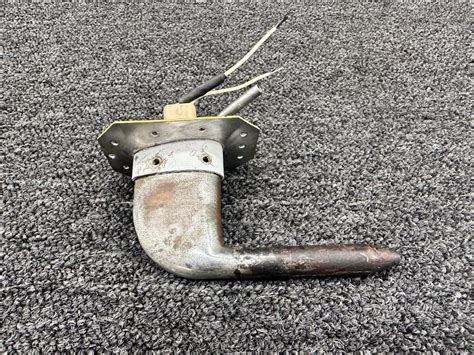
The pitot tube, a forward-facing pressure probe, measures pitot pressure. Positioned along the aircraft’s longitudinal axis, it collects the pressure caused by forward airspeed. Since pitot pressure includes both static and dynamic pressure components, subtracting static pressure yields the dynamic pressure, which directly correlates to indicated airspeed.
As with the static system, pitot systems are duplicated to offer redundancy. Most airliners feature two or three pitot tubes, with separate connections to multiple air data systems.
Because pitot tubes are highly susceptible to contamination, particularly from icing or insects, they are:
-
Covered when the aircraft is parked.
-
Electrically heated to prevent freezing at altitude.
Failure to follow these protective measures has historically led to catastrophic airspeed discrepancies, as seen in multiple aviation incidents.
Air Data Computer: The Central Processor
In advanced aircraft, readings from the pitot and static systems are processed by the Air Data Computer (ADC). This sophisticated unit interprets and calibrates raw pressure inputs into reliable data streams including:
-
Indicated Airspeed (IAS)
-
True Airspeed (TAS)
-
Mach Number
-
Altitude
-
Vertical Speed
-
Outside Air Temperature (OAT)
-
Total Air Temperature (TAT)
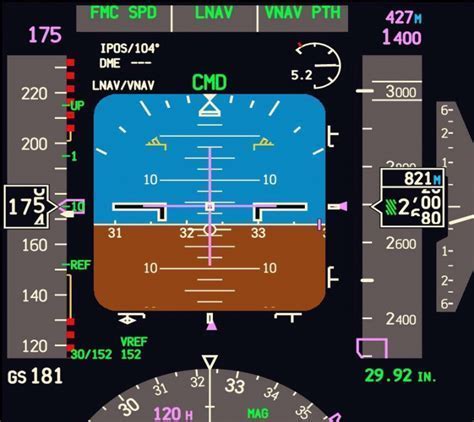
These processed values are then fed to the Electronic Flight Instrument System (EFIS), Autopilot, and navigation subsystems, integrating real-time pressure data with flight control algorithms.
Instrumentation Dependent on the Pitot-Static System
Each pitot-static instrument serves a specific purpose in maintaining safe and effective aircraft operation:
-
Altimeter: Measures altitude based on ambient static pressure.
-
Airspeed Indicator (ASI): Calculates indicated airspeed using the difference between pitot and static pressure.
-
Vertical Speed Indicator (VSI): Measures the rate of climb or descent by tracking changes in static pressure.
-
Machmeter: Displays Mach number by comparing true airspeed with local speed of sound, derived from pitot-static and temperature data.
These instruments must function reliably under a wide range of flight conditions. Any blockage, miscalibration, or data loss in the pitot-static system can produce misleading instrument readings, potentially leading to Loss of Control In-flight (LOC-I).
Redundancy and System Safeguards
To safeguard against failure, most commercial aircraft use dual or triple redundancy. This design ensures that failure of a single component—whether a pitot tube, static port, or ADC—does not compromise system integrity.
Additional safety practices include:
-
Cross-checking between pilot and co-pilot instruments
-
Independent sensor paths for captain and first officer
-
Backup analog instruments in case of EFIS or ADC failure
Some advanced aircraft feature synthetic air data systems, which use multiple sensor inputs and predictive algorithms to cross-verify air data in real-time.
Failure Scenarios and Aviation Incidents
Failures in pitot-static systems can result in unreliable airspeed indications, triggering flight automation disengagement or inappropriate pilot responses. For example:
-
Air France Flight 447 experienced a pitot tube icing failure at high altitude, leading to conflicting airspeed indications and autopilot disengagement.
-
Birgenair Flight 301 crashed due to a wasp-nest obstruction in a pitot tube that had not been covered while parked.
These incidents underline the necessity for proper maintenance, crew training, and fail-safe system design.

Maintenance and Operational Best Practices
Operators must follow stringent maintenance protocols to ensure pitot-static system integrity. This includes:
-
Routine inspections for physical blockages or wear
-
Functional checks of heating elements and signal consistency
-
Covering sensors during parking periods exceeding a few hours
-
Pre-flight verification of instrument coherence and plausibility
Pilots are also trained to detect anomalous instrument behavior that may indicate sensor failure and revert to alternate data sources or backup instruments when necessary.
Future Trends in Pitot-Static Systems
The next evolution in air data sensing includes smart probes and sensor fusion systems. These advanced units combine pitot-static data with GPS, laser airspeed sensors, and inertial navigation systems (INS) to generate redundant and validated flight data.
As aircraft automation continues to grow, the demand for fault-tolerant, multi-source data integration will intensify, making pitot-static systems just one of several data contributors in a holistic air data ecosystem.
FAQ
What happens if the pitot tube becomes blocked?
If a pitot tube is blocked while the static port remains open, the airspeed indicator will give inaccurate readings—often showing a constant or increasing airspeed regardless of actual aircraft velocity. This can mislead pilots during crucial phases like climb or descent.
Why do aircraft have multiple pitot and static systems?
To ensure redundancy and reliability, modern aircraft are equipped with at least two independent systems. This setup allows cross-verification of data and ensures that if one system fails due to blockage or malfunction, accurate air data is still available from the other.
Can pilots detect failures in the pitot-static system during flight?
Yes. Inconsistencies between cockpit instruments (e.g., captain and first officer displays), implausible readings, or alerts from the air data computer can indicate a pitot-static system failure. Pilots are trained to identify such failures and rely on backup instruments or alternate procedures.