The S-400 Triumf missile system, designated by NATO as the SA-21 Growler, represents one of the most advanced surface-to-air missile (SAM) platforms in global defense arsenals today. Developed by Russia’s NPO Almaz-Antey, the S-400 embodies decades of engineering evolution, tactical precision, and strategic foresight. Officially approved for service in April 2007 and deployed by August of the same year, it has become synonymous with Russia’s renewed focus on integrated air and missile defense capabilities, sitting alongside the even newer S-500 system to provide a layered defense strategy.
The inception of the S-400 dates back to the early 1980s, when Soviet defense planners sought to replace the aging S-200 system. However, a shifting threat landscape, coupled with significant budgetary constraints following the Cold War, saw the program postponed. The resurgence of strategic missile threats and increasing vulnerability to cruise missiles prompted the revival of the project in 1991 under the name Triumf. Rigorous testing commenced in 1999 at the iconic Kapustin Yar testing range, culminating in a successful intercept of ballistic targets by 2004. The system reached a new milestone in 2018 when its 40N6 long-range missile was accepted for service, expanding the S-400’s engagement envelope to a staggering 400 km.
Advanced Structure and Components of the S-400
At the heart of the S-400 lies a sophisticated command architecture, built around the 30K6E command system, which can coordinate up to eight battalions simultaneously. The nerve center, the PBU 55K6E control post, ensures seamless integration and execution of intercept missions. This command network is supported by an array of radar systems, each fulfilling critical roles to maintain 360-degree situational awareness and tracking capability.
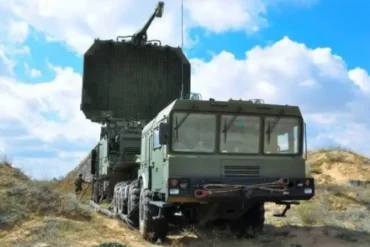
The 91N6E panoramic radar provides broad-area surveillance up to 340 km, while the 92N6E multi-functional radar excels at precise target tracking and missile guidance, capable of engaging up to 20 targets concurrently. Supplementary options include the Protivnik-GE UHF radar (400 km range) for detecting stealth assets, the 96L6E radar for high-altitude threat interception, and the Nebo-M VHF radar, a versatile asset that extends the radar horizon to 400 km. This modular radar integration provides flexibility against a diverse threat spectrum, from UAVs to hypersonic glide vehicles.
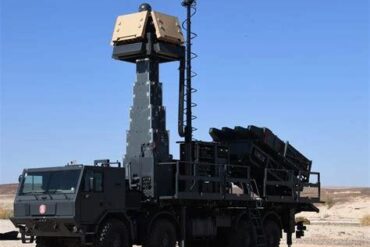
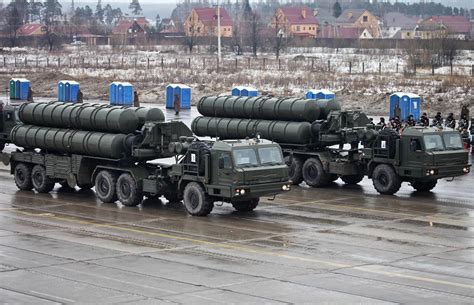
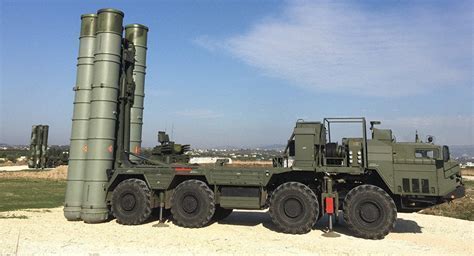
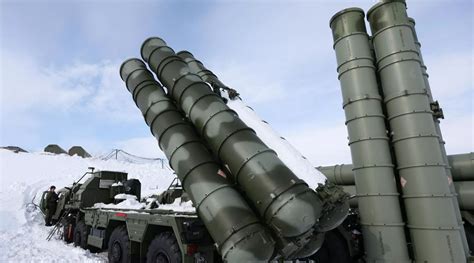
The system’s Transporter Erector Launchers (TELs) consist of the self-propelled 5P85TE2 and the trailer-mounted 5P85SE2, each equipped to carry four missile tubes—two in the case of the massive 40N6 interceptors. This mobility ensures rapid redeployment and reduced vulnerability to pre-emptive strikes.
A Versatile Missile Arsenal
The S-400’s missile family is designed to counter a broad array of aerial threats across multiple engagement ranges and altitudes. It deploys:
- 9M96 missiles: short-to-medium range (up to 40 km), effective against tactical aircraft and UAVs.
- 48N6 series: medium-to-long range (up to 250 km), a versatile workhorse for intercepting aircraft, cruise missiles, and ballistic targets.
- 40N6 missiles: extreme long-range (380–400 km), designed for high-value targets including AWACS and electronic warfare aircraft.
All missiles in the S-400’s inventory are guided using a combination of semi-active and active radar homing, augmented by high-fragmentation, directed-explosion warheads that maximize kill probability. The system’s anti-ballistic missile (ABM) capability, while initially near the limits of treaty constraints, is poised for future enhancement with the upcoming 77N6 series, introducing kinetic intercept technology for true hit-to-kill capability.
Global Deployment and Service Record
The S-400 made its operational debut in 2007 with the deployment of the first regiment near Elektrostal, Russia. Subsequent years witnessed its expansion to critical locations such as Kaliningrad, Nakhodka, and across Russia’s vast military districts. The system’s combat-tested credentials were showcased during the Russian intervention in Syria (2015–2017), where two battalions were stationed at Khmeimim Air Base to provide air defense coverage, deterring potential threats from hostile aircraft and missiles.
In the context of the ongoing Ukraine conflict (2022 onward), the S-400 has been deployed extensively. However, despite its formidable capabilities, battlefield losses have occurred, with reports confirming the destruction of critical radar units and launchers in high-intensity engagements.
One of the most high-profile international acquisitions came from India, which signed a $5.43 billion defense agreement in 2018 for five S-400 squadrons. The first deliveries commenced in December 2021, with subsequent deployments positioned along the sensitive Line of Control (LoC) and Line of Actual Control (LAC). Full operational capability is anticipated by 2026, marking a significant upgrade to India’s air defense network.
Operators and Expanding Influence
The S-400’s reputation as a game-changing air defense system has attracted operators beyond Russia’s immediate sphere of influence. Current operators include China, India, Turkey, Belarus, and Algeria. Turkey’s procurement, in particular, sparked geopolitical tremors within NATO, straining Ankara’s relations with Washington due to perceived incompatibility with NATO systems and security concerns.
Countries such as Saudi Arabia, Iran, Egypt, Iraq, and even the United States have expressed varying levels of interest at different times, though some deals failed to materialize amid diplomatic friction or strategic recalculations. Notably, South Korea’s KM-SAM system borrows technological lineage from the S-400’s 9M96 missile, reflecting the global footprint of Russian missile innovation.
The Strategic Edge and Future Prospects
The S-400 stands as a pinnacle of modern air defense, providing a multi-layered, multi-target solution that few systems worldwide can match. Its deep integration of advanced radar technology, diverse missile types, and flexible command structures enable it to respond dynamically to evolving aerial threats. Moreover, its mobility and rapid redeployment capabilities add tactical resilience in complex battlefield scenarios.
Looking forward, the introduction of the S-500 Prometey system, designed to complement and eventually supersede the S-400, hints at Russia’s vision for a next-generation integrated defense matrix. However, the S-400’s proven combat record and established export footprint ensure it will remain a cornerstone of air defense strategies for decades to come.
In sum, the S-400 Triumf missile system exemplifies the convergence of strategic foresight, technical sophistication, and battlefield adaptability, maintaining its position as one of the world’s premier guardians of national airspace.