In the evolving world of aviation technology, the Attitude and Heading Reference System (AHRS) stands as a critical pillar. Designed to deliver precise three-axis information—roll, pitch, and yaw—AHRS has redefined how pilots interface with aircraft orientation, moving away from the heavy mechanical systems of the past. By integrating solid-state or microelectromechanical systems (MEMS) gyroscopes, accelerometers, and magnetometers, AHRS provides a streamlined, robust, and reliable solution that enhances flight safety and performance.
What is AHRS in Aviation?
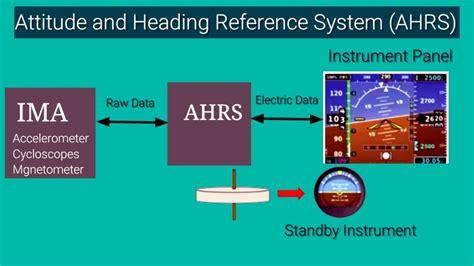
An Attitude and Heading Reference System is a network of advanced sensors strategically aligned on three axes. Unlike an Inertial Measurement Unit (IMU), which simply transmits raw data requiring further computation, an AHRS incorporates onboard processing to instantly deliver complete attitude and heading information. Through sophisticated algorithms like sensor fusion, AHRS compensates for gyroscopic drift by referencing both gravity and the Earth’s magnetic field, enabling a continuously accurate depiction of the aircraft’s position.
This seamless blending of sensor inputs results in drift-free orientation, making AHRS not only more cost-effective but also substantially more efficient than traditional high-grade IMUs, which rely heavily on extremely stable gyroscope bias characteristics.
The Components Behind AHRS Functionality
Understanding the power of AHRS requires an exploration into its primary components:
- Gyroscopes: Measure angular velocity around the aircraft’s axes.
- Accelerometers: Detect linear acceleration and gravitational forces.
- Magnetometers: Sense magnetic field vectors to assist with heading accuracy.
Together, these elements work in concert, with real-time computational algorithms—often employing an Extended Kalman Filter—to produce an accurate, stable, and responsive orientation solution essential for modern aviation operations.
Sensor Fusion and Its Critical Role
Sensor fusion stands at the heart of AHRS efficacy. By intelligently combining multiple types of sensor data, the system ensures that short-term inaccuracies from one sensor type are corrected by the long-term stability of another. For instance, while gyroscopes offer excellent short-term angular velocity data, they are prone to drift over time. Accelerometers and magnetometers, conversely, provide absolute reference points but suffer from immediate inaccuracies due to turbulence or local magnetic disturbances.
Through advanced algorithms, AHRS systems achieve a balance, ensuring high-frequency responsiveness and long-term stability—an indispensable attribute for any aircraft’s navigation and control systems.
AHRS Versus Traditional Gyroscopic Instruments
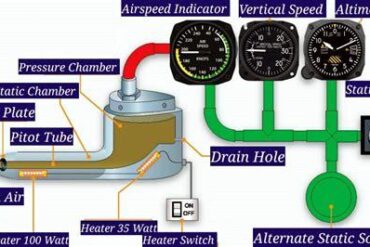
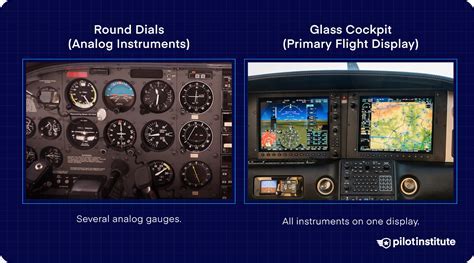
Before AHRS, aircraft relied on a suite of mechanical gyroscopes: the attitude indicator, heading indicator, and turn coordinator. These instruments, though revolutionary in their time, suffered from significant maintenance needs, susceptibility to drift, and sensitivity to vibrations. In contrast, AHRS-based systems:
- Require significantly less maintenance.
- Offer greater reliability in turbulent conditions.
- Deliver continuous self-correction via sensor fusion.
- Weigh considerably less, enhancing aircraft performance.
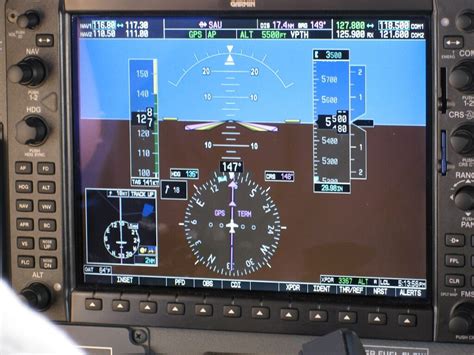
The advent of AHRS technology has enabled the development of the glass cockpit, where digital displays replace traditional mechanical instruments, presenting pilots with Primary Flight Displays (PFDs) that are clear, integrated, and highly informative.
Integration of AHRS with Electronic Flight Instrument Systems (EFIS)
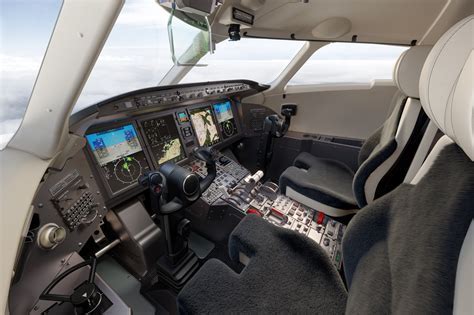
Today’s advanced aircraft often feature EFIS that integrate AHRS data to provide comprehensive flight displays. In these glass cockpits, AHRS outputs are visualized on screens that combine attitude, heading, speed, altitude, and navigational information into a single, easy-to-read interface. This evolution enhances situational awareness and reduces pilot workload, contributing substantially to flight safety and efficiency.
The Role of AHRS in Inertial Navigation Systems (INS)
While AHRS is predominantly used for attitude and heading determination, its capabilities also support inertial navigation functions. By fusing acceleration and rotation data over time, AHRS can provide short-term navigation solutions, particularly useful during GPS outages or in regions with degraded satellite coverage. Although traditional full-scale INS remain more accurate over long periods, AHRS offers a lightweight and cost-effective alternative for many aviation applications.
Advancements in AHRS Technology
The miniaturization of sensors and improvements in computational capabilities have dramatically increased the accuracy and robustness of modern AHRS systems. Innovations such as dual-AHRS setups, where two independent systems cross-check each other, are becoming standard in commercial and military aviation, offering unprecedented redundancy and safety margins.
Moreover, new algorithms capable of dynamically adjusting to changing magnetic environments and turbulence profiles continue to push the boundaries of what AHRS can achieve. Today’s systems can maintain high accuracy even during aggressive flight maneuvers, ensuring that pilots receive consistent and trustworthy information under all conditions.
Combining AHRS with Air Data Computers (ADCs): ADAHRS Systems
When AHRS data is merged with inputs from air data computers measuring airspeed, altitude, and outside air temperature, the resulting system is termed an Air Data, Attitude, and Heading Reference System (ADAHRS). This integration enables comprehensive situational awareness and allows for advanced flight management and autopilot systems to function seamlessly.
In ADAHRS, the synergy between inertial and air data sensors results in systems that can maintain operational integrity even in partial failures, an essential requirement for commercial aviation certification.
Applications of AHRS Beyond Aviation
While aviation remains the primary field of application, AHRS technology is rapidly expanding into other domains. Modern unmanned aerial vehicles (UAVs), spacecraft, maritime navigation systems, and even ground vehicles increasingly rely on AHRS units for orientation and control.
The affordability and robustness of MEMS-based AHRS solutions have democratized access to high-quality navigation systems, fostering innovation across industries.

Challenges and Future Prospects
Despite its many advantages, AHRS is not without challenges. Susceptibility to magnetic disturbances, sensor noise, and bias instability under certain conditions requires continual improvements in sensor quality and algorithm sophistication. In highly dynamic environments, ensuring the system remains calibrated and reliable over extended periods demands cutting-edge computational strategies.
Looking forward, the integration of machine learning and artificial intelligence into sensor fusion algorithms offers promising avenues. These technologies could allow AHRS to adapt in real time to changing environmental conditions, further reducing errors and enhancing reliability.
Moreover, as the aerospace industry pushes towards urban air mobility (UAM) and autonomous flight, the demand for compact, ultra-reliable AHRS systems is set to soar. The future AHRS units will likely feature even greater resilience, enhanced redundancy, and integrated multi-sensor inputs including vision-based and lidar-based systems to complement inertial navigation.
Conclusion
In conclusion, the Attitude and Heading Reference System represents a cornerstone of modern aviation technology, blending mechanical simplicity with computational sophistication to deliver critical orientation data. As aerospace ventures into increasingly complex and autonomous domains, the role of AHRS will only grow in importance, underpinning the safety, efficiency, and innovation that define the skies of tomorrow.