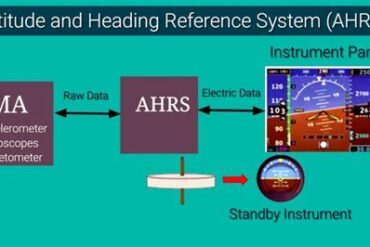
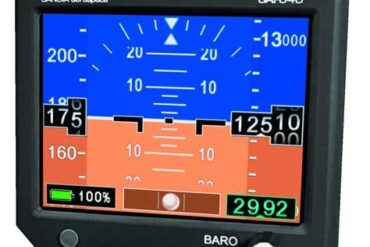
An Attitude and Heading Reference System (AHRS) is a modern tool that provides similar information to traditional mechanical gyros found in attitude indicators and heading indicators. However, AHRS delivers more precise data by utilizing electromechanical gyros, accelerometers, and a magnetometer or flux valve.
The AHRS system detects roll, pitch, and yaw, just like traditional gyroscopic instruments. Its solid-state components respond to changes as the aircraft maneuvers. The data from these components is combined to generate accurate readings of attitude and heading. Initially, AHRS technology was primarily used in commercial and military aircraft. As it has evolved and become more affordable, it is now increasingly found in general aviation (GA) aircraft.
One significant advantage of AHRS over traditional gyroscopic instruments is that it is not affected by precession errors and does not require regular manual adjustments. Besides its main function of supporting flight instruments, AHRS systems can transmit data to autopilots, flight directors, yaw dampers, flight data recorders, and various other components.
Upon startup, AHRS systems automatically perform an alignment to determine the aircraft’s initial attitude. Depending on the model, this process can take a few seconds to a couple of minutes. It’s crucial not to move the aircraft during this alignment, as movement can introduce errors that may not be noticeable on the ground but could become significant during flight.
Most AHRS units also feature an in-flight alignment option if there’s a power loss or malfunction. If there is a complete failure of the AHRS, pilots can rely on traditional standby flight instruments.