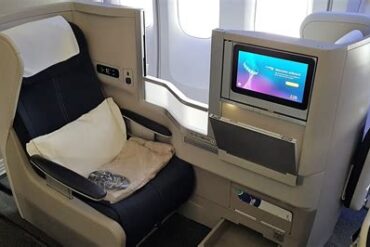
Regional aviation has spent decades trapped in an uncomfortable middle ground. Passengers paying premium fares on short-haul routes often receive little more than blocked middle seats, slightly wider cushions, and upgraded snacks marketed as “business class.” Meanwhile, long-haul travelers enjoy lie-flat suites, privacy doors, advanced ergonomics, and luxury finishes that increasingly resemble boutique hotel rooms rather than aircraft cabins. The divide has never been caused by a lack of passenger demand. It has been driven by one unforgiving engineering reality: weight.
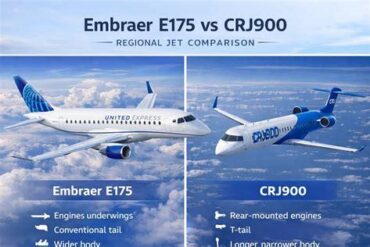
Every kilogram added to a regional aircraft matters far more than it does on a larger jet. A seat that seems perfectly reasonable aboard an Airbus A350 or Boeing 777 can become economically impractical on an Embraer E175 or CRJ900. Airlines operating regional fleets have therefore spent years balancing passenger expectations against the brutal mathematics of fuel burn, payload restrictions, maintenance costs, and operational efficiency.
That equation may finally be changing.
Expliseat’s unveiling of the TiSeat S at Aircraft Interiors Expo 2026 represents more than another premium airline seat launch. It signals a possible turning point in regional aviation economics. By combining titanium structures with carbon fiber construction, the company claims the seat achieves approximately 40% lower weight than traditional business-class products. In aviation terms, that is not a marginal improvement. It is the kind of leap capable of reshaping cabin design strategies across entire fleets.
The implications extend well beyond aesthetics or passenger comfort. If lightweight premium seating can truly deliver full-featured business-class experiences without imposing severe operational penalties, airlines may finally have a path toward offering genuine premium cabins on regional jets instead of watered-down approximations.
The regional business-class market has long been constrained by physics. Titanium may finally loosen those constraints.
After years of incremental cabin improvements, airlines now face the possibility of a genuine structural breakthrough.
Why Weight Has Always Crippled Regional Business Class
Aircraft seating is one of the least glamorous yet most consequential aspects of airline economics. While passengers notice upholstery, legroom, and recline angles, airlines focus obsessively on mass. Every additional kilogram increases fuel consumption across thousands of flights annually. On smaller aircraft, those penalties become magnified.
Regional jets operate under far tighter performance margins than widebody aircraft. An Airbus A320 carrying 180 passengers distributes cabin weight across a relatively large payload capacity. By contrast, an Embraer E175 or Bombardier CRJ900 typically transports between 70 and 90 passengers. Each individual seat therefore represents a much larger percentage of the aircraft’s overall operating weight.
Traditional premium seats are extraordinarily heavy because of their complexity. Recline systems require motors, reinforced hinges, mechanical supports, thicker structures, and stronger mounting points. Integrated tray tables, leg rests, armrests, power systems, and larger backshells further increase mass. Crashworthiness regulations also demand extremely durable frames capable of surviving significant forces during emergency scenarios.
The result is a product category that steadily gained comfort while simultaneously becoming heavier.
On large long-haul aircraft, airlines could justify the weight because premium fares generated enormous revenue. But regional routes rarely produce the same economics. A regional business-class seat weighing 55 to 77 pounds may seem manageable in isolation, yet multiply that across 12 or 16 seats and the consequences quickly become significant. Hundreds of additional kilograms directly impact climb performance, fuel efficiency, maintenance cycles, and route viability.
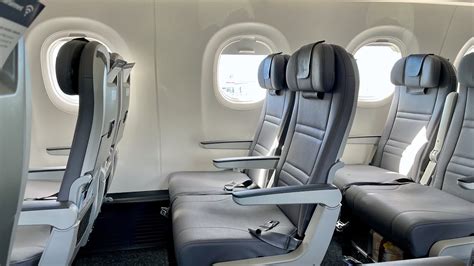
This explains why so many airlines adopted “Eurobusiness” or hybrid premium cabins instead of authentic business-class seating. Rather than installing dedicated premium products, carriers simply modified economy cabins with extra pitch and enhanced service. The visual distinction existed, but the actual comfort gap remained relatively narrow.
Passengers noticed.
Travelers increasingly accustomed to premium experiences on long-haul flights began expecting consistency across shorter sectors as well. Airlines understood the demand but struggled to reconcile it with operational realities. Regional aviation became trapped in a compromise loop where genuine premium seating was simply too expensive from a weight perspective.
Until now, reducing weight typically meant sacrificing durability, comfort, or certification standards. Expliseat’s approach attempts to break that tradeoff entirely.
How Titanium Changes The Rules Of Aircraft Seating
Titanium has always occupied a near-mythical status in aerospace engineering. It delivers exceptional strength while weighing substantially less than steel. The challenge has historically been cost and manufacturing complexity. For decades, extensive titanium usage remained largely reserved for critical structural aircraft components rather than cabin interiors.
Expliseat’s TiSeat S pushes titanium directly into the passenger experience.
The seat uses titanium extensively throughout its structural framework, particularly within high-load zones such as supports, bases, and joints. Compared to conventional steel-based architectures, titanium provides similar tensile strength at roughly 40% lower density. That ratio is extremely attractive in aviation, where even modest weight reductions generate meaningful operational savings over time.
Equally important is titanium’s resistance to fatigue. Aircraft seats endure relentless repetitive stress cycles from passenger movement, turbulence, recline operation, and constant daily usage. Materials susceptible to fatigue degradation eventually require repairs or replacement. Titanium performs exceptionally well under repeated loading conditions, making it particularly suited for commercial aviation applications.
The material’s corrosion resistance further enhances its appeal. Cabin environments experience constant humidity fluctuations, spills, cleaning chemicals, and thermal changes. Titanium tolerates those conditions far better than many traditional metals.
However, titanium alone is not responsible for the TiSeat S weight reduction.
Carbon fiber plays a critical supporting role.
Carbon Fiber Makes Premium Seats Thinner And Smarter
Carbon fiber has transformed modern aviation over the past two decades. Aircraft such as the Boeing 787 and Airbus A350 rely heavily on carbon composite structures to reduce airframe weight while improving fuel efficiency. Expliseat is now applying similar principles inside the cabin itself.
The TiSeat S incorporates an all-carbon fiber backshell, replacing heavier aluminum or mixed-material designs commonly used in premium seating. This shift fundamentally changes what designers can achieve structurally.
Traditional metal backshells often require additional reinforcement to maintain rigidity while supporting integrated features. Carbon fiber enables thinner geometries without compromising strength. Engineers can therefore create more sculpted ergonomic forms while simultaneously lowering mass.
This matters because modern business-class expectations increasingly revolve around privacy, support, and spatial definition rather than simple seat width alone. Wrap-around headrests, contoured lumbar zones, integrated storage elements, and carefully shaped support surfaces all contribute to perceived comfort.
Carbon fiber allows those features to exist without triggering the dramatic weight escalation typically associated with premium products.
The material also improves design flexibility. Carbon composites can be molded into complex shapes more efficiently than many metallic structures, opening possibilities for future cabin concepts that prioritize both aesthetics and efficiency.
Combined with titanium architecture, the resulting product reportedly weighs between 33 and 44 pounds, significantly below conventional business-class seating. Across an entire cabin, those reductions become operationally transformative.
An airline installing 16 lightweight premium seats could eliminate several hundred kilograms from the aircraft before considering additional savings from lightweight economy seating throughout the rest of the cabin.
That scale of reduction fundamentally alters regional fleet economics.
Why Regional Jets Are The Perfect Testing Ground
Regional aircraft stand to benefit more dramatically from lightweight seating than almost any other segment of commercial aviation.
These jets typically operate high-frequency routes with multiple daily cycles. A single aircraft may complete numerous short sectors every day, multiplying the financial impact of fuel efficiency improvements over time. Even tiny reductions in fuel burn per flight accumulate into substantial annual savings.
Industry estimates suggest fuel consumption can rise approximately 0.03% to 0.05% for every additional kilogram carried. While that may appear trivial, aviation economics thrive on cumulative optimization. Hundreds of kilograms removed from a regional aircraft operating thousands of annual flights can translate into major reductions in fuel expenditure.
Expliseat claims that combining the TiSeat S with its lightweight TiSeat 2X economy product can reduce overall aircraft weight by as much as 1,323 pounds (600 kilograms).
That figure carries implications extending beyond fuel alone.
Lower aircraft weight can improve climb performance, particularly at hot-and-high airports where regional jets frequently encounter operational limitations. Reduced mass may also extend range capabilities, potentially allowing airlines to operate longer routes without payload penalties.
Maintenance economics improve as well. Lighter aircraft place less stress on landing gear, braking systems, tires, and structural components. Over years of operation, those reductions contribute to lower lifecycle costs.
For airlines operating thin-margin regional networks, these efficiencies matter enormously.
The timing is especially significant because regional aviation faces mounting competitive pressure. Passengers increasingly compare regional flights directly against narrowbody experiences. Airlines that continue offering outdated premium cabins risk appearing uncompetitive, particularly among high-yield business travelers.
A lightweight business-class solution therefore becomes more than a comfort upgrade. It evolves into a strategic fleet tool.
From Individual Seats To Entire Fleet Strategies
One of the most strategically important aspects of the TiSeat S is not the seat itself but the ecosystem surrounding it.
Expliseat designed the product to share components and architecture with its TiSeat 2X economy platform. That commonality creates operational simplification airlines aggressively pursue across modern fleets.
Aircraft operators manage enormous inventories of spare parts, maintenance procedures, technician training programs, and certification requirements. Standardizing seat architectures across multiple cabin classes reduces complexity in all those areas simultaneously.
Maintenance crews benefit from familiar systems and interchangeable components. Airlines reduce spare inventory requirements. Repair procedures become more streamlined. Downtime may decrease.
These efficiencies matter because airline profitability often depends less on headline innovation and more on operational consistency.
Cabin branding also improves through unified design language. Many airlines struggle to maintain visual consistency across mixed fleets containing regional jets, narrowbodies, and widebodies from multiple manufacturers. Shared seating architecture allows carriers to create more cohesive passenger experiences regardless of aircraft type.
The TiSeat S has additionally been designed for compatibility beyond regional aviation. Expliseat intends the product to function aboard narrowbody aircraft such as the Airbus A320 family and Boeing 737 series.
That scalability could prove decisive.
Airlines increasingly seek fleet-wide standardization strategies that simplify procurement and reduce long-term operating complexity. A lightweight premium seat deployable across multiple aircraft categories becomes highly attractive from both financial and branding perspectives.
Instead of developing separate regional and narrowbody premium products, carriers may eventually unify short-haul business-class experiences around a single lightweight architecture.
If successful, that shift would fundamentally alter premium cabin planning throughout the industry.
Passengers Could Finally Get Real Business Class On Short Flights
For years, short-haul premium travel has largely depended on marketing language rather than genuine product differentiation.
Passengers purchasing business-class tickets on many regional routes often receive limited tangible upgrades. A blocked middle seat, priority boarding, lounge access, and better catering rarely replicate the premium experiences travelers associate with modern business class.
The underlying problem has never been imagination. Airlines understood exactly what passengers wanted. The challenge was making those products economically viable aboard smaller aircraft.
The TiSeat S potentially changes that calculation.
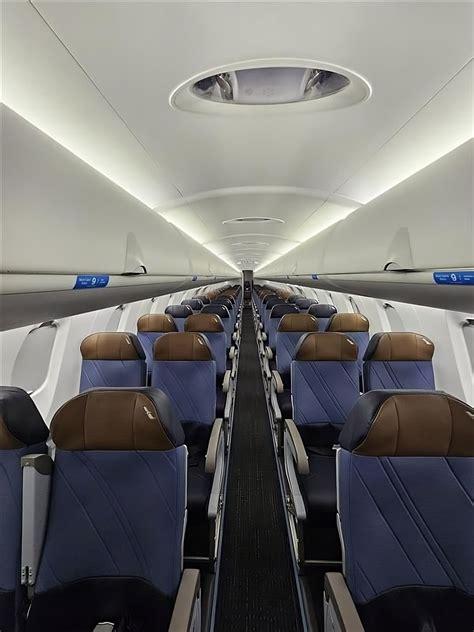
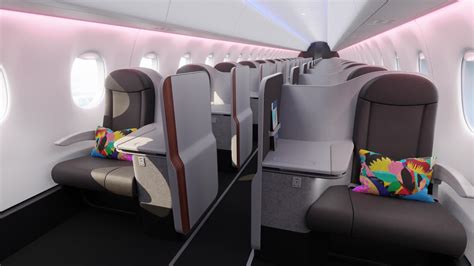
Features including wrap-around backrests, movable leg rests, integrated tray tables, advanced ergonomic shaping, and enhanced privacy elements move regional seating closer to genuine business-class territory rather than premium economy territory.
Importantly, these features arrive without the traditional mass penalties that historically made such products impractical.
This could produce a broader transformation in passenger expectations. Travelers may begin demanding greater consistency between regional and mainline operations. Airlines capable of delivering that continuity could gain meaningful competitive advantages, especially among corporate travelers willing to pay premium fares for comfort and reliability.
The ripple effects may extend into route planning itself.
If lightweight premium cabins improve regional route profitability, airlines could justify expanding business-class offerings across more secondary markets. Smaller cities may gain access to higher-quality premium products previously reserved for major hubs and long-haul routes.
Regional aviation has often existed in the shadow of larger aircraft innovation. Yet this may become one of the rare moments where regional constraints actually drive industry-wide transformation.
The Future Of Premium Aviation May Depend On Weight Reduction
The aviation industry is entering an era where efficiency pressures are intensifying simultaneously from economic and environmental directions. Airlines face volatile fuel prices, sustainability targets, fleet modernization costs, and increasingly demanding passenger expectations.
Weight reduction sits at the center of all those challenges.
Historically, cabin innovation focused heavily on adding features. More privacy, larger screens, thicker cushions, and greater personalization often resulted in steadily heavier interiors. The TiSeat S reflects a different philosophy emerging across aerospace engineering: smarter materials delivering better experiences with fewer penalties.
That shift mirrors broader aircraft development trends already visible in engines, airframes, and structural systems.
Lightweight materials are no longer niche technologies reserved for flagship aircraft programs. They are becoming foundational tools for achieving the next generation of operational efficiency.
If Expliseat’s titanium-and-carbon approach proves commercially successful after certification and service entry in 2027, competitors will almost certainly accelerate similar strategies. Regional aviation could become the proving ground for an entirely new category of lightweight premium interiors.
For passengers, the benefits may finally be tangible. Real business-class comfort on short-haul flights would no longer require compromise disguised as luxury.
For airlines, the implications are even larger. A premium seat that improves passenger experience while simultaneously lowering operational penalties represents one of the rarest achievements in commercial aviation: a product capable of satisfying both travelers and accountants at the same time.
Physics has constrained regional business class for decades.
Titanium may finally allow the industry to move beyond those limits.