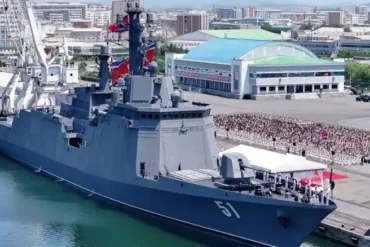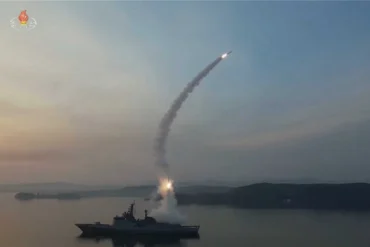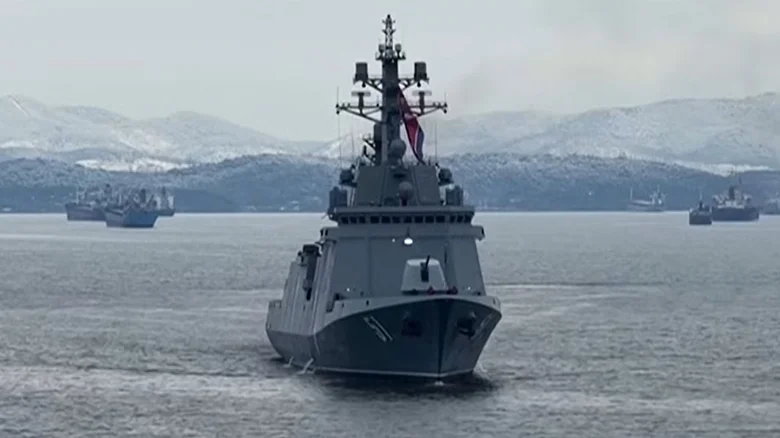
North Korea has long been viewed as a military power built around artillery, missiles, and mass ground forces rather than blue-water naval strength. Its fleet has traditionally centered on coastal patrol craft, submarines, and small combat vessels designed for regional defense rather than global reach. That image may now be changing. The unveiling and weapons testing of the Choe Hyon-class destroyer signals Pyongyang’s clearest attempt yet to field a modern surface combatant capable of projecting force beyond its shoreline.
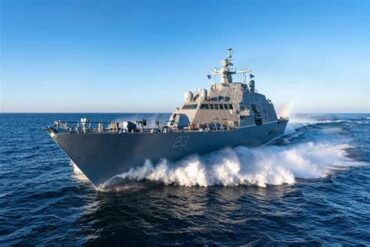
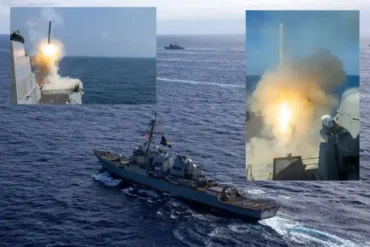
The new destroyer has generated outsized attention because some observers believe it could challenge advanced Western warships, including the U.S. Navy’s famed Arleigh Burke-class destroyers. That is an ambitious claim. The Burke class has spent decades proving itself in combat zones, missile defense missions, and multinational operations. Yet the very fact that North Korea’s new vessel is being discussed in the same conversation reveals how serious this program appears to be.
The Choe Hyon is reportedly the lead ship of a new destroyer class, with a second vessel, Kang Kon, already launched. That suggests North Korea is not building a one-off prestige project, but the early stage of a broader naval modernization effort. For a country with limited resources and heavy sanctions pressure, committing to multiple large warships is strategically significant.

Why the Choe Hyon-Class Matters
North Korea’s navy has historically lacked large, modern multi-role surface combatants. Much of its fleet was suited for coastal harassment, infiltration missions, or defensive patrols. A destroyer changes that equation. Even a modestly capable guided-missile destroyer can influence sea lanes, threaten regional shipping, and complicate enemy planning.
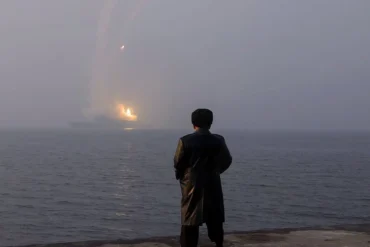
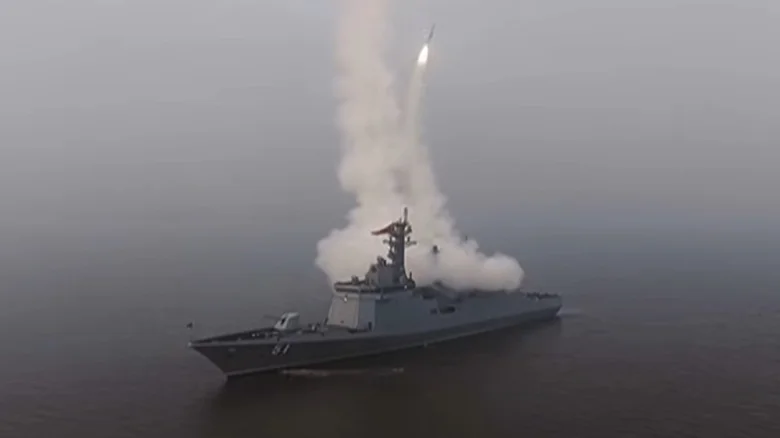
Recent missile tests attributed to the Choe Hyon included anti-ship missiles and cruise missiles reportedly striking targets accurately. If genuine, that would indicate progress in integrating weapons control, navigation systems, and targeting architecture. Building missiles is one challenge; linking them into a coherent combat system aboard a moving warship is another entirely.
This matters because modern naval warfare depends less on steel hulls and more on digital coordination. Sensors must detect threats, computers must classify them, launchers must respond quickly, and communications systems must survive jamming. If North Korea has made meaningful progress in those areas, the Choe Hyon becomes more than propaganda.
Choe Hyon vs Arleigh Burke: Size and Firepower
On paper, the two classes occupy the same broad category: missile-armed destroyers designed for offensive and defensive operations. But they differ sharply in scale.
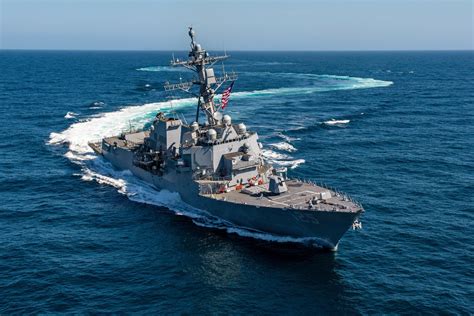
The Choe Hyon is believed to displace roughly 5,000 tons, placing it closer to a medium destroyer or large frigate by global standards. By contrast, Arleigh Burke-class ships range from approximately 8,000 to nearly 10,000 tons, giving them more room for fuel, sensors, command spaces, crew support, and weapons growth.
Missile capacity is another key comparison point. Reports suggest the Choe Hyon carries 74 vertical launch cells, an impressive number for a vessel of its size. Burke-class ships field 96 launch cells, a benchmark that has made them exceptionally flexible. Those cells can be loaded with surface-to-air missiles, land-attack cruise missiles, anti-submarine weapons, and interceptors.
Some analysts note that portions of North Korea’s launch system may be sized for ballistic missiles, something uncommon on U.S. destroyers. If true, Pyongyang may be emphasizing shock-strike capability and political deterrence rather than balanced mission versatility.
Where America Still Holds the Clear Edge
Raw missile count alone does not determine naval superiority. The U.S. Navy’s biggest advantage lies in systems integration refined over decades. The Aegis Combat System aboard Arleigh Burke destroyers remains one of the most capable maritime battle management networks ever deployed. It combines radar tracking, interceptor control, data fusion, and cooperative engagement with allied forces.
That means a Burke-class ship is not fighting alone. It can function as part of a layered network with cruisers, aircraft, submarines, satellites, and land-based sensors. A detected threat can be tracked by one platform and engaged by another. This networked warfare model is difficult and expensive to replicate.
Crew training is another decisive factor. U.S. naval crews routinely conduct global deployments, live exercises, anti-submarine drills, air defense scenarios, and real-world intercept missions. Experience under pressure often matters more than technical specifications on paper.
Maintenance and logistics also favor Washington. A warship is only dangerous when it is operational. Sustaining engines, electronics, radars, and missiles over years of service requires industrial depth that North Korea may struggle to match.
The Propaganda Problem and the Intelligence Gap
Any assessment of North Korean weapons programs must confront a simple reality: reliable data is scarce. Much of the available information comes through state media, staged footage, or external imagery analysis. Claims of “perfect accuracy” or “ultra-precision strikes” cannot be accepted at face value without independent verification.
That does not mean the program is fake. It means uncertainty cuts both ways. Outsiders may underestimate real progress, but dramatic official claims may also conceal serious weaknesses in software reliability, sensor range, engine durability, or ammunition quality.
North Korea has repeatedly surprised observers with missile advances once thought beyond its reach. That history makes dismissing the Choe Hyon unwise. But it also does not justify assuming parity with the world’s most battle-tested destroyer fleet.
Can It Really Rival the Burke-Class?
The honest answer is not yet proven. The Choe Hyon-class may represent a major leap for North Korea and a genuine regional concern. It likely enhances anti-ship strike options and strengthens Pyongyang’s maritime deterrence posture. Against weaker or unprepared opponents, it could be dangerous.
However, rivaling the Arleigh Burke class requires more than missiles and launch cells. It requires radar excellence, resilient software, electronic warfare dominance, fleet integration, crew proficiency, and sustained readiness. Those are areas where the United States still holds a substantial advantage.
North Korea’s new destroyer should be taken seriously—but not mythologized. It is best understood as a warning that Pyongyang is investing in a more sophisticated navy, not as proof that America’s premier destroyers suddenly have an equal challenger.