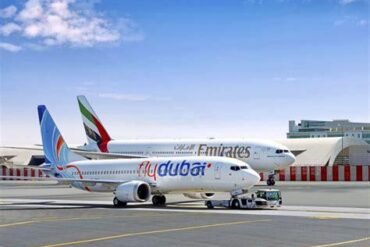
Flydubai’s rise from a nimble regional carrier into a connective engine of global mobility is no accident. The airline’s 2025 performance crystallized a strategy built on disciplined network expansion, a modernized fleet plan, and a sharpened focus on underserved markets that quietly fuel global trade and tourism. Record passenger volumes and revenue gains did not emerge from marketing theatrics; they grew from operational muscle and a ruthless clarity about where demand actually lives. The numbers tell a story of velocity, but the strategy behind them explains why the momentum looks durable rather than fragile.
The carrier’s operating model blends the agility of a value-focused airline with the connective power of a hub-centric network. Dubai’s geographic advantage becomes a multiplier when paired with precise route selection, allowing flydubai to stitch together secondary cities that global carriers often overlook. This is not scattershot growth. It is methodical, data-driven expansion that turns latent demand into sustained traffic flows. The result is a network that scales without bloating, growing reach while preserving unit economics in markets that reward consistency over spectacle.
Flydubai’s Growth Formula Anchored in Underserved Markets
By 2025, flydubai served 140 destinations across 58 countries, connecting Dubai to more than 100 underserved markets. That phrase matters. Underserved markets are where price sensitivity meets pent-up mobility needs, and where consistent frequency can unlock tourism, business travel, and cargo spillover. Serving 15.7 million passengers in a single year, backed by a 6% capacity increase to over 47.1 billion available seat kilometers, demonstrates that demand materialized where the airline planted flags. Revenue climbed to a record $3.7 billion, translating operational scale into commercial strength without diluting network discipline.
The connective logic also reinforces Dubai’s role as a gateway for trade and tourism. Each new city-pair compounds the hub’s gravitational pull, funneling flows across Africa, the Middle East, Europe, and Central Asia. Passenger growth of 17% in the Middle East and 12% in both Africa and Europe signals more than a cyclical rebound; it reveals corridors of mobility that reward frequency, reliability, and practical pricing. Business class demand rising 19% adds a premium layer to what was once perceived as a purely leisure-forward proposition, showing that product evolution is reshaping the airline’s yield mix.
Record-Breaking Performance That Redefined Scale
Operational rigor turned expansion into profit. A 6% improvement in on-time performance alongside 126,604 flights indicates a carrier scaling without sacrificing punctuality, the unglamorous metric that quietly governs customer trust. Pre-tax profit reached approximately $591 million, with net profit near $531 million, anchoring growth in financial resilience rather than fragile volume chasing. This balance matters because scale without margins is just motion. Flydubai’s 2025 performance demonstrated that disciplined expansion can coexist with profitability when network choices align with fleet capabilities and demand curves.
The network’s expansion added nine new destinations and resumed service to three cities, reinforcing the airline’s thesis that coverage density beats headline-grabbing long-haul gambits. This is a carrier that understands its comparative advantage: short- to medium-haul connectivity where aircraft utilization stays high and market stimulation is measurable. The refusal to stretch prematurely into North America underscores strategic restraint, favoring routes where economics are predictable over prestige plays that erode margins.
Fleet Expansion Strategy Fueling Network Resilience
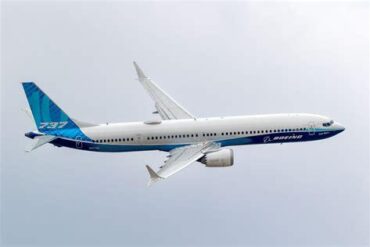
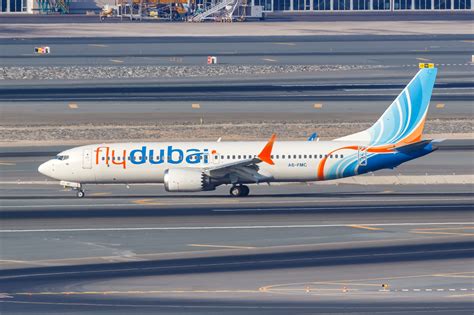
Fleet strategy is where growth becomes durable. Flydubai operates 97 aircraft with an average age of 7.4 years, a youth profile that compresses maintenance costs and improves dispatch reliability. The order book of 145 aircraft, including Boeing 737 MAX variants and the incoming Boeing 787-9, signals a calibrated leap in capacity and range. The narrowbody fleet underwrites frequency and network density, while the 787-9 introduces longer reach without forcing a premature pivot into ultra-long-haul risk. This layered fleet architecture lets the airline right-size capacity to route economics rather than bending routes to aircraft constraints.
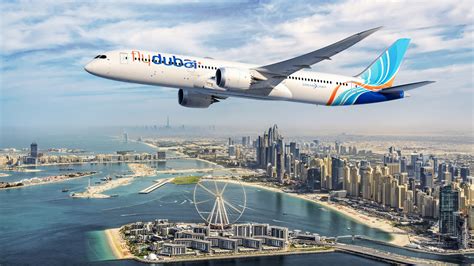
Scheduled operations for 2026 point to 132,756 flights and more than 22.7 million seats, a step-change that compounds network breadth with schedule depth. Twelve aircraft deliveries push the fleet into triple digits, giving planners more levers to fine-tune frequency, open thin routes, and add resilience to peak-season surges. Capacity growth becomes a strategic instrument rather than a blunt expansion tool, enabling flydubai to absorb demand spikes without distorting pricing power.
Passenger Experience as a Revenue Multiplier
Product evolution quietly amplifies network economics. Enhancements to the onboard experience, digital touchpoints, and premium cabin offering reposition flydubai beyond the simplistic low-cost label. The growth in business class demand reflects a market response to improved comfort, connectivity, and schedule reliability. When experience aligns with convenience, price elasticity widens, allowing the airline to capture higher-yield segments without alienating value-conscious travelers. This duality, value with credible premium options, turns the network into a revenue engine rather than a volume treadmill.
The experience layer also strengthens loyalty in markets where alternatives are limited but expectations are rising. Reliability, modern cabins, and predictable schedules create trust. Trust converts occasional travelers into habitual users, especially across regional corridors where time sensitivity competes with price sensitivity. Over time, this compounds into defensible market share, the quiet moat of aviation.
Why Flydubai’s 140-Destination Network Matters for 2026 and Beyond
The trajectory into 2026 looks less like a growth spurt and more like a structural phase change. Increased seat supply, a maturing premium product, and a fleet poised to double against current capacity give flydubai the tools to defend its corridors while selectively opening new ones. The airline’s refusal to chase prestige routes before the economics align preserves balance sheet health, while its focus on underserved markets continues to unlock organic demand. This is growth with a thesis: connect the ignored, scale with discipline, modernize the fleet, and let reliability do the persuasion. The strange beauty of aviation strategy is that it rewards patience as much as ambition, and flydubai’s formula turns both into altitude.