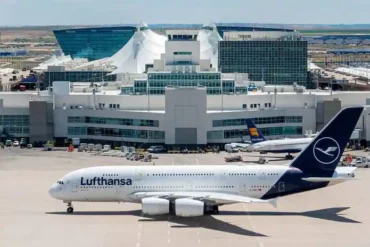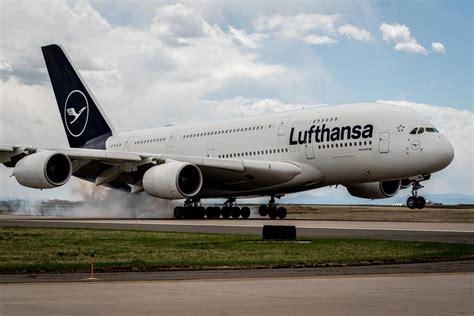
Lufthansa has quietly made a decisive adjustment to its long-haul strategy in the United States, cutting back Airbus A380 operations to Denver in a move that signals a sharper focus on yield over spectacle. The German carrier has confirmed that all A380 flights planned for June have been removed from its 2026 schedule, trimming the operating window and reducing total superjumbo frequencies to Colorado. For an airport that only recently joined the very small club of regular double-decker operators, the change is significant.
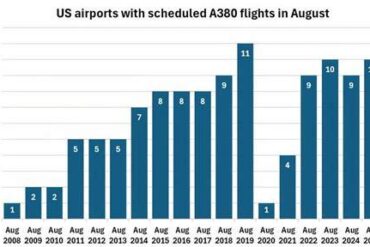
Denver International Airport remains a rarity in the global A380 story. Aside from a single Air France diversion in 2018, the airport had never hosted scheduled Airbus A380 services until Lufthansa arrived. The airline is still the only carrier to operate the type there on a planned basis, and that exclusivity continues in 2026, albeit in a scaled-down form that reflects changing commercial realities rather than a loss of confidence in the market.
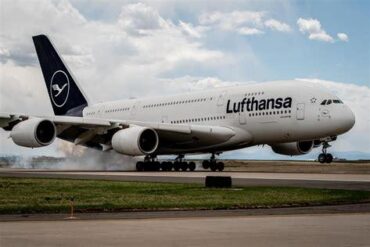
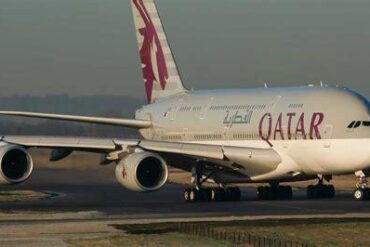
Lufthansa’s 509-seat, first-class-equipped Airbus A380s first touched down in Denver on April 30, 2025, creating instant buzz among aviation enthusiasts and local travelers alike. During that initial season, data from Cirium shows 167 round-trip departures between Munich and Denver, effectively a near-full summer deployment. The aircraft’s sheer size dramatically increased capacity on the route, reshaping traffic flows across Lufthansa’s European and intercontinental network.
A Shortened A380 Season Signals Strategic Restraint
Plans for the second season were always more conservative, but the latest schedule update sharpens the reduction. Earlier projections showed 111 A380 departures for 2026, already a 34% year-on-year cut. With June now entirely removed, just 89 services remain. The operating period has narrowed from an original June 8 to September 27 window to a much tighter July 1 through September 27 season, representing a 20% week-on-week reduction and nearly half the number of flights seen in 2025.
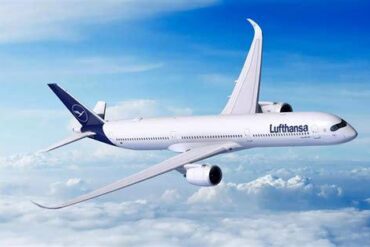
The strategic logic behind the move is straightforward. Lufthansa will continue serving Munich–Denver outside the shortened A380 window using the 293-seat Airbus A350-900, a far more flexible aircraft for shoulder-season demand. By limiting A380 operations to peak summer weeks, the airline reduces excess capacity during slower periods, aiming to lift the seat load factor and protect yields on a route that remains structurally important for Star Alliance connectivity.
Rising Passenger Numbers Mask a Capacity Problem
Passenger data explains why this recalibration was necessary. Between May and October 2025, Lufthansa carried 130,685 round-trip passengers between Munich and Denver, up sharply from 97,093 during the same months in 2024. That 35% traffic increase looks impressive at first glance, but it came alongside a 57% surge in available seats due to the introduction of the superjumbo. Capacity simply grew faster than demand.
The result was a notable drop in performance metrics. Seat load factor on the Munich–Denver route slid from 89% in 2024 to just 76% in 2025, a level that raises red flags for a premium-heavy aircraft like the A380. For comparison, Lufthansa’s Frankfurt–Denver service, operated with smaller widebodies, maintained an 89% load factor over the same period. The numbers make it clear why trimming the A380 season became unavoidable.
Connectivity Patterns Shape the Munich–Denver Equation
Connectivity patterns also reveal how the aircraft was being used. During the peak A380 months, roughly 51% of Munich–Denver passengers connected onward at Munich, feeding cities such as Athens, Budapest, Florence, Berlin, Bengaluru, Venice, Prague, Kraków, Delhi, and Mumbai. Another 24% relied on dual connections through both Denver and Munich, often in cooperation with United Airlines, while 13% connected onward only in Denver. Pure local traffic accounted for just 12% of passengers.
This heavy reliance on connecting flows contrasts sharply with Lufthansa’s Frankfurt hub, where Denver passengers most often connected to Amsterdam, Barcelona, Vienna, Milan Malpensa, and Zurich, with far less overlap. The divergence underlines why Munich required careful capacity management. Looking ahead to 2027, Lufthansa’s decision sets a clear benchmark: if higher loads and stronger yields fail to materialize within the shortened window, the Airbus A380’s future in Denver may face further scrutiny. For now, the adjustment reads less like a retreat and more like disciplined network management, aligning aircraft size with realistic demand. Denver keeps its superjumbo connection, Lufthansa sharpens profitability, and the market gets a clearer signal that prestige aircraft must earn their place through performance alone today.