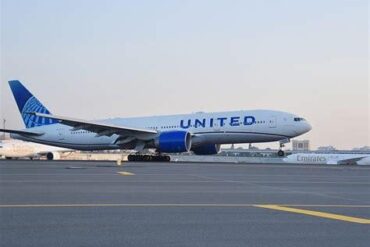
The airspace connecting Denver and Winnipeg will fall silent in early 2025 as United Airlines suspends its year-round service between the two cities. The suspension, which comes into effect in January 2025, is directly tied to the withdrawal of CAD $5 million in aviation subsidies by the Province of Manitoba — a move that has triggered broader consequences for U.S.-Canada air connectivity.
This decision not only grounds the Denver-Winnipeg route but also sends ripples through other international links involving Los Angeles, Atlanta, and Winnipeg, where airlines like WestJet face similar economic viability crises. The air corridor between Denver International Airport (DEN) and Winnipeg Richardson International Airport (YWG), once a reliable daily connection, will now go dormant until at least summer 2026, unless alternative financial structures emerge.
Economic Fragility: Manitoba’s Aviation Subsidies Withdrawal
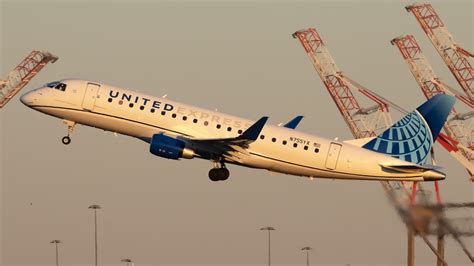
The core of this aviation shakeup lies in Manitoba’s strategic exit from aviation subsidy programs. Once considered a lifeline for regional and international air routes, these funds ensured economic feasibility for secondary cross-border links. In particular, United Airlines’ daily flights operated using an Embraer 175 — a 74-seat regional jet — which now joins the list of services deemed unsustainable.
The gravity of the move is compounded by its immediate impact on WestJet’s transborder flights to Los Angeles (LAX) and Atlanta (ATL). These routes, launched under the assumption of continued provincial backing, now face existential uncertainty. While United had not explicitly tied its route to government assistance, the timing and scale of its suspension signal the extent to which such subsidies were woven into the route’s economic logic.
WestJet’s Position: Strategic Hubs at Risk
WestJet’s Winnipeg-Atlanta and Winnipeg-Los Angeles services offer a broader lens into the fragile ecosystem of government-supported air connectivity. Operating five times a week, the Winnipeg-Atlanta flight provides a critical link to Delta Air Lines’ global hub, allowing for onward international and domestic connections across the United States and beyond.
However, Delta’s partnership with WestJet may not be enough to sustain this route. The withdrawal of provincial funds now places the responsibility of survival squarely on ticket revenue and interline agreements. Although the Atlanta route boasts moderate frequency and relatively stable demand, it remains precariously balanced without additional support mechanisms.
The Winnipeg-Los Angeles route, on the other hand, faces far steeper odds. Operating just twice per week during peak travel months, it lacks both the frequency and alliance-driven network support that Atlanta enjoys. With only 307–336 seats offered weekly, its continuation under current conditions appears bleak.
Irony in the Air: The Decline of the Film-Driven LAX-YYG Route
There is a stinging irony in the potential loss of the Los Angeles-Winnipeg connection — a route initially championed for its ability to link Hollywood and Manitoba’s booming film sector. For years, Manitoba’s film production tax credits attracted large-scale U.S. productions, creating a transborder creative economy that made the LAX-YYG route not just practical but necessary.
This route once represented a tangible synergy between aviation and economic development. However, despite continued demand from the film and television industry, economic viability has faltered. With trade frictions between Canada and the U.S., and no current plans for aviation reinvestment by Manitoba, the strategic logic behind the route is now undercut by financial realities.
Aircraft Utilization and Route Efficiency
The technical backbone of these suspended or endangered services further illustrates their operational challenges. United’s Embraer 175, while efficient and appropriate for mid-range regional routes, offers a modest 74-seat capacity. Although suited for the Denver-Winnipeg run, this aircraft configuration limits revenue potential per flight, particularly when government support is removed.
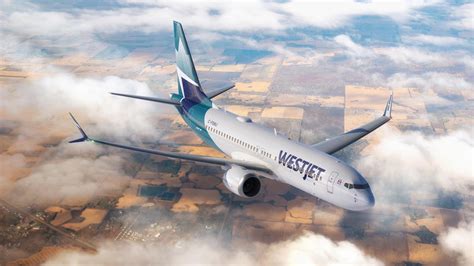
WestJet’s deployments of the Boeing 737-800 (73W) and MAX 8 (7M8) on the Winnipeg routes to LAX and ATL provide greater capacity — up to 799 weekly seats on Atlanta flights. Yet larger aircraft come with higher operating costs and require stronger load factors to maintain profitability.
In this new environment, where public sector contributions are receding, these very aircraft could turn into liabilities. The contrast between the modest Embraer 175 and the higher-capacity 737s symbolizes the spectrum of risk facing regional international routes in the absence of subsidies.

Cross-Border Aviation at a Tipping Point
The collapse of these key Winnipeg routes — in tandem with broader industry trends — underscores a harsh truth: cross-border aviation is increasingly dependent on public-private cooperation. Without government backing, routes that serve regional interests rather than pure profit motives are rapidly becoming endangered species.
What’s particularly alarming is that this development isn’t isolated. The ripple effect of Manitoba’s decision could inspire similar measures in other provinces facing budgetary constraints. That could spell further trouble for air corridors linking U.S. cities to secondary Canadian urban markets.
At present, Winnipeg’s position as a transborder gateway is severely undermined. While major cities like Toronto, Vancouver, and Montreal can rely on heavy passenger traffic to sustain multiple U.S. routes, mid-tier cities like Winnipeg often require tailored financial support to justify and maintain international connectivity.
Implications for Travelers and Airlines
For travelers, the suspension of the Denver-Winnipeg flight forces reliance on connecting itineraries through hubs like Chicago, Toronto, or Minneapolis. This not only increases travel time and inconvenience but also raises costs, especially for business travelers and those commuting for film, academic, or trade-related reasons.
Airlines, meanwhile, face tough decisions. Do they seek new financial partnerships with provinces or cities? Do they reduce capacity or abandon marginal routes altogether? As the subsidy model unravels, the risk calculus shifts — and so too will airline route strategies.
A Glimpse into the Future: Rethinking Route Sustainability
The demise of these services may serve as a wake-up call for policymakers. If the goal is to maintain a well-connected North American airspace, particularly for underserved communities and industries, then new funding frameworks will need to be considered. Options could include:
- Public-private partnerships led by local economic development agencies
- Targeted aviation incentive programs tied to industry use (e.g., film, tech, agriculture)
- Flexible federal funding programs in both Canada and the U.S. to protect strategic but non-profitable routes
Until then, the reality remains stark. Without the support that once underpinned routes like Denver–Winnipeg, Atlanta–Winnipeg, and LAX–Winnipeg, North American aviation may grow more centralized, leaving regional connections to falter.
Conclusion: A Shrinking Map for Regional Cross-Border Air Travel
The suspension of United Airlines’ Denver-Winnipeg service is more than just the loss of a single route. It symbolizes the unraveling of a network strategy that relied heavily on provincial goodwill and strategic investment. As Winnipeg’s cross-border options dwindle, cities like Los Angeles, Atlanta, and Denver lose valuable connectivity, while passengers face diminished travel flexibility.
The current turbulence in regional international aviation poses a simple but pressing question: Who pays to keep the skies connected when the market alone won’t?
If answers don’t arrive soon, the list of suspended routes will only grow — and the long-term consequences for regional economies, travelers, and even continental diplomacy could be profound.