America’s aviation system is approaching a breaking point, and the problem runs far deeper than crowded terminals or delayed flights. Across the country, airports built for the demands of the late twentieth century are now being pushed into handling passenger volumes, cargo operations, and airline schedules that belong to a completely different era. The United States still operates the largest and busiest aviation network on Earth, yet many of its most critical airports are physically trapped by urban sprawl, political resistance, environmental regulations, and decades of infrastructure hesitation.
More than 45,000 flights move through American airspace every single day, a staggering figure that continues climbing as population growth, tourism, business travel, e-commerce logistics, and international connectivity expand simultaneously. Yet the physical capacity needed to support that growth is lagging badly behind. Runways cannot simply appear overnight. New terminals require years of planning. Entire airports demand billions of dollars, massive land acquisition, federal coordination, and political courage that often evaporates the moment local opposition begins.
The result is a uniquely American contradiction. The country that pioneered modern commercial aviation now struggles to build the very infrastructure its economy increasingly depends on. Instead of constructing bold new airports designed for future demand, the system often relies on squeezing more flights into aging facilities already operating near their practical limits.
By the end of the next two decades, several regions may face aviation bottlenecks severe enough to affect economic competitiveness, tourism growth, freight movement, and even housing markets. Yet even where the need for new airports is obvious, actually building them remains painfully difficult.
Central Texas Is Quietly Becoming America’s Next Airport Emergency
Few places illustrate America’s airport dilemma more clearly than the booming corridor between Austin and San Antonio. What once existed as two separate metropolitan regions is rapidly evolving into a single interconnected economic powerhouse stretching across Central Texas. Population growth, technology investment, manufacturing expansion, logistics development, and nonstop migration into the state are reshaping the region faster than its transportation infrastructure can keep up.
Austin-Bergstrom International Airport has become one of the busiest growth airports in the United States. What was once a relatively manageable mid-sized airport now handles enormous passenger demand fueled by the city’s transformation into a technology and business magnet. Companies relocating from California, expanding startup ecosystems, music tourism, and convention traffic have pushed Austin’s airport into near-constant expansion mode.
San Antonio International Airport faces similar pressure, though on a slightly different scale. Tourism, military activity, healthcare growth, and broader regional expansion continue pushing passenger totals upward. But the deeper issue is not merely that Austin and San Antonio are individually growing. The real challenge is that the entire corridor between them is functioning more like one giant mega-region than two isolated cities.
That distinction matters enormously for aviation planning.
A purpose-built airport located between the two metropolitan areas could fundamentally reshape air travel in Central Texas. Unlike the existing airports, a new regional hub could be designed from the beginning with multiple parallel runways, massive terminal expansion capability, integrated cargo facilities, rail connections, and surrounding land reserved for future growth instead of suburban development.
Such an airport could eventually serve tens of millions of passengers annually while easing pressure on both Austin and San Antonio simultaneously. It could also attract additional international service and potentially create a stronger competitive environment among airlines.
But this is precisely the kind of ambitious infrastructure project modern America struggles to deliver.
Land acquisition alone would become politically explosive. Ranches, suburbs, environmental zones, highway corridors, and property rights would all collide immediately. Local governments would argue over tax revenue distribution. Airlines would hesitate to split operations between airports. Residents would oppose noise and traffic. Environmental reviews could stretch for years. High-speed rail links and freeway expansion would add billions more to the cost.
In practical terms, Central Texas may genuinely need a new mega-airport. In political terms, it may be nearly impossible to build.
Seattle’s Airport Capacity Problem Is Becoming Impossible to Ignore
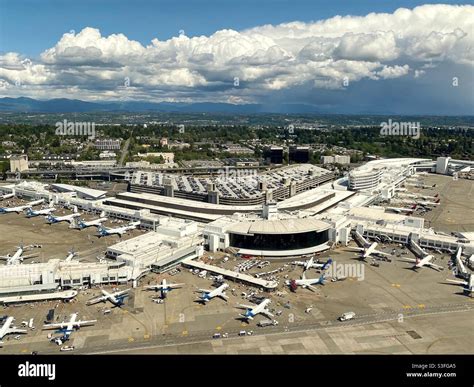
Western Washington faces a different version of the same crisis. Seattle-Tacoma International Airport has evolved into one of the nation’s most strategically important aviation hubs, driven by explosive growth in technology, global trade, tourism, and Pacific connectivity. Yet despite continuous modernization projects, Sea-Tac is running out of room.
The airport handled more than 52 million passengers in 2025, setting new records while operating on one of the most physically constrained footprints among major American airports. Unlike sprawling hubs built on enormous tracts of land, Sea-Tac is boxed in by dense suburban development and transportation corridors. Every additional gate, taxiway improvement, or terminal expansion becomes increasingly difficult and expensive.
The state of Washington has already acknowledged the severity of the problem. Officials created dedicated aviation planning groups specifically tasked with identifying long-term solutions for Western Washington’s future airport demand. That alone represents a remarkable admission. Governments rarely begin discussing entirely new airports unless existing infrastructure is nearing structural limitations.
The challenge is not understanding the need. The challenge is deciding where the burden should fall.
Any proposed location for a second major airport immediately becomes a battlefield involving environmental concerns, farmland preservation, community opposition, tribal interests, traffic fears, and regional politics. Residents support expanded aviation capacity in theory, but enthusiasm often disappears the moment a potential airport site appears near their community.
Noise pollution remains one of the most emotionally powerful anti-airport arguments in America. Modern aircraft are quieter than older generations, yet the scale of operations at major airports means communities still fear relentless overhead traffic. In environmentally conscious regions like the Pacific Northwest, concerns about emissions, wetlands, forests, and wildlife protections intensify resistance even further.
Ironically, Western Washington’s economic success is partly what created the airport crisis in the first place. Technology giants, booming trade networks, and rising international business links have dramatically increased demand for passenger and cargo capacity. The region depends heavily on global connectivity, yet the infrastructure needed to sustain that connectivity faces enormous local resistance.
That contradiction defines the modern American airport debate.
Las Vegas Is Already Planning for a Future Beyond Harry Reid International
Southern Nevada may offer the clearest real-world example of how America eventually responds when an airport reaches long-term capacity limits. Unlike regions still debating theoretical needs, Las Vegas has already moved toward planning a second major commercial airport.
Harry Reid International Airport continues posting extraordinary passenger numbers fueled by tourism, conventions, sports events, nightlife, entertainment, and international travel. Nearly 55 million passengers passed through the airport in 2025 alone, placing enormous pressure on facilities originally designed for a very different scale of operation.
Las Vegas possesses a unique economic vulnerability compared to many other cities. Tourism is not merely one sector among many. It is the core engine powering the regional economy. That means aviation capacity directly affects hotel occupancy, convention business, entertainment revenue, employment growth, and tax income.
Officials understand incremental improvements alone cannot solve the problem forever.
The proposed Southern Nevada Supplemental Airport project in the Ivanpah Valley represents one of the most serious large-scale airport development concepts currently under active review in the United States. Located south of Las Vegas near Interstate 15, the project envisions a massive new commercial airport with multiple runways, terminals, cargo infrastructure, utility systems, and extensive transportation connections.
Importantly, the project has already re-entered active federal environmental review processes after earlier efforts stalled years ago. That may sound procedural, but in American infrastructure politics, restarting a federal Environmental Impact Statement process is a major milestone.
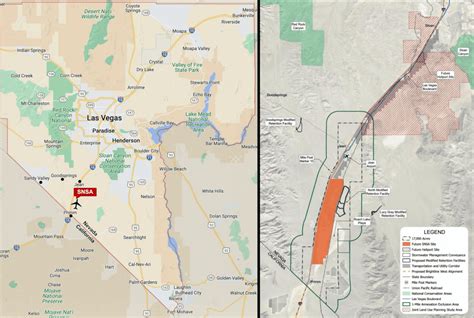
Yet even under optimistic timelines, the airport remains decades away from completion.
Federal land issues complicate development because much of the surrounding territory involves Bureau of Land Management oversight. Water availability in the desert Southwest introduces another major challenge. Ground transportation links would require substantial expansion. Environmental assessments involving wildlife habitats and desert ecosystems could take years. Financing a multi-billion-dollar airport from scratch introduces another layer of political negotiation and economic uncertainty.
Still, Southern Nevada demonstrates something important about America’s aviation future. Eventually, some metropolitan regions become too large to depend on a single dominant airport indefinitely.
Las Vegas has already crossed that threshold.
Atlanta Shows Why Second Airports Are So Difficult to Build
Atlanta represents perhaps the most fascinating airport case study in the country because it combines overwhelming demand with unusually powerful airline dominance.
Hartsfield-Jackson Atlanta International Airport remains one of the busiest airports on Earth, serving as the central pillar of Delta Air Lines’ global network. Passenger numbers continue climbing year after year, while the airport functions as a critical domestic and international transfer hub.
From a purely operational standpoint, the region has a plausible argument for a second major airport. Federal aviation studies have repeatedly examined long-term capacity concerns across metropolitan Atlanta, acknowledging that future growth could eventually strain even one of the world’s most efficient hub airports.
But Atlanta’s airport debate extends beyond simple capacity.
Competition sits at the center of the discussion.
Delta’s overwhelming presence at Hartsfield-Jackson gives the airline enormous influence over routes, scheduling, gate access, and fare dynamics. A secondary airport could potentially attract more low-cost carriers, expand point-to-point service, and create stronger pricing competition for travelers.
In theory, that sounds attractive.
In reality, building a second airport capable of meaningfully competing with Atlanta’s primary hub would require extraordinary financial and political commitment. Airlines generally prefer concentrated hub operations because they maximize connectivity and efficiency. Splitting traffic between airports can weaken those advantages.
Additionally, any proposed airport site would face the same familiar American obstacles: land acquisition battles, environmental reviews, suburban opposition, transportation infrastructure demands, and disputes over public funding.
The Atlanta case highlights an important reality about aviation economics. Even when additional capacity may be beneficial, existing airline business models often discourage fragmentation across multiple airports.
That creates a paradox where regions may need more aviation infrastructure while the industry itself hesitates to support it fully.
California’s Palmdale Experiment Could Become a Blueprint for Future Airports
While some regions debate entirely new greenfield airports, Southern California offers a different approach through the gradual redevelopment of existing aviation infrastructure.
Palmdale Regional Airport occupies a uniquely interesting position within the broader Los Angeles aviation ecosystem. Rather than building an airport completely from scratch, the city hopes to leverage existing aerospace infrastructure surrounding Air Force Plant 42 to restore meaningful commercial passenger service to the Antelope Valley.
This concept carries enormous strategic appeal because Southern California desperately needs additional aviation capacity. Los Angeles International Airport remains heavily congested despite repeated modernization projects, while surrounding airports struggle to absorb regional demand growth.
Palmdale’s advantage lies in its hybrid development model.
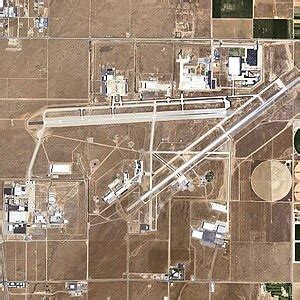
The project combines municipal land ownership, military coordination, aerospace industry partnerships, federal oversight, and potential private investment. Existing runways and aviation infrastructure already provide a foundation that entirely new airports would lack.
That dramatically reduces certain development barriers.
However, the complexity of the partnership structure introduces new complications. Military compatibility concerns must be addressed carefully. Commercial airline interest remains uncertain. Transportation access from core Los Angeles population centers remains challenging. High-speed rail integration could eventually help, but California’s rail projects have faced their own delays and controversies.
Palmdale reflects a broader truth about modern airport development in America. Increasingly, the most realistic path toward expanded capacity may involve adapting underutilized aviation assets rather than attempting politically explosive mega-airport construction from scratch.
Even so, progress remains slow.
Why America Keeps Delaying the Airports It Clearly Needs
The deeper airport crisis in the United States is not technological. America absolutely possesses the engineering expertise, aviation knowledge, and financial resources required to build world-class airports.
The real obstacle is institutional paralysis.
Large infrastructure projects now move through layers of environmental review, legal challenges, public consultation, intergovernmental coordination, financing disputes, and political resistance that can stretch timelines across decades. By the time many projects receive approval, demand projections have already evolved beyond original assumptions.
Meanwhile, passenger growth continues.
Air travel has become deeply embedded in American economic life. Remote work flexibility increased leisure travel frequency. Migration patterns shifted population growth toward Sun Belt regions. International tourism rebounded strongly. E-commerce expanded cargo aviation demand dramatically. Business travel stabilized instead of disappearing.
Every one of those trends places additional pressure on airports already operating near capacity.
Yet communities often resist airport expansion for understandable reasons. Residents worry about property values, traffic congestion, environmental impact, and quality of life. Local politicians respond to those concerns because airport opponents tend to organize intensely at the community level.
This produces a nationwide cycle where everyone agrees more infrastructure is necessary, but almost nobody wants the consequences nearby.
The result is a country increasingly dependent on aviation infrastructure designed for another century. Some airports continue stretching beyond their intended limits through terminal renovations, scheduling optimization, and operational improvements. But eventually, efficiency gains stop compensating for physical constraints.
At that point, entirely new airports become unavoidable.
America is rapidly approaching that moment in several major regions simultaneously.