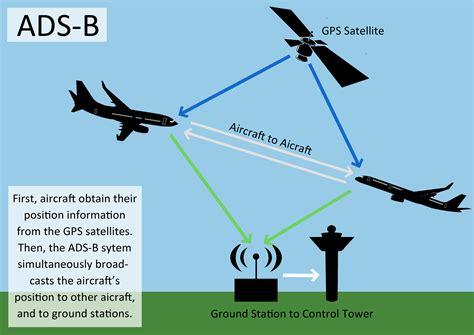
In the wake of a devastating crash in January 2025, the debate surrounding military helicopter tracking in Washington, D.C. airspace has intensified. While the National Defense Authorization Act (NDAA) quietly granted a waiver to military aircraft from broadcasting their positions via Automatic Dependent Surveillance-Broadcast (ADS-B), a conflicting legislative effort—the ROTOR Act—now threatens to reverse this exemption. The result is a bureaucratic standoff that leaves both transparency and security in flux.
The Crash That Ignited a Legislative Firestorm
On a cold January morning, an Army Black Hawk collided with American Airlines Flight 5342 in Washington airspace, leading to a catastrophic event that shocked the aviation community. In the aftermath, the Federal Aviation Administration (FAA) acted swiftly, mandating the activation of ADS-B technology in the capital’s tightly controlled skies. ADS-B, a tool designed to broadcast aircraft position data in real-time, enhances air traffic management but also opens a potential vulnerability by making military movements visible to adversaries.

Military helicopters, while technically equipped with ADS-B, traditionally disable the transmitter during operations to maintain stealth and national security. This practice became a point of contention following the crash. The FAA’s mandate clashed with longstanding military protocol, raising questions about whether operational security should outweigh public safety in civilian airspace.
Section 373: The Loophole Inside the NDAA
As Congress scrambled to fund the Pentagon, lawmakers worked feverishly on the 3,000-page NDAA. Buried within it was Section 373, a clause that effectively reinstated the military’s ability to fly in D.C. without ADS-B—quietly overriding the FAA’s post-crash requirement. No one has taken responsibility for inserting the clause, but the maneuver illustrates the opaque nature of legislative backroom dealings.
The logic behind Section 373 is rooted in operational concerns. ADS-B uses an open protocol, allowing not only the FAA but also civilians and potentially malicious entities to track aircraft in real-time. For military missions, particularly low-flying rotary-wing operations, that exposure is considered a risk. Despite the controversy, once the NDAA passed and was signed into law, the exemption became effective—at least temporarily.
A Bipartisan Pushback: The ROTOR Act Rises
Senators Ted Cruz (R-TX) and Maria Cantwell (D-WA), both alarmed by the implications of Section 373, introduced the ROTOR Act, which mandates full ADS-B compliance for all aircraft—including military helicopters—in D.C. airspace. The ROTOR Act initially stalled in a gridlocked Senate, with budget deadlines and political theater taking precedence.

However, after uncovering the Section 373 exemption, Cruz and Cantwell tried to amend the NDAA to strip it out and replace it with their bill. That effort failed procedurally. Instead, Cruz brokered a deal to pass the NDAA intact, but also to bring the ROTOR Act to a swift vote under unanimous consent. The Senate approved it—but with the House still in recess, the bill hangs in limbo.
Timing Chaos: Legal Exemption vs. Pending Overturn
This legal paradox means the military exemption is currently in effect, thanks to the NDAA, but may be overridden retroactively if the House passes the ROTOR Act. This has created a gray area in regulatory enforcement. Military pilots, base commanders, and FAA controllers now face a delicate conundrum: enforce a law that may vanish within weeks, or anticipate compliance with a statute not yet finalized.
The broader implications are troubling. As Politico and Forbes noted, the maneuvering around these acts exposes a serious flaw in how airspace safety legislation is crafted and passed. It also reveals a disconcerting reliance on procedural exploitation, where critical national security policies can hinge on obscure provisions snuck into massive omnibus bills.
The Risk Beneath the Radar: Near Misses and Airspace Strain
A recent NTSB preliminary report casts an even more urgent light on the issue. It documents 15,214 near misses at Reagan National Airport from October 2021 to December 2024. This staggering figure underscores the systemic vulnerabilities in Washington’s airspace, where commercial, military, and private aviation intersect under tremendous pressure.

ADS-B is no silver bullet, but proponents argue it offers a clear and immediate improvement in collision avoidance and situational awareness. Opponents counter that any technology reliant on open digital broadcast is inherently exploitable. The debate is not merely technical—it pits public transparency against military secrecy, and in D.C., both are sacred.
A Broken System Behind the Sky
Beyond ADS-B, the debate draws attention to deeper infrastructural issues. The U.S. air traffic control (ATC) system, plagued by outdated equipment and staffing shortages, remains ill-prepared to handle the increasing complexity of modern aviation. While upgrades are underway, delays in funding and bureaucratic inertia continue to plague progress.
In this vacuum, Congressional micromanagement of air safety becomes more prominent—and more dangerous. A system where tracking mandates can be added or removed with the stroke of a hidden pen is one where neither safety nor security is truly protected. Until Congress reforms its approach to aviation oversight, expect more legislative turbulence ahead.
Conclusion: Sky High Stakes
As it stands, military helicopters can once again fly untracked over Washington, D.C.—but only under a temporary legal umbrella. The ROTOR Act’s fate in the House will determine whether this exemption endures or is swiftly nullified. Meanwhile, the specter of the January crash looms large, a grim reminder of what happens when technology, policy, and politics fall out of sync.
Ultimately, this debate is not just about who gets to fly unseen—it’s about whether we trust our airspace to be safe, and who decides how that safety is enforced. In the skies above the Capitol, the war between invisibility and accountability continues, one legislative clause at a time.