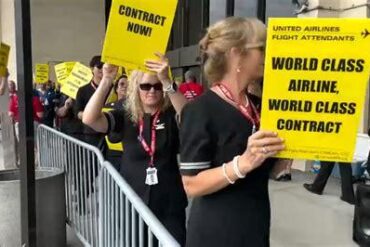
Alaska Air Group is facing mounting labor pressure after Horizon Air flight attendants voted overwhelmingly to authorize a strike, with 99.8% of participating union members backing the measure. The vote represents one of the strongest labor mandates seen in recent airline negotiations and sends a clear signal that frustration among cabin crew has reached a critical point.
While the authorization does not mean a strike is imminent, it significantly strengthens the bargaining position of the Association of Flight Attendants-CWA (AFA-CWA) as negotiations continue under federal mediation. The result highlights growing tensions over wages, benefits, and workplace rules at a regional airline that plays a vital role in Alaska Air Group’s broader network strategy.
Horizon Air Flight Attendants Escalate Contract Dispute
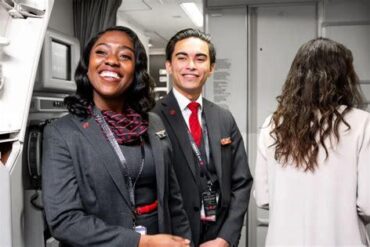
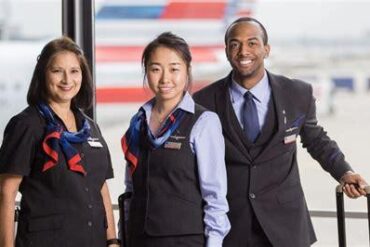
The strike authorization covers approximately 650 Horizon Air flight attendants represented by AFA-CWA. Union leaders described the vote as a response to prolonged negotiations and what they characterize as insufficient economic proposals from management.
Federal mediation has been underway since January 2025, placing the dispute within the formal framework established for airline labor negotiations in the United States. After more than a year of discussions, flight attendants are signaling that patience is wearing thin and that they expect meaningful movement toward a new contract.
According to union officials, the vote was never intended as a declaration of an immediate walkout. Instead, it serves as a powerful demonstration of solidarity and determination among workers seeking improvements in compensation and working conditions.
Union representatives argue that Horizon flight attendants perform safety-critical duties every day while struggling with compensation levels they believe no longer reflect the realities of modern living costs. The near-unanimous result gives labor leaders a significant mandate as they continue negotiating with both Horizon Air management and Alaska Air Group leadership.
For many employees, the dispute centers on a broader question of professional recognition. Flight attendants emphasize that their role extends far beyond customer service, encompassing emergency preparedness, regulatory compliance, passenger safety, and operational support throughout every stage of a flight.
Wage Concerns Become the Central Issue
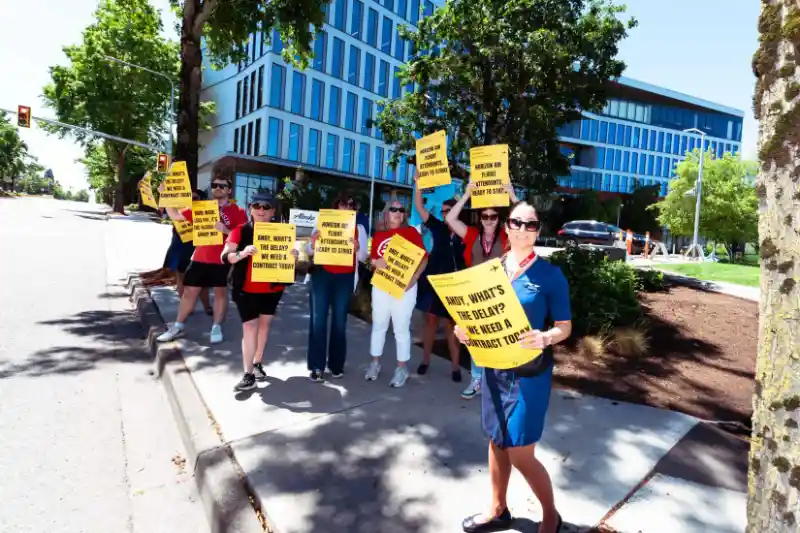
At the heart of the conflict is compensation. AFA-CWA leaders argue that entry-level earnings remain inadequate for employees attempting to build long-term careers in the industry.
Union representatives have pointed to first-year compensation figures that they say fall below sustainable living standards. They also contend that certain duties performed before departure and after arrival remain unpaid despite being essential to airline operations.
These responsibilities include preflight safety inspections, passenger boarding procedures, cabin preparation, and various compliance-related tasks that occur outside officially compensated flight time. The union believes such practices fail to recognize the full scope of the work performed by cabin crew members.
The issue of boarding pay has become increasingly prominent throughout the airline industry. Several major carriers have recently agreed to compensation structures that acknowledge time spent assisting passengers during boarding, creating additional pressure on regional airlines to modernize their own labor agreements.
Beyond wages, flight attendants are seeking enhanced healthcare benefits, stronger scheduling protections, improved quality-of-life provisions, and updated work rules designed to reflect contemporary operational realities.
The dispute mirrors broader trends across the aviation sector, where workers have become increasingly vocal about securing contracts that keep pace with inflation, labor shortages, and rising industry profitability.
Why Horizon Air Holds Strategic Importance
Although Horizon Air operates largely behind the scenes for many travelers, its role within Alaska Air Group is exceptionally important.
Founded in Seattle in 1981, Horizon Air was created to connect smaller communities throughout the Pacific Northwest with larger transportation hubs. Alaska Air Group acquired the carrier in 1986, integrating it into a regional strategy that continues to support network growth today.
The airline no longer markets itself independently to passengers in the way it once did. Instead, Horizon flights operate under the Alaska Airlines brand, carrying passengers on routes sold, scheduled, and managed as part of the broader Alaska network.
This integration means any labor disruption at Horizon could have implications that extend well beyond the regional carrier itself.
Today, Horizon Air operates a fleet of 47 Embraer E175 regional jets. The aircraft feature 76 seats arranged across first class, premium seating, and main cabin sections, allowing Alaska Airlines to offer a consistent passenger experience on thinner routes where larger aircraft may not be economically viable.
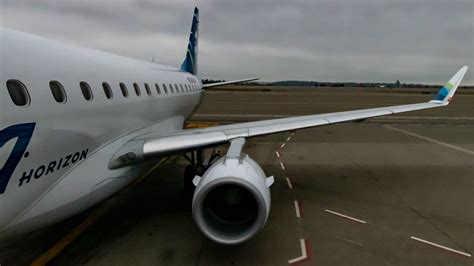
The airline serves dozens of destinations and acts as a crucial feeder operation for major hubs, particularly Seattle-Tacoma International Airport and Portland International Airport.
Regional connectivity remains one of Alaska Air Group’s competitive strengths. Smaller cities throughout the Pacific Northwest rely on Horizon-operated flights to access larger domestic and international networks. Those connections generate passenger traffic that supports broader airline operations and strengthens hub economics.
As Alaska Air Group continues integrating Hawaiian Airlines into its growing portfolio, maintaining stable regional operations becomes even more strategically important. Long-haul expansion may capture headlines, but regional connectivity remains the foundation that feeds passengers into larger domestic and international services.
Understanding the Railway Labor Act Process
Despite the dramatic nature of a strike authorization vote, airline labor disputes operate under a unique legal framework that makes actual strikes relatively uncommon.
The Railway Labor Act governs labor relations in both the railroad and airline industries. The law was specifically designed to minimize disruptions to transportation networks that are considered vital to the national economy.
Under this system, a strike cannot occur immediately following an authorization vote.
Instead, negotiations must continue under the supervision of the National Mediation Board. Only if mediators determine that additional discussions are unlikely to produce an agreement can the process advance to the next stage.
At that point, the board may offer binding arbitration. Should either party reject arbitration, a mandatory 30-day cooling-off period typically follows. Only after these steps are completed can labor and management legally engage in self-help measures such as strikes or lockouts.
Further interventions remain possible even then. Government officials can establish a Presidential Emergency Board if they determine that a labor dispute threatens substantial disruption to interstate commerce or national transportation services.
As a result, airline labor disagreements often continue for months or even years before reaching the point where a strike becomes legally possible.
Strike Authorization as a Negotiating Tool
The overwhelming vote is therefore best viewed as a strategic bargaining instrument rather than an immediate operational threat.
Alaska Air Group has emphasized that strike authorization ballots are common elements of airline contract negotiations and do not automatically lead to work stoppages. Management has also noted that actual airline strikes remain relatively rare because of the extensive legal process required under federal law.
Nevertheless, the vote increases pressure on company leadership. A 99.8% approval rate demonstrates an extraordinary degree of unity among flight attendants and signals that employees are prepared to escalate if negotiations fail to produce meaningful progress.
Union leaders have also referenced the possibility of deploying AFA-CWA’s well-known CHAOS strategy, an acronym for “Create Havoc Around Our System.” Unlike a traditional network-wide strike, CHAOS actions can target specific flights, routes, or operational areas, creating uncertainty while minimizing the need for a complete shutdown.
The strategy has historically attracted attention because it allows unions to apply pressure in highly targeted ways. Even a relatively small workforce can generate significant operational challenges if disruptions occur at carefully selected points within an airline’s network.
For now, negotiations remain ongoing, and both sides continue working within the federal mediation process. Yet the message delivered by Horizon Air’s flight attendants is unmistakable. With nearly unanimous support behind strike authorization, employees have demonstrated that they are prepared to push aggressively for a contract that addresses pay, benefits, and workplace concerns. The vote may not trigger an immediate walkout, but it has undeniably transformed the dynamics of one of the most closely watched regional airline labor disputes in the United States.