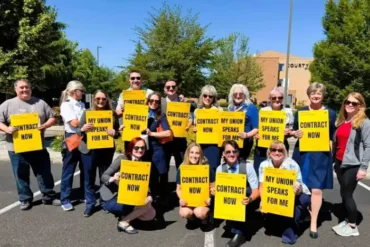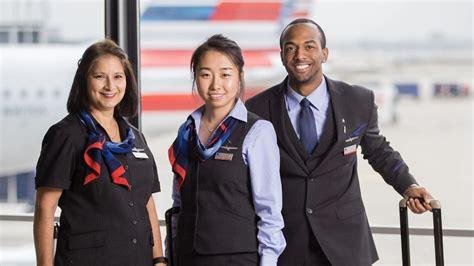
American Airlines is facing a rare and highly visible challenge from within its own ranks. On February 12, 2026, flight attendants represented by the Association of Professional Flight Attendants (APFA) are set to demonstrate outside the company’s headquarters in Fort Worth, Texas, directing their frustration not at contract negotiations or wage scales, but squarely at executive leadership. At the center of the storm is CEO Robert Isom, following a formal vote of no confidence by the union’s governing board.
This is not a traditional labor dispute. It is a confrontation over corporate direction, operational reliability, and accountability at the highest levels of one of the world’s largest airlines. For many frontline employees, the issue is not what they earn—it is how the airline is being run.
A No-Confidence Vote Signals Deep Structural Discontent
The APFA’s decision to hold a vote of no confidence marks a significant escalation. Such moves are uncommon in the airline industry, particularly outside of contract negotiations. Union leaders argue that persistent operational disruptions, inconsistent execution of strategy, and lagging financial performance have eroded trust in senior leadership.
Flight attendants report that repeated assurances from management about improvement initiatives have not translated into meaningful change on the ground. Instead, they describe a widening gap between executive messaging and daily operational reality. Crews contend that system-wide scheduling inefficiencies, last-minute aircraft swaps, and irregular route planning have compounded workplace stress.
By choosing to protest outside headquarters, flight attendants are making a deliberate statement. This demonstration is not symbolic—it is designed to apply pressure directly to corporate decision-makers and the airline’s board.
Operational Instability Hits the Frontline First
Airlines are complex logistical ecosystems. When network planning falters or aircraft utilization drops below target efficiency, the impact does not remain confined to spreadsheets. It flows outward, and frontline employees absorb the shock.
American Airlines has trailed certain major competitors in operational reliability and profitability metrics in recent years. Industry analysts note that on-time performance, completion rates, and network stability are key trust indicators for employees and investors alike. When these metrics falter, frontline crews are tasked with managing passenger dissatisfaction in real time.
Flight attendants describe prolonged duty days caused by cascading delays, reassigned pairings that disrupt personal schedules, and heightened tension onboard when disruptions ripple through the system. In these scenarios, crews become the face of a system they did not design and cannot control.
The friction arises not simply from fatigue, but from a perception that leadership decisions have amplified avoidable strain. Union representatives argue that strategic miscalculations and inconsistent execution have placed unnecessary operational burdens on employees.
Beyond Pay: A Fight Over Governance and Direction
What distinguishes this standoff is its focus. Unlike typical labor actions in aviation, this protest is not centered on compensation or contract terms. Flight attendants emphasize that their grievances stem from leadership accountability and corporate governance, not wage dissatisfaction.
That distinction matters. It signals a broader crisis of confidence rather than a transactional dispute. In previous airline labor conflicts, financial terms often dominated headlines. Here, the narrative revolves around whether current leadership is capable of steering the airline back to a competitive and stable trajectory.
The APFA has framed the protest as a call for decisive leadership capable of restoring operational discipline and rebuilding trust. According to union messaging, the airline requires a strategic reset that aligns execution with ambition.
Industry Context: Competitive Pressure and Investor Perception
The airline industry operates within narrow margins and intense competitive pressure. Rival carriers posting stronger reliability metrics and steadier profitability create a stark contrast. Investors monitor these comparisons closely, and employee morale often tracks alongside market performance.
Sustained internal dissatisfaction can ripple outward. When labor unrest becomes public, it influences brand perception and investor sentiment. Markets tend to respond cautiously to signs of internal instability, particularly when it involves frontline employees responsible for customer experience.
American Airlines’ current tension emerges against this broader competitive backdrop. Analysts observe that rebuilding trust typically demands one of two outcomes: visible leadership change or measurable, sustained operational improvement. Without either, skepticism can harden.
The Human Cost of Operational Strain
Behind performance charts and quarterly reports lies a human dimension. Flight attendants operate in a highly regulated environment requiring vigilance, emotional labor, and adaptability. When operational disruptions intensify, so does the cognitive and emotional load on crews.
Irregular schedules disrupt sleep cycles and family life. Last-minute reassignments complicate commuting logistics. Extended duty days test endurance. These stressors accumulate. When employees perceive that systemic inefficiencies are avoidable—or poorly managed—frustration deepens.
Frontline workers often serve as the buffer between corporate strategy and passenger frustration. They must absorb complaints, manage safety procedures, and maintain service standards regardless of circumstances. Over time, this imbalance between responsibility and influence can erode morale.
What Comes Next for American Airlines
The February 12 demonstration represents more than a symbolic gathering. It is a public assertion that dissatisfaction has reached a critical threshold. Whether the airline’s leadership responds with structural change, enhanced transparency, or strategic recalibration will shape the next chapter.
Historically, airlines facing prolonged operational underperformance have seen labor relations deteriorate in parallel. Repairing that relationship requires consistent execution and credible communication. Trust, once strained, is not restored through messaging alone—it demands evidence.
For American Airlines, the stakes extend beyond internal harmony. The outcome may influence employee retention, recruitment of experienced crew members, and competitive positioning in a market where reliability increasingly defines brand loyalty.
The confrontation unfolding in Fort Worth is not simply about one executive or one union. It reflects a deeper question confronting major carriers worldwide: Can leadership align operational execution with frontline reality in an industry where margins are thin and expectations are high?
The answer will determine whether this moment becomes a turning point—or another chapter in a prolonged struggle between strategy and the people tasked with carrying it out at 35,000 feet.