For decades, transportation planners, airline executives, and policymakers have wrestled with the same question: why doesn’t the New York metropolitan area simply build a brand-new airport to relieve the chronic congestion that affects John F. Kennedy International Airport (JFK), Newark Liberty International Airport (EWR), and LaGuardia Airport (LGA)?
At first glance, the solution appears obvious. The New York region is home to one of the largest aviation markets on Earth. Tens of millions of passengers pass through its airports every year. Delays are frequent, cancellations regularly ripple through airline networks nationwide, and airspace congestion has become a persistent challenge. Yet despite these realities, the construction of a fourth major airport has remained little more than a recurring idea rather than an achievable project.
The explanation is far more complicated than a lack of political will or funding. The real reason New York cannot build the airport it desperately needs lies at the intersection of geography, population density, environmental protection, infrastructure limitations, and the unique realities of operating aviation facilities in one of the most developed urban regions in the world.
The challenge is not deciding whether a new airport would be useful. The challenge is finding a place where such an airport could actually exist.
New York’s aviation system is already operating within constraints that few global cities face, and those constraints have made the dream of a new mega-airport extraordinarily difficult to turn into reality.
The Three-Airport System That Powers New York
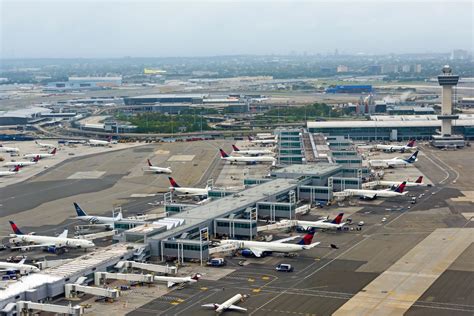
The New York metropolitan area relies primarily on three major commercial airports: JFK, Newark Liberty, and LaGuardia. Together, these facilities form one of the most important aviation hubs in the world.
JFK serves as the region’s premier international gateway. Long-haul flights connect New York with virtually every major continent, making the airport a critical component of global aviation networks. American Airlines and Delta Air Lines maintain substantial operations there, while dozens of international carriers use JFK as their primary entry point into the United States.
Across the Hudson River, Newark Liberty functions as United Airlines’ most important East Coast hub. Although located in New Jersey, Newark serves the same regional market as New York’s airports and is often viewed by travelers as simply another gateway to Manhattan and the surrounding metropolitan area.
LaGuardia, meanwhile, focuses heavily on domestic operations. Its location closer to Manhattan makes it particularly attractive for business travelers, despite having fewer international services than JFK.
Together, these airports handle enormous passenger volumes while supporting thousands of daily aircraft movements. On paper, the region already possesses an extensive aviation network. In practice, however, the proximity of these airports creates a highly complex operating environment.
Aircraft arriving at one airport frequently affect operations at the others. Air traffic controllers must manage overlapping flight paths in some of the busiest airspace in the world. Even relatively minor disruptions can cascade across the entire system.
This interconnectedness is one reason why delays originating in New York often spread throughout the national aviation network.
Why Congestion Has Become a National Aviation Problem
The impact of New York’s airport congestion extends far beyond the city itself.
When weather, staffing shortages, equipment issues, or runway restrictions affect JFK, Newark, or LaGuardia, airlines frequently struggle to maintain schedules across their entire networks. Aircraft arriving late into New York often depart late. Crews exceed allowable duty times. Connecting passengers miss flights. Gate assignments become disrupted.
The result is a domino effect that can influence operations from California to Florida.
Recent years have highlighted just how vulnerable the region’s aviation system has become. Flight delays and cancellations have consistently ranked among the highest in the country. Newark, in particular, has faced recurring operational challenges that prompted federal authorities to maintain restrictions on hourly flight movements.
The Federal Aviation Administration has continued imposing operational caps designed to reduce system overload and improve safety margins. While such restrictions can help stabilize airport performance, they also demonstrate a fundamental reality: demand is pushing against infrastructure limits.
The situation has led many observers to conclude that only a new airport can provide meaningful relief.
Yet that conclusion immediately encounters a formidable obstacle.
There Is Simply No Suitable Land Available
The greatest barrier to a new airport is not engineering. It is geography.
Modern international airports require vast amounts of land. A facility capable of handling tens of millions of passengers annually needs multiple runways, terminal complexes, cargo facilities, maintenance areas, transportation links, fuel infrastructure, parking facilities, and future expansion zones.
Such developments typically occupy thousands of acres.
Finding a site of that size within or near New York City is virtually impossible.
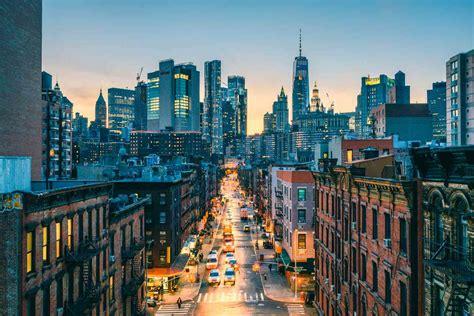
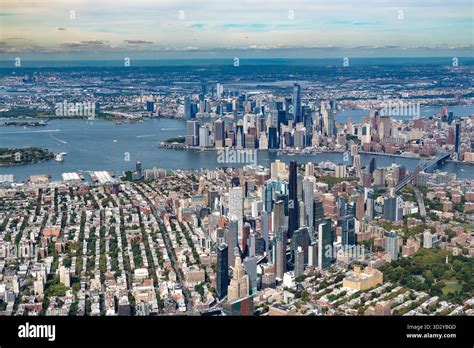
The metropolitan area is one of the most densely developed regions in North America. Residential communities, industrial zones, highways, rail corridors, ports, commercial districts, and protected lands occupy nearly every available parcel.
Any location large enough for a major airport would almost certainly require the displacement of entire neighborhoods.
That reality immediately creates enormous political and social challenges. Relocating tens of thousands of residents would involve years of legal disputes, extensive compensation programs, and intense public opposition. Few elected officials would support a project carrying such consequences.
Unlike rapidly growing regions where new airports can be built on relatively undeveloped land, New York lacks the physical space necessary to accommodate a project of comparable scale.
Environmental Protections Create Another Major Obstacle
Even if land could somehow be identified, environmental regulations present another significant challenge.
One of the most frequently discussed expansion concepts involved extending airport infrastructure into Jamaica Bay near JFK. From a purely operational perspective, additional runway capacity would have provided valuable flexibility for one of the nation’s busiest airports.
However, Jamaica Bay is far more than open space on a map.
The area contains federally protected wildlife habitats and environmentally sensitive ecosystems that support numerous bird species and marine life. Federal protections limit development activities and preserve critical ecological resources.
Any attempt to significantly alter these areas would face extraordinary regulatory scrutiny and likely provoke extensive legal opposition from environmental organizations.
The challenge illustrates a broader issue affecting infrastructure projects throughout the region. Many of the remaining undeveloped areas around New York possess environmental significance that makes large-scale construction difficult or impossible.
As a result, potential airport sites often collide with conservation priorities long before construction plans can advance.
Why Existing Airports Cannot Expand Indefinitely
Some observers argue that instead of building a new airport, New York should simply enlarge its current facilities.
The reality is that each airport faces substantial physical constraints.
JFK possesses four runways and remains the region’s largest airport. Yet it is surrounded by development and environmentally sensitive areas that limit major airfield expansion.
Newark operates with three runways, but its location between urban development, transportation corridors, and industrial infrastructure leaves little room for dramatic growth.
LaGuardia faces perhaps the most severe limitations. Positioned on a compact waterfront site, the airport lacks the space necessary for significant runway expansion.
Unlike airports built in remote areas with abundant surrounding land, New York’s airports were effectively locked into their footprints decades ago.
While terminals can be modernized and passenger facilities expanded, adding substantial runway capacity is considerably more difficult.
And in aviation, runway capacity often determines how many flights an airport can realistically handle.
The $19 Billion Alternative Strategy
Recognizing the impracticality of building a new airport, the Port Authority of New York and New Jersey has pursued a different approach.
Instead of creating a fourth airport, officials are attempting to maximize the potential of the existing three-airport system.
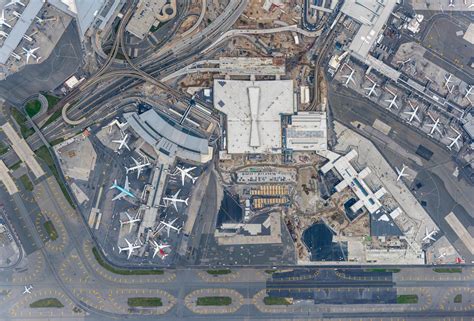
The centerpiece of this strategy is JFK’s massive redevelopment program, a transformation valued at approximately $19 billion.
The initiative includes entirely new terminal facilities, expanded passenger processing capabilities, additional gates, upgraded road access, modernized infrastructure, and enhanced airline operations.
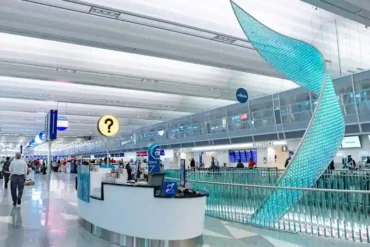
Terminal Six represents one of the most prominent components of the redevelopment effort. The project is replacing aging facilities with modern infrastructure capable of handling significantly higher passenger volumes.
At the same time, the new Terminal One project is creating a much larger international gateway by integrating areas previously occupied by older terminals.
Additional investments at Terminals Four and Eight further increase operational flexibility and improve passenger experience.
Collectively, these projects are expected to raise JFK’s long-term capacity substantially while allowing airlines to operate more efficiently within the airport.
How Terminal Expansion Can Reduce Operational Pressure
Although new terminals do not create additional runways, they can still improve airport performance in important ways.
Modern facilities process passengers more efficiently, reducing congestion inside terminals and shortening transfer times. Additional gates enable airlines to schedule aircraft more effectively. Improved baggage systems accelerate operations behind the scenes.
Airline consolidation can also generate efficiencies.
As new terminal capacity becomes available, carriers may be able to centralize more operations within a single airport. This can simplify connections, reduce logistical complexity, and create better utilization of airport resources.
Lufthansa’s planned move into JFK’s future Terminal Six reflects this broader trend. Similar operational adjustments could occur as additional redevelopment projects are completed.
For passengers, these improvements may translate into smoother journeys, more reliable connections, and better airport experiences.
However, terminal investments alone cannot eliminate all sources of congestion.
Air Traffic Control Remains a Critical Weakness
One of the most overlooked aspects of the New York aviation challenge is that airport infrastructure is only part of the equation.
Air traffic control capacity plays an equally important role.
Even if airports expand terminals and improve ground operations, flights still require sufficient controller staffing and airspace management resources.
Across the United States, shortages of certified air traffic controllers have emerged as a persistent concern. The New York region, with its exceptionally complex airspace, is particularly vulnerable to these staffing pressures.
Controllers must safely coordinate aircraft arriving and departing from multiple major airports located within relatively short distances of one another. The workload is immense, and staffing constraints can directly affect airport throughput.
Without sustained improvements in air traffic control resources, infrastructure investments alone may struggle to deliver their full benefits.
In other words, more gates do not automatically translate into more flights if the airspace system cannot accommodate additional traffic.
Why New York’s Airport Future Will Look Different
The vision of a massive new airport serving New York has captivated planners for generations. Yet the obstacles standing in the way are unlike those faced by most metropolitan areas.
Land scarcity, dense urban development, environmental protections, community opposition, infrastructure complexity, and airspace limitations combine to create a challenge that no amount of simple funding can solve.
Rather than constructing an entirely new aviation hub, New York’s future is increasingly centered on modernization, optimization, and strategic expansion of existing facilities.
The region’s airports are not being replaced. They are being reinvented.
Massive investments at JFK, continuing upgrades at Newark and LaGuardia, improved airline coordination, and enhancements to air traffic management represent the most realistic path forward. These efforts may not eliminate every delay or congestion issue, but they offer a practical solution within the constraints of one of the world’s most densely populated urban environments.
The real reason New York cannot build the airport it desperately needs is ultimately straightforward: the region no longer possesses the space, flexibility, or environmental freedom required for a project of that scale. In a city where every acre carries enormous economic, social, and ecological value, building a brand-new mega-airport is far easier to imagine than to accomplish.
For the foreseeable future, New York’s aviation future will be shaped not by creating a fourth major airport, but by extracting every possible ounce of capacity from the three airports it already has.