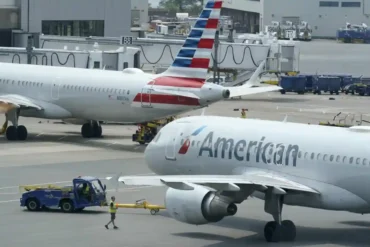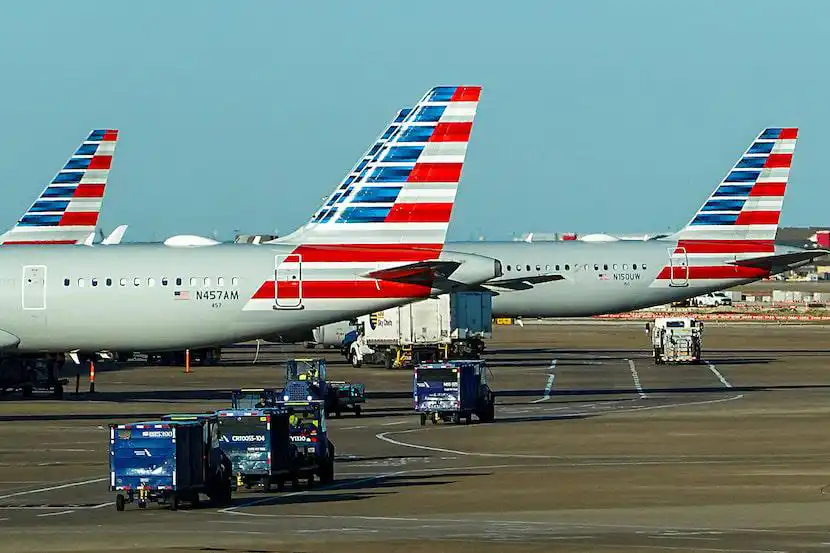
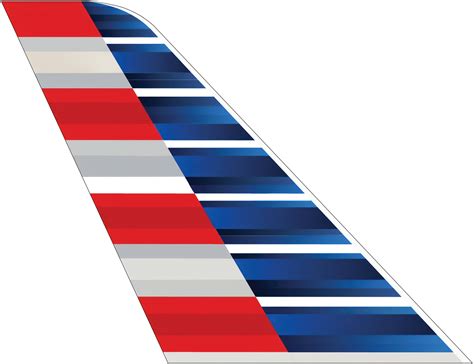
American Airlines has always been a pioneer not only in aviation but also in brand presentation, setting visual trends that ripple across the airline industry. Since its dramatic rebrand in 2013, following the merger with US Airways, its aircraft have sported a tail design that turns heads—a stylized American flag motif with stripes that cascade dramatically down the vertical stabilizer and then, controversially, appear to halt midway down the fuselage. The effect is striking, but for many observers, it raises the question: why does the design stop so abruptly? To understand the design choice, one must explore the interplay of branding, aircraft engineering, paint logistics, and visual perception across diverse aircraft types.
The American Flag, Reimagined in Aluminum and Paint
At the heart of American Airlines’ livery redesign was a mission: revitalize a legacy brand in a modern, global aviation landscape while nodding to its American roots. The flag-based tail design was part of FutureBrand’s livery overhaul, which replaced the iconic silver fuselage and Helvetica typeface with a sleeker, painted aesthetic and a bold eagle-logo mark. The tail is now emblazoned with a stylized interpretation of the Stars and Stripes, represented in vivid red, white, blue—and notably—varied tones of gray.
Yet, what seems like an abrupt cutoff below the vertical stabilizer is not actually where the design ends. Faint gray stripes—invisible from a distance or in poor lighting—continue the pattern slightly beyond the vivid red and blue bands. These stripes fade downward intentionally, following the natural taper of the fuselage.
This isn’t an oversight; it’s deliberate minimalism meeting technical necessity.
Uniform Design Across a Diverse Fleet
The tail design had to be modular and adaptable—consistent branding across more than a dozen aircraft types, from widebodies like the Boeing 777 and Airbus A330 to regional aircraft like the CRJ-900 and Embraer 175. Each has different fuselage contours, tail heights, and surface geometry, making full wraparound designs risky from a branding consistency standpoint.
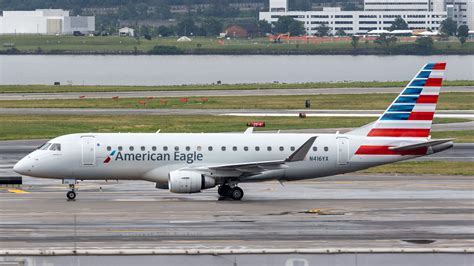
Rather than customizing the length of the stripes for each aircraft—something that would have introduced branding inconsistency, high costs, and regulatory hurdles—the design team opted for a universal template that fits all aircraft types. The placement of the last red stripe thus becomes a design endpoint that ensures alignment across the fleet, no matter how large or small the aircraft. On some models, like the Embraer 175, the gray fade is barely visible. On others, like the CRJ, it becomes more apparent—but always ends at the same visual anchor point.
Engineering, Paint, and Practical Constraints
Painting aircraft is not just about looks—it’s about weight, balance, and performance. Every extra ounce of paint adds weight, impacting fuel efficiency and maintenance schedules. On large jets, a full-color tail and extended fuselage design can require over 200 pounds of paint.
By choosing to fade the stripes into lighter grays, American minimizes the pigment density and blends the artwork more organically with the silver-gray fuselage. This reduces the number of masking layers required during the painting process. The fade also lowers labor time and paint waste, important when an airline operates hundreds of aircraft and cycles them through repaints every few years.
It’s also critical to consider how paint adheres to composites versus metal. American’s older polished aluminum look wouldn’t work on the modern carbon fiber composites used on aircraft like the Boeing 787. That helped necessitate a full redesign—one that embraced fully painted liveries but still kept cost-effective, scalable execution in mind.
The “Missing Stripe” Controversy
Eagle-eyed observers often point out that the tail pattern features only 12 visible stripes, while the actual U.S. flag has 13. Critics argue that the design misses a patriotic detail, suggesting that one red stripe could’ve been added to the gray fade area.
However, this argument misunderstands the intent. The design is not a literal replica of the American flag—it’s a symbolic evocation. The missing stripe, in practice, isn’t missing at all: the 13th stripe exists as a light gray band that visually disappears against the aircraft’s metallic body under most lighting conditions. This subtle touch, far from an oversight, reflects American Airlines’ desire to make a refined, abstract gesture to national identity rather than a blunt reproduction.
Tail Strike Considerations? Not Quite
One Reddit user half-jokingly speculated that the tail design ends higher up so that the flag “never touches the ground”—a reference to U.S. flag etiquette. While poetic, this isn’t grounded in reality. Tail strikes are rare and typically involve the aircraft’s belly, not the vertical stabilizer. There’s no official FAA regulation or branding protocol that mandates a paint cutoff point for patriotic reasons. Still, the rumor highlights the strong emotional connection many have with the flag design.
In truth, safety and maintenance factors play a larger role. The base of the vertical stabilizer is subject to frequent inspections, especially near control surface junctions. Applying thick paint or sharp design transitions in this zone risks paint chipping, corrosion, or maintenance headaches. By transitioning into subdued grays and lighter tones, the design avoids drawing visual attention to these high-wear areas while preserving aesthetic continuity.
An Industry Trend Toward Abstract Tail Art
American Airlines isn’t alone in embracing tail art that extends onto the fuselage. Other global carriers—British Airways, Icelandair, Lufthansa, Virgin Atlantic, Canadian North—have flirted with similar extensions, though most keep design elements confined to the stabilizer.
Unlike logos, which demand shape fidelity, abstract stripes or gradients can afford to be interpretative and scalable. Much like how the Nike swoosh remains untouched in size and shape regardless of the canvas, airline brands generally aim for visual predictability. However, abstract elements allow more flexibility, so long as the essence remains unchanged.
In American’s case, the fade serves this function—anchoring the visual identity to the tail while offering gentle transitions into the body. It’s not just aesthetic; it’s a clever solution to spatial limitations.
A Livery Born from Merger and Momentum
It’s important to remember that the current livery debuted just before the US Airways merger in 2013. Many have speculated that the number of stripes reflects American’s legacy of mergers—12 airlines absorbed over time, possibly with each stripe representing one of those past entities.
Though no official statement from American confirms this, the idea resonates symbolically. From Trans Caribbean to TWA, Reno Air to America West, American’s history is layered with consolidation. A livery that subtly celebrates that amalgamation—even if unconsciously—adds another dimension to its meaning.
Subjective Beauty, Objective Intent
Design always invites critique. Some passengers adore the boldness of American’s tail art; others find it jarring or asymmetrical. A not-insignificant number of commenters have dismissed the design as an “eyesore,” while others praise it as iconic and distinctly American.
But opinions aside, one thing is clear: the tail design isn’t arbitrary. It’s rooted in branding logic, technical execution, and fleet-wide scalability. The decision to extend the stripes and end them with a fade is intentional, not accidental.
By blending patriotism with visual modernity, and practicality with symbolism, American Airlines’ tail design manages to project identity while respecting the structural diversity of its aircraft. What some see as a “cutoff” is actually a transition zone—a boundary between bold visibility and operational pragmatism.
In a world where airline liveries risk becoming indistinguishable, American Airlines has chosen to stand out—not just by flying the flag, but by reimagining it in motion.