Airbus is moving aircraft off its assembly lines at a pace that would have seemed implausible just a few years ago. In an industry notorious for bottlenecks, supplier fragility, and certification delays, the European aerospace giant has not merely stabilized its output but accelerated it, closing 2025 with 793 deliveries, narrowly exceeding a revised target that many analysts assumed was already ambitious. The real story, however, is not the final number. It is how Airbus managed to compress recovery, scale production globally, and still deliver aircraft on time and on quality while the rest of the aerospace supply chain remained under strain.
What is unfolding is not a short-term surge or a lucky year-end sprint. Airbus has engineered a structural advantage, one rooted in globalized manufacturing, industrial redundancy, and a ruthless focus on its most commercially dominant aircraft families. The result is a production machine that now looks less like a traditional aerospace company and more like a resilient, distributed industrial network built for volatility.
By early 2026, Airbus stands on the threshold of 900 annual deliveries, with credible pathways to go higher. The reasons behind this acceleration are neither accidental nor mysterious. They are the product of deliberate decisions made years ago, now paying off at scale.
From European Manufacturer to Global Industrial Network
For decades, Airbus was perceived as a primarily European manufacturer with assembly lines clustered in France, Germany, and Spain. That model worked well in a stable world. It is far less effective in an era of labor shortages, geopolitical friction, and fragile supply chains. Airbus recognized this reality earlier than many of its peers and acted decisively.
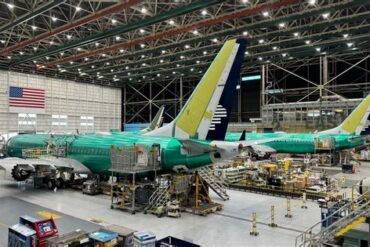
Today, Airbus operates a globally distributed network of Final Assembly Lines (FALs) that allows production to flex geographically without compromising output. Aircraft are assembled not only in Toulouse and Hamburg, but also in Mobile, Alabama, and Tianjin, China, with each site capable of handling high-volume narrowbody production.
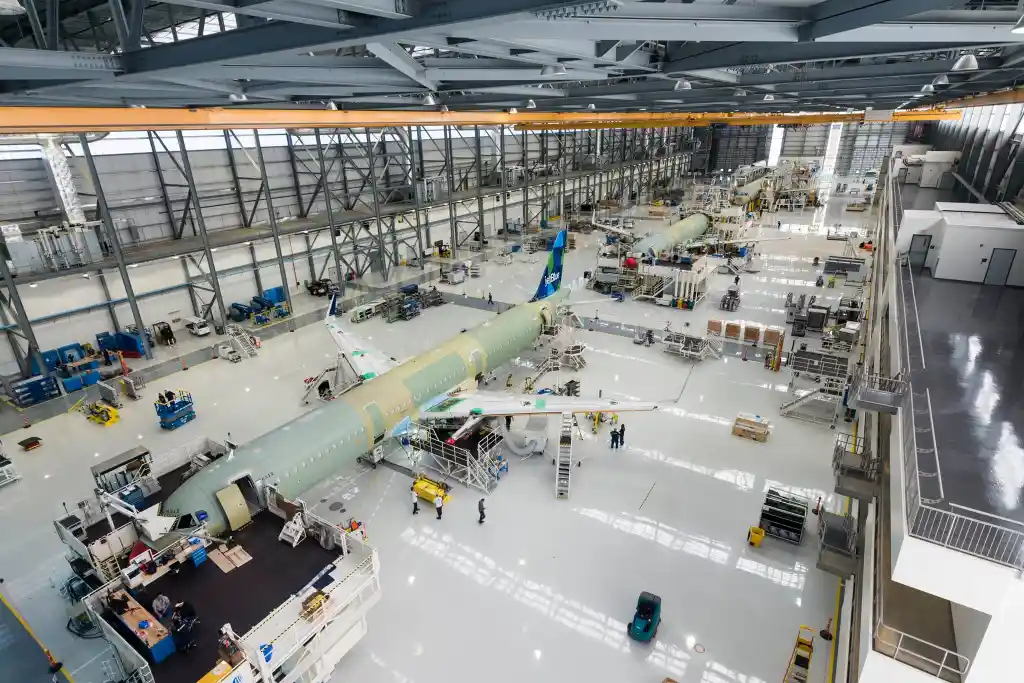
The opening of a second FAL in Mobile in October 2025 was a pivotal moment. It effectively doubled Airbus’s narrowbody assembly capacity in North America, bringing production closer to key airline customers while reducing exposure to transatlantic logistics risks. At the same time, Airbus advanced preparations for an additional FAL in Tianjin, aimed squarely at absorbing China’s enormous single-aisle demand while insulating European operations from regional disruptions.
Even legacy facilities have been repurposed with surgical precision. The former A380 assembly hall, once home to the world’s largest passenger aircraft, is now being reconfigured to produce A320-family jets, transforming symbolic excess into industrial efficiency. This reuse of infrastructure allowed Airbus to expand capacity without the delays and costs associated with greenfield construction.
This distributed approach acts as a hedge. Labor strikes, trade disputes, and localized supply issues no longer threaten the entire production system. Airbus can rebalance workloads across continents, keeping aircraft flowing even when one region slows.
The A320 Family as the Engine of Volume
At the heart of Airbus’s production dominance lies the A320 family, now officially the best-selling airliner family in aviation history, surpassing the Boeing 737 in cumulative deliveries. This milestone was not merely symbolic. It reflects how completely Airbus has aligned its industrial strategy around the world’s most in-demand aircraft category.
The star of the lineup is the A321neo, a stretched, fuel-efficient workhorse that now accounts for roughly 60% of Airbus’s single-aisle deliveries and nearly two-thirds of its narrowbody backlog. Airlines favor the A321neo because it offers widebody-like range on narrowbody economics, especially in a market increasingly focused on point-to-point routes.
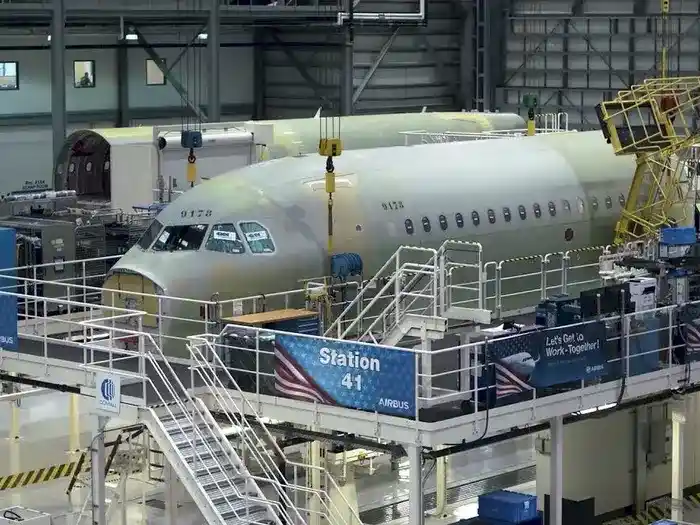
Airbus has reshaped its production system to serve this reality. All new and upgraded FALs are “A321-ready,” meaning they can switch between A320neo variants with minimal downtime. This flexibility allows Airbus to respond to real-time airline demand rather than being locked into rigid production mixes.
The company is targeting a monthly A320-family production rate of 75 aircraft by 2027, a figure that would have been unthinkable during the pandemic recovery phase. For 2026, internal assumptions point toward approximately 900 total deliveries, with narrowbodies doing most of the heavy lifting.
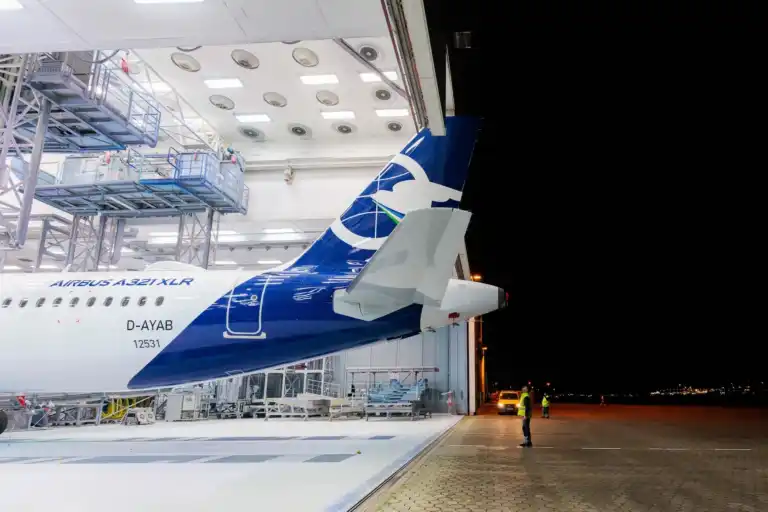
Strategic investments support this ramp-up. In late 2025, a new automated facility in Augsburg, Germany, began producing specialized rear center fuel tanks for the A321XLR, a long-range variant that has no direct competitor in Boeing’s lineup. By internalizing this critical component, Airbus removed yet another potential choke point from its production flow.
Industrial Discipline Through Digital Oversight
High production rates mean nothing if quality slips. Airbus learned this lesson the hard way in previous decades, and it has embedded those scars into its modern industrial governance. One of the most important yet least visible contributors to Airbus’s delivery performance is its “watchtower” system.
These watchtowers are not physical rooms so much as digital command centers, combining real-time supplier data, risk analytics, and human expertise. They monitor thousands of suppliers simultaneously, tracking everything from financial health to labor availability and geopolitical exposure.
When a supplier shows signs of distress, Airbus does not wait for delays to cascade. It sends its own engineers and industrial specialists directly to the supplier’s site, providing hands-on technical support to stabilize output. This proactive intervention model allowed Airbus to recover rapidly from a 2025 fuselage panel quality issue that could have otherwise derailed deliveries for months.
To reinforce this approach, Airbus expanded its supply-chain management workforce by 150% heading into 2026, ensuring that no critical path goes unmonitored. This level of oversight is expensive, but it is vastly cheaper than grounded aircraft and missed delivery slots.
Vertical Integration as a Supply Chain Firewall
Perhaps the clearest signal of Airbus’s seriousness about production resilience is its move to acquire portions of Spirit AeroSystems tied to the A320 and A220 programs. This acquisition brings approximately 4,000 skilled workers under Airbus’s direct control and secures the supply of critical structures that had previously represented a vulnerability.
Vertical integration in aerospace is not fashionable. It is complex, capital-intensive, and politically sensitive. Airbus pursued it anyway, not as a growth play but as a defensive maneuver designed to protect production tempo. In an environment where a single supplier’s failure can idle multiple assembly lines, control equals stability.
This strategy also complements Airbus’s increasing use of advanced robotics, including automated fuselage drilling systems and laser-guided tooling platforms. By reducing manual intervention in repetitive tasks, Airbus has lowered error rates while easing pressure on a global workforce already stretched thin.
The 2025 Year-End Surge: Stress Test Passed
The final weeks of 2025 were a stress test of Airbus’s entire production philosophy. A late-year discovery of a widespread quality issue affecting over 600 aircraft, combined with an emergency software update triggered by solar radiation risks, forced Airbus to revise its delivery guidance downward from 820 to 790 aircraft.
November deliveries fell to 72 aircraft, a worrying dip that suggested the revised target might also be out of reach. To compensate, Airbus needed an extraordinary December performance. What followed was an industrial sprint rarely seen in commercial aviation.
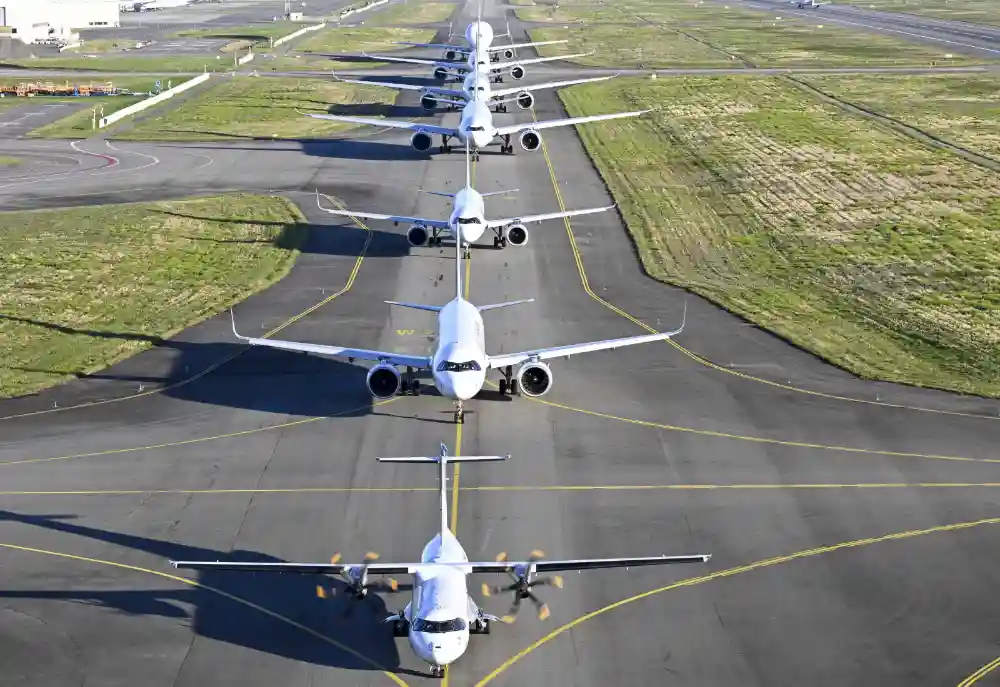
In December alone, Airbus delivered approximately 121 aircraft, including 10 A321neos in a single day on December 19. The company closed the year at 793 deliveries, exceeding its revised goal and demonstrating that its production system could absorb shocks without collapsing.
This was not a reckless push that mortgaged future quality. Regulators confirmed that the vast majority of affected aircraft were modified and returned to service within weeks, validating Airbus’s claim that speed and safety were not mutually exclusive.
Crisis Management Without Production Collapse
The solar radiation software vulnerability that emerged in late 2025 could have crippled Airbus’s credibility. Approximately 6,000 A320-family aircraft were affected worldwide, triggering emergency airworthiness directives from EASA and the FAA.
Airlines were forced to ground large portions of their fleets during peak travel periods, and public scrutiny intensified after a JetBlue A320 incident involving an uncommanded pitch-down event. Yet Airbus’s response was rapid, coordinated, and technically decisive.
For roughly 5,000 aircraft, the fix involved a software rollback that took just two to four hours per jet. More complex hardware upgrades were required for older aircraft, but even these were managed without disrupting new deliveries in a meaningful way. By early December, daily operations had largely normalized.
The key takeaway was not that Airbus avoided a crisis, but that its production momentum survived one. That distinction matters enormously in an industry where setbacks often compound.
Why Airbus Is Pulling Ahead of Boeing
Airbus’s rapid production and delivery rates stand in stark contrast to Boeing’s slower recovery. While Boeing delivered around 560 aircraft in 2025, it remained constrained by quality-control challenges and certification delays, particularly following the early-2024 737 MAX door-plug incident.
Airbus, by comparison, entered 2026 with a backlog exceeding 8,600 aircraft, representing more than a decade of production at current rates. It also enjoys structural advantages Boeing currently lacks, including the A220 at the lower end of the market and the A321XLR at the upper end of the single-aisle segment.
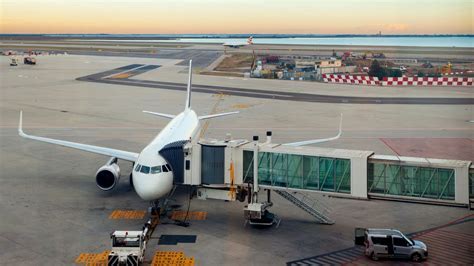
These aircraft allow Airbus to capture niche demand that Boeing cannot yet serve, further smoothing its production curve. Market share data reflects this shift, with Airbus now controlling over half of the global single-aisle market, a reversal of decades-old industry assumptions.
A Production Model Built for the Next Decade
Airbus’s rapid production and delivery rates are not the result of one clever tactic or a single good year. They are the outcome of a deliberately engineered system designed to thrive under pressure. Globalized assembly lines, flexible production mixes, digital supply-chain oversight, selective vertical integration, and a clear focus on high-demand aircraft families have combined into a resilient industrial machine.
As Airbus looks toward 900 deliveries in 2026 and beyond, the more important question is not whether it can sustain this pace, but how high the ceiling truly is. In an industry defined by constraints, Airbus has turned adaptability into a competitive weapon, quietly rewriting what “normal” production looks like in modern commercial aviation.