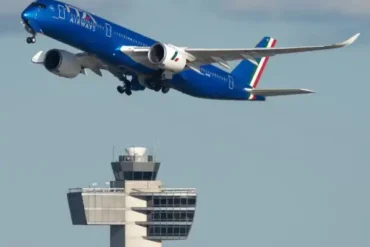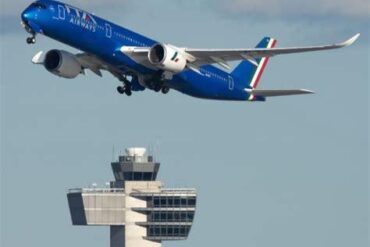
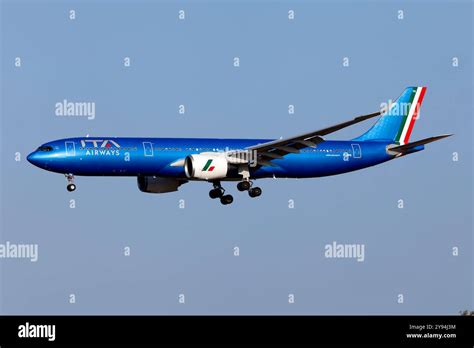
Italy’s flag carrier is no longer tiptoeing into the long-haul arena. ITA Airways has made it clear that caution, once baked into its medium-term strategy, is no longer fit for purpose. The airline’s decision to rush widebody aircraft into service ahead of schedule is not a cosmetic adjustment but a structural shift driven by pressure from unions, strategic expectations from shareholders, and the unforgiving economics of long-haul aviation. At the center of this recalibration sits the Airbus A330-900, an aircraft that has quietly become the backbone of ITA’s intercontinental ambitions.
The original 2026–2030 business plan adopted last summer was built around incrementalism. Growth would be steady, measured, and conservative, with long-haul capacity expanding slowly as the airline consolidated its post-Alitalia identity. That restraint, however, quickly drew fire. Critics argued that a plan promising transformation while keeping fleet numbers effectively flat was a contradiction dressed up as prudence. For an airline expected to reclaim Italy’s global connectivity, restraint began to look like hesitation.
What followed was a rethink that cut to the heart of ITA Airways’ future. Rather than adding one widebody per year, management opted to accelerate deliveries, pulling forward aircraft and compressing the timeline for long-haul expansion. The message to staff, partners, and competitors was unmistakable: ITA intends to grow, and it intends to do so now.
Pressure from labor unions was a critical catalyst in this shift. When the airline’s board approved the original plan, transport unions reacted with unusual force, arguing that a fleet hovering around 100 aircraft through 2030 amounted to stagnation rather than growth. Their frustration was rooted in arithmetic rather than ideology. A fleet of that size already existed, meaning productivity gains and network expansion would have to come without meaningful capacity growth, a scenario that typically ends with overworked crews and limited career progression.
Union leaders escalated their opposition by appealing directly to Italy’s Ministry of Economic Affairs and to Lufthansa, which holds a 41% stake in ITA Airways. The threat of strike action underscored how seriously labor viewed the issue. This was not resistance to modernization but a demand for it, framed around the belief that long-haul flying is the only segment capable of delivering sustainable margins for a mid-sized European carrier.
Chief executive Jörg Eberhart responded with a revised vision that acknowledged those concerns. Under the updated trajectory, ITA will introduce two new widebody aircraft in 2026 and two more in 2027, effectively doubling the pace of long-haul fleet growth. The target of 30 long-haul aircraft by 2030 represents more than a numerical goal; it signals a strategic commitment to intercontinental relevance rather than regional survival.
The acceleration is made possible by a transformation that has already been underway for several years. When ITA Airways launched operations in 2021, it inherited a skeletal widebody fleet from Alitalia, consisting largely of aging Airbus A330-200s leased decades earlier. Those aircraft, while serviceable, were fuel-hungry and ill-suited to a market increasingly defined by efficiency and environmental scrutiny. Replacing them was not optional; it was existential.
The solution came in the form of a decisive Airbus order. ITA committed to ten A330-900 aircraft, later supplementing that purchase with additional leased examples and a small sub-fleet of Airbus A350-900s. The result has been a rapid modernization that few European airlines of comparable size have matched. All A330-200s have now been retired, with the final aircraft completing its farewell flight from Boston at the end of last year, closing a chapter that stretched back to the early 2000s.
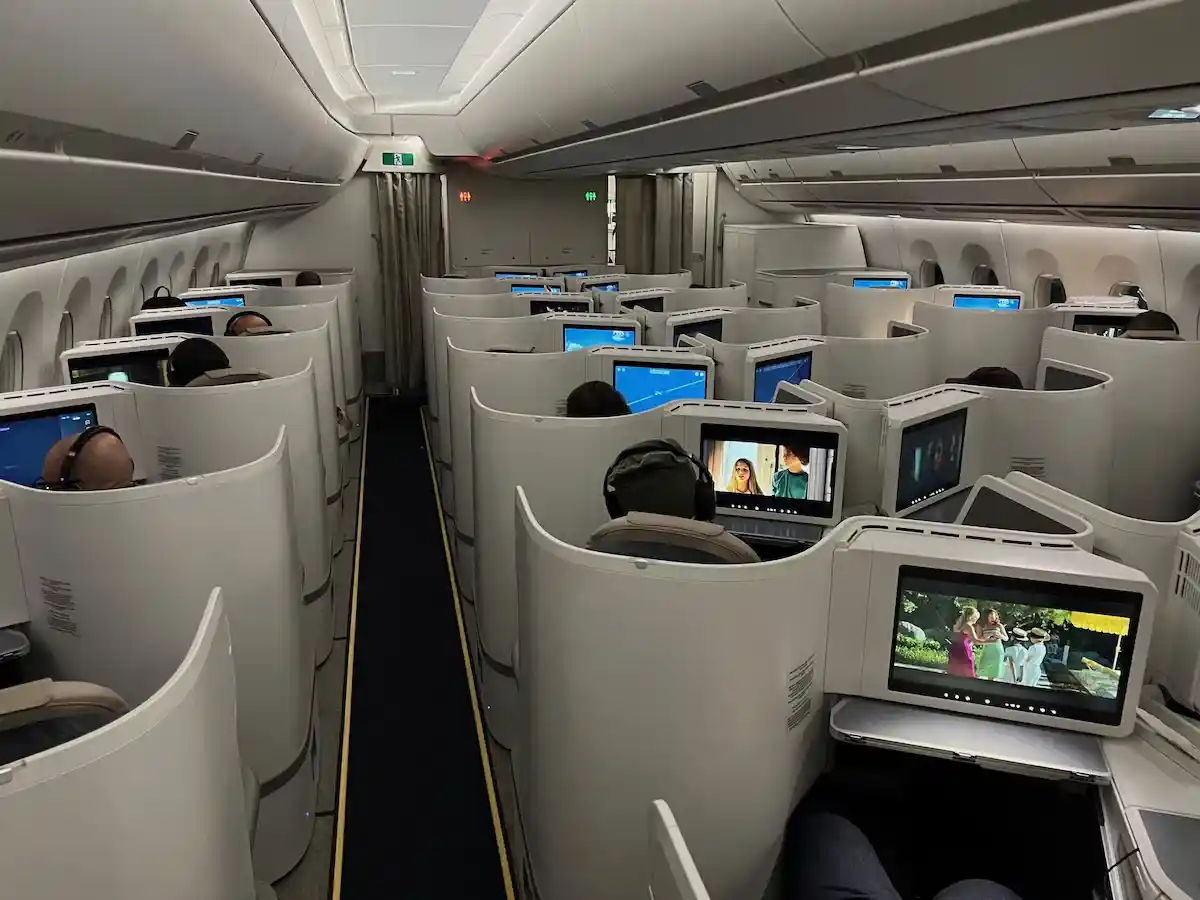
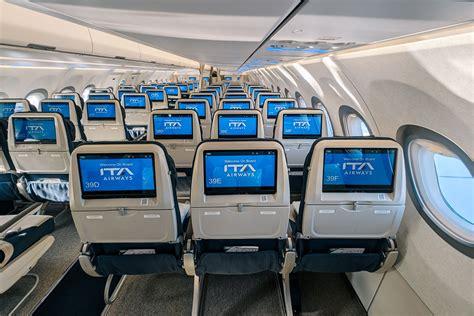
Today, ITA operates one of the youngest widebody fleets in Europe. Fourteen A330-900s are already in service, joined by six A350-900s deployed on ultra-long-haul missions. With three more A330-900s formally on order, the arithmetic behind Eberhart’s comments initially appeared puzzling. The explanation lies in timing rather than accounting. A flurry of late deliveries has effectively pulled future capacity into the present, allowing aircraft originally earmarked for later years to enter service now.
This early arrival of capacity reshapes ITA’s network planning in tangible ways. The A330-900 is optimized for transatlantic routes, combining range, payload, and operating economics that suit Rome Fiumicino’s role as a connecting hub between Europe and the Americas. As more aircraft arrive, route planners gain flexibility to experiment with frequencies and destinations without overcommitting scarce assets.
The airline’s westward focus is deliberate and data-driven. North America remains the most lucrative long-haul market accessible from Italy, offering strong premium demand, robust cargo yields, and alliance connectivity through Star Alliance partners. The planned launch of Rome–Houston services exemplifies this logic. Houston is not an obvious leisure destination, but as a major hub for United Airlines, it provides immediate network depth and corporate traffic flows that smaller cities cannot match.
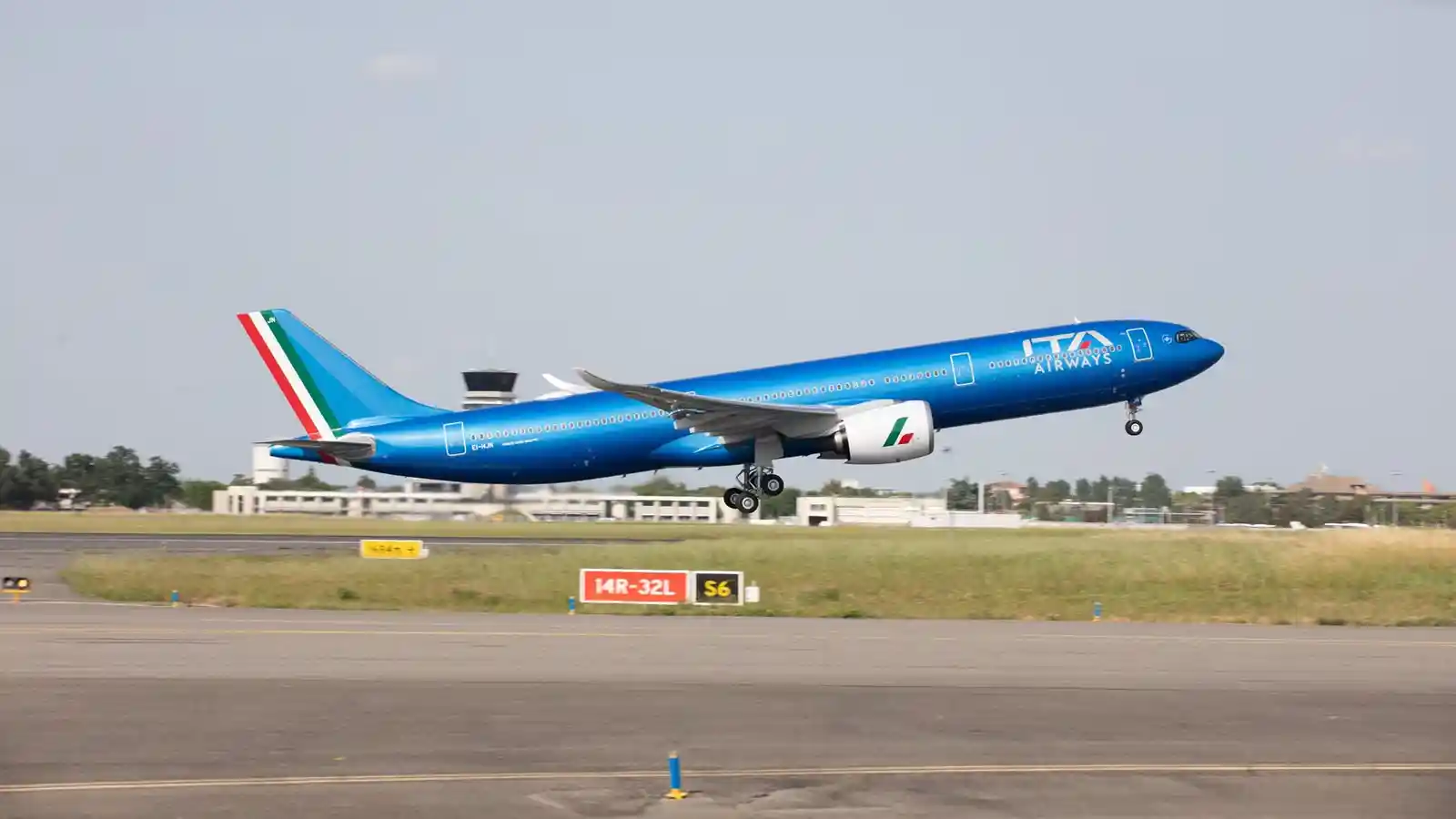
Further expansion to Newark Liberty International Airport would reinforce this strategy, strengthening ties with United while tapping into one of the largest Italian diaspora markets in the United States. Unlike speculative long-haul routes, these services are anchored in alliance economics, reducing risk while expanding reach. The emphasis is less on flashy map-filling and more on building durable corridors of demand.
By contrast, Asia remains a distant prospect. Geopolitical realities have reshaped route economics, with the closure of Russian airspace forcing longer routings that erode margins and complicate scheduling. While destinations such as Tokyo retain strategic value, broader Asian expansion has been deprioritized in favor of Latin America and North America, regions where stage lengths, yields, and operational complexity align more comfortably with ITA’s current fleet.
Latin America, in particular, offers intriguing possibilities. Existing services to cities like Buenos Aires have demonstrated consistent demand, and further links could leverage partnerships with Star Alliance members such as Avianca and Copa Airlines. Routes to Bogotá or Panama City would not merely add dots on a map but integrate Rome into powerful regional networks, extending ITA’s virtual reach far beyond its own metal.
The accelerated widebody strategy also reflects shareholder expectations. Lufthansa’s involvement is not passive capital placement; it comes with an implicit demand for alignment with group logic. Long-haul connectivity, hub strength, and fleet efficiency are pillars of Lufthansa Group strategy, and ITA’s pivot toward faster widebody growth mirrors that philosophy. A cautious ITA would be a strategic mismatch within the group’s broader ecosystem.
Operationally, the timing is shrewd. Widebody availability across the industry remains constrained, and securing early delivery slots provides a competitive edge. Airlines that hesitate risk being locked out of growth opportunities for years, while those that act decisively can capture market share as demand continues to rebound. ITA’s move suggests an understanding that in aviation, timing is often as important as intent.
Ultimately, ITA Airways is rushing widebodies ahead of schedule because delay has become the greater risk. The airline has emerged from its predecessor’s collapse with a clean-sheet fleet, a clear long-haul focus, and the backing of a powerful strategic partner. Accelerating A330-900 deliveries is not an act of impatience but a recognition that relevance in global aviation is earned through presence, not promises. By betting on modern widebodies and intercontinental routes now, ITA is choosing momentum over caution, and in today’s competitive skies, that choice may define its future.