Boeing entered 2025 under intense scrutiny, weighed down by years of production disruptions, safety crises, and cultural soul-searching. It exited the year looking unexpectedly resilient. Delivering more than 600 commercial aircraft, its strongest annual performance since 2018, Boeing proved it could still execute at scale. Yet the more revealing story is not that 2025 was good. It is that Boeing is deliberately pushing harder in 2026, treating last year not as a finish line, but as a warm-up lap.
This acceleration is not driven by optimism alone. It is rooted in cold operational math. Boeing’s financial recovery depends on turning its enormous $500 billion backlog into delivered aircraft and cash. Production rate increases, certification milestones, and quality discipline are now existential priorities. A strong 2025 validated the recovery path. Picking up the pace in 2026 is how Boeing makes it irreversible.
From Survival To Conversion: Why Production Rates Matter More Than Orders
Boeing does not have an order problem. It has a conversion problem. Airlines have committed to thousands of aircraft, but until jets leave the factory and enter service, those orders remain accounting abstractions. Each delivery converts future revenue into immediate cash flow, and Boeing has been starved of that oxygen since the 737 MAX crisis began.
The company has been explicit: 2026 is projected to be its first sustainably positive free cash flow year since 2018, even if only in the low single-digit billions. That goal is unattainable without higher monthly production rates across its core programs. The logic is brutally simple. Fixed costs remain high. Margins improve only when volume rises. Boeing’s leadership understands that momentum cannot pause after a good year, because pause equals regression in a market where Airbus continues to deliver more aircraft annually.
The 737 MAX: The Economic Engine Boeing Cannot Afford To Stall
No aircraft matters more to Boeing’s recovery than the 737 MAX. It is the company’s primary cash generator, its most ordered product, and its most politically sensitive program. With more than 4,800 unfilled orders, the MAX alone represents years of guaranteed demand if Boeing can execute consistently.
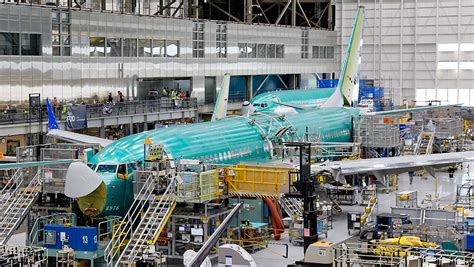
Production in 2025 showed tangible improvement. Enhanced oversight by the Federal Aviation Administration (FAA) and the National Transportation Safety Board (NTSB) forced Boeing to institutionalize stricter quality processes. The result has been slower, but cleaner, output. Boeing’s objective now is to scale that disciplined production back to high monthly rates without reintroducing defects.
The competitive context favors Boeing in subtle but important ways. Airbus’s A320 family surpassed the 737 as the best-selling single-aisle jet in history in 2025, but that milestone masks growing pressure. Hundreds of A320neo aircraft remain grounded due to Pratt & Whitney GTF engine issues, creating operational chaos for airlines and delivery bottlenecks for Airbus. Software recalls and fuselage supply disruptions further constrained European output.
As those issues persist, Boeing sees a window. The long-awaited 737 MAX 7 and MAX 10 variants are central to this strategy. Once certified, they will complete the MAX family, allowing Boeing to address short-haul, high-density, and premium narrowbody segments with a unified product line. Certification delays remain a risk, but the payoff is enormous. A fully operational MAX family at scale reopens the door to reclaiming dominance in the narrowbody market.
The 787 Dreamliner: Boeing’s Quietly Dominant Workhorse
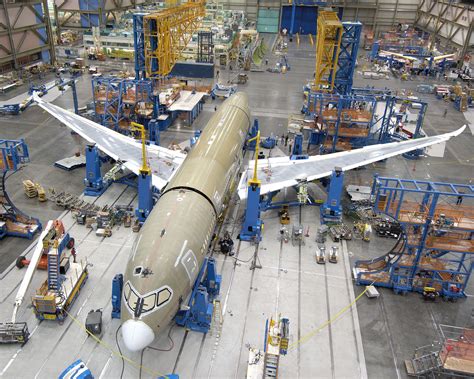
While the MAX absorbs public attention, the 787 Dreamliner has become Boeing’s most reliable commercial success story. In 2025, it outsold the Airbus A350 family by a wide margin, securing 368 new orders, the program’s second-best sales year ever. As of early 2026, the backlog stands at roughly 1,050 aircraft, confirming the Dreamliner’s status as the best-selling widebody in aviation history.
The 787’s appeal is structural, not cyclical. Its composite construction, fuel efficiency, and range align perfectly with airline strategies that prioritize flexible long-haul routes over hub-heavy superjumbo operations. Boeing understands this demand is not temporary. Global forecasts point to 7,800 new widebody aircraft needed over the next two decades, and the 787 sits at the center of that future.
To meet it, Boeing is ramping production from seven to ten aircraft per month by late 2026. Supporting that increase is a $1 billion investment to double manufacturing capacity in North Charleston, South Carolina. Longer term, Boeing is studying a rise to 16 aircraft per month by the end of the decade. This is not speculative expansion. It is a calculated response to sustained global demand.
Dreamliner DNA: How The 787 Reshaped Boeing’s Entire Portfolio
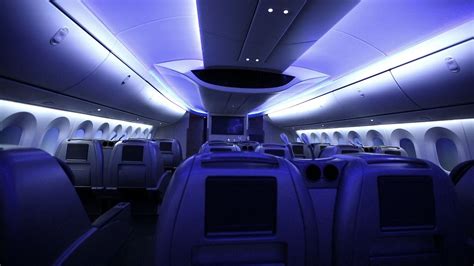
The 787’s influence extends far beyond its own sales figures. It quietly reshaped Boeing’s design philosophy across multiple programs. The Boeing Sky Interior, with larger windows, sculpted overhead bins, and LED mood lighting, migrated directly from the Dreamliner into the 737 MAX. The MAX’s flight deck displays are also derived from 787-era avionics, improving commonality for pilots and operators.
This technological lineage continues with the 777X, which borrows the 787’s open-architecture flight deck and advanced environmental systems. Cabin altitude on the 777X drops to 6,000 feet, significantly reducing passenger fatigue on ultra-long-haul flights. Even the adoption of larger windows on a successor variant reflects the Dreamliner’s influence.
In effect, the 787 became Boeing’s template for modern aircraft design. That legacy strengthens Boeing’s long-term competitiveness, ensuring future programs share systems, philosophies, and operational efficiencies.
The 777X: Delayed, Yes—But Still Central To Boeing’s Long Game
The 777X remains Boeing’s most complex and politically sensitive program. Certification delays have pushed entry into service from earlier targets into early 2027, testing airline patience and investor confidence. Yet the aircraft’s strategic importance has not diminished.
With over 540 firm orders from customers such as Emirates, Qatar Airways, and Lufthansa, the 777X occupies a unique niche. It is a high-capacity “super-twin,” combining the scale of the original 777 with the efficiency gains pioneered by the 787. Its massive composite wing spans 235 feet, featuring industry-first folding wingtips that allow it to use existing airport gates despite its size.
Powered by GE9X engines, the most powerful turbofans ever built, the 777X promises 10 to 12% lower fuel burn per seat compared to previous-generation widebodies. It will be longer than the Airbus A380 and the longest commercial aircraft ever produced, yet without the infrastructure penalties that crippled four-engine giants.
For Boeing, the 777X is not about quick returns. It is about defending the high-capacity long-haul segment for decades to come. Certification progress in 2026 will be watched closely, because success here reinforces Boeing’s credibility across its entire product lineup.
Supply Chain Control: Why The Spirit AeroSystems Deal Matters
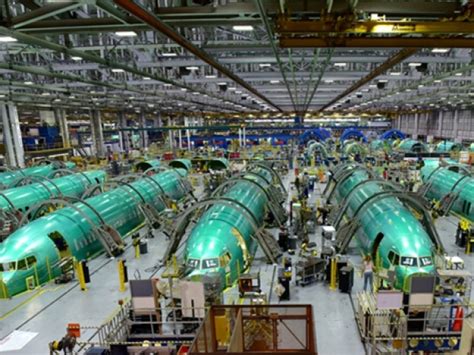
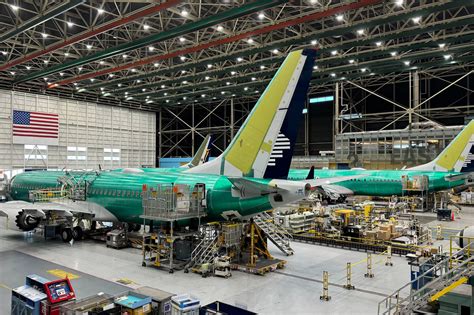
One of the most consequential moves Boeing made in 2025 received comparatively little public attention: the reacquisition of Spirit AeroSystems. By re-merging with the supplier responsible for roughly 70% of 737 MAX aerostructures, Boeing regained direct control over quality at a critical choke point in its supply chain.
The decision was shaped by hard lessons. The 2024 Alaska Airlines door plug blowout exposed how fragmented accountability could undermine even well-designed systems. Vertical integration does not eliminate risk, but it reduces ambiguity. Boeing can now enforce uniform standards, align production schedules, and intervene earlier when defects emerge.
This matters because the global aerospace supply chain remains fragile. Titanium shortages, sanctions-related material constraints, and labor disruptions continue to affect both Boeing and Airbus. Engine reliability issues have already crippled Airbus’s output. Boeing’s strategy is to minimize variables it can control while building buffers against those it cannot.
Walking The Quality Tightrope In A Ramping Production Environment
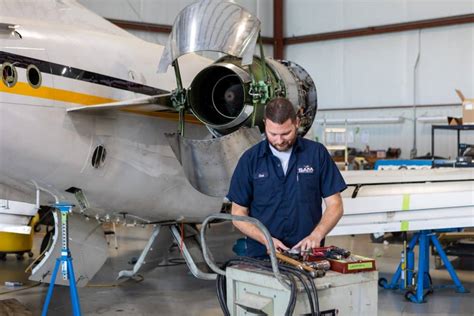
Boeing’s greatest vulnerability is also its greatest test: quality discipline during acceleration. Ramping production too fast risks repeating the mistakes that defined the past decade. Moving too slowly risks financial stagnation and competitive erosion.
Leadership has framed this as a cultural issue as much as an operational one. Eliminating “traveled work,” unfinished tasks passed between stations, has become a central metric. Defect reduction is no longer a talking point but a gating requirement. Regulators remain embedded in Boeing’s factories, and their continued confidence is non-negotiable.
Certification milestones loom large. Delays to the 737 MAX 7 and MAX 10 threaten key customers such as Southwest and Ryanair. Further slippage on the 777X would compound reputational damage. Boeing’s pace increase in 2026 is therefore deliberately incremental, designed to preserve trust while restoring throughput.
Kelly Ortberg’s Engineering Reset And Why It’s Changing Outcomes
Since becoming CEO in August 2024, Kelly Ortberg has reshaped Boeing’s internal priorities with unusual clarity. His leadership rejects the finance-first ethos that took hold after the McDonnell Douglas merger. Instead, engineering rigor and safety discipline now sit at the top of the decision stack.
Ortberg’s presence on factory floors is not symbolic. It reconnects executive decision-making with manufacturing reality. Airline CEOs have openly praised this shift, noting faster problem identification and more credible timelines. The cultural reset remains unfinished, but momentum is visible.
The symbolism matters. Boeing’s engineering-first reputation once inspired the slogan, “If it ain’t Boeing, I’m not going.” Restoring even a portion of that trust carries tangible economic value in a market where airlines commit billions based on confidence as much as specifications.
Why Boeing Is Accelerating Now, Not Later
Boeing’s decision to pick up the pace after a strong 2025 reflects strategic urgency, not overconfidence. The backlog is massive. The market demand is real. The competitive landscape is fluid. Most importantly, the financial math leaves no room for complacency.
Every additional aircraft delivered in 2026 strengthens cash flow, stabilizes supplier networks, and rebuilds airline confidence. Slowing down after progress would squander hard-earned credibility. Accelerating carefully, under regulatory oversight and cultural reform, turns recovery into sustainability.
Boeing’s future will not be decided by a single year, or even a single aircraft program. It will be decided by whether the company can scale excellence, not just rediscover it. The pace increase underway suggests Boeing understands that distinction—and is acting on it with intent.