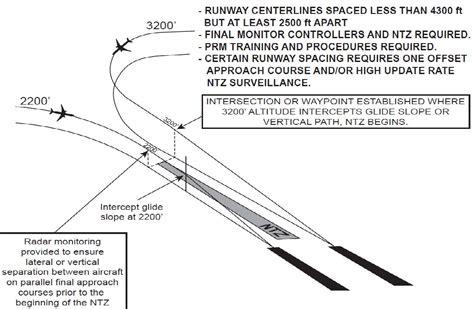
A breakout is an important procedure in aviation, as defined by the Pilot/Controller Glossary from the U.S. Federal Aviation Administration (FAA). Essentially, a breakout directs aircraft out of the approach stream to maintain safety. This technique is particularly crucial during simultaneous operations on parallel runways. When an aircraft poses a threat to another due to deviation, Air Traffic Control (ATC) steps in.
Simultaneous Precision Runway Monitoring (PRM) Instrument Landing System (ILS) approaches are used for runways spaced less than 4,300 feet apart but at least 3,000 feet apart. Pilots need specific training for these approaches. They also use a secondary communication frequency. This is vital in case the primary frequency becomes blocked during urgent situations.
If an aircraft strays too far from its designated path, ATC will issue a breakout instruction. This helps prevent any potential loss of separation between aircraft. The instruction might involve climbing or descending. ATC communicates the breakout with specific phrases, such as, “(aircraft call sign) TURN (left/right) IMMEDIATELY, HEADING (degrees) CLIMB/DESCEND/MAINTAIN (altitude).” It’s essential for pilots to hand-fly these breakout maneuvers to ensure accuracy.