The MD-11 fleet, long considered a workhorse of global cargo logistics, is now firmly sidelined well past the Christmas surge. Extended inspections, complex structural evaluations, and regulatory scrutiny continue to keep the trijet grounded, derailing peak-season planning for UPS Airlines and FedEx Express just as e-commerce demand reaches its annual crescendo. The grounding, triggered by the devastating November 4 crash in Louisville, has shifted from a temporary disruption to a months-long operational challenge with far-reaching consequences across the cargo ecosystem.
The aircraft involved in the tragedy—34-year-old MD-11 N259UP—lost its left engine and pylon assembly during takeoff from Louisville Muhammad Ali International Airport, leading to the deaths of three UPS crew members and 11 individuals on the ground. In the aftermath, both UPS and FedEx voluntarily grounded their MD-11 fleets before the FAA issued its formal directive. Newly revealed internal communications indicate that the investigative scope has widened dramatically, turning what was initially forecast as weeks of downtime into a prolonged suspension.
According to reporting from the Associated Press citing a memo from UPS Airlines President Bill Moore, Boeing’s technical assessment shows that required inspections and repair programs are far more significant than previously expected. Moore noted that the evaluation now spans multiple structural elements and failure scenarios, increasing the complexity and duration of corrective actions.
Boeing’s Expanding Technical Work and FAA Oversight
The MD-11 grounding has placed Boeing—absorbing McDonnell Douglas in 1997—under intense pressure to deliver precise engineering guidance aligned with emerging data from the Louisville crash. Initial analyses, sources suggest, point toward a combination of fatigue-related concerns and potential material anomalies within the pylon assembly. As inspections broaden, engineers are developing new inspection procedures, updated service bulletins, and structural reinforcements tailored to the aging trijet.
The FAA’s role has evolved from monitoring to hands-on coordination as the agency examines proposed repair cycles and verifies engineering assumptions. This cross-team approach has slowed the timeline but is considered essential for returning the fleet to service with an adequate safety margin. Until regulators formally approve Boeing’s corrective roadmap—still in late-stage development—the MD-11 remains blocked from commercial operation.
UPS and FedEx Turn to Contingency Aircraft Amid Holiday Pressure
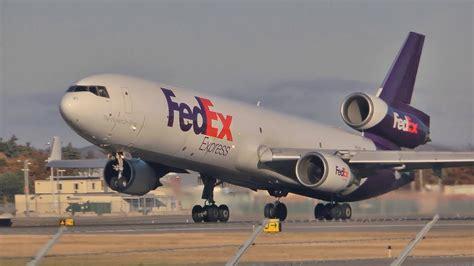
The grounding’s timing is particularly punishing. The November–December window represents the global cargo industry’s most intense operational stretch, driven by holiday e-commerce, fast-moving perishables, and high-value last-mile shipments. With MD-11s accounting for 11% of UPS’s fleet and 4% of FedEx’s, the absence of these aircraft forces both carriers to undertake rapid, expensive, and logistically complex fleet substitutions.
UPS has activated contingency lift, deploying 767-300Fs, 747-8Fs, and short-term capacity agreements to preserve network fluidity. FedEx is leveraging its broad fleet mix, though with similar strain; shifting routes, load planning, and crew cycles around the missing trijets introduces substantial operational friction. While both carriers maintain confidence in their holiday performance, the grounding pushes margins, scheduling flexibility, and overnight delivery commitments into unusually thin territory.
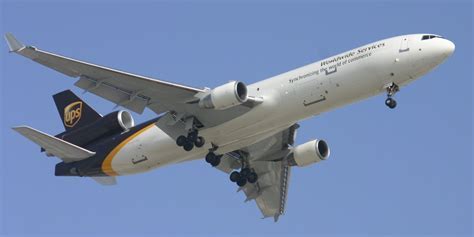
Aging Trijets Face Uncertain Future After Decades of Service
The MD-11, first delivered in 1990 and derived from the DC-10 lineage, was once the world’s largest and most ambitious trijet. Known for its distinctive performance profile—powerful GE CF6-80C2 or Pratt & Whitney PW4000 engines, high freight density, and long-range capability—it ultimately found its niche as a freighter long after its passenger era faded. Airlines such as American, Delta, and KLM retired their passenger-configured MD-11s by 2014, closing an iconic chapter in widebody aviation history.
The freighter-converted MD-11 remains attractive due to its low acquisition cost, high volume, and extensive remaining structural life. Yet its age presents growing challenges. Most active MD-11s are more than 30 years old, and maintenance demands escalate sharply at this stage of service. Carriers have long planned gradual retirement: FedEx targets 2032 for full phase-out, while UPS is transitioning toward an all-twinjet fleet, anchored by the Boeing 767-300F.
Long-Term Grounding Scenarios Raise Industry-Wide Uncertainty
Industry analysts increasingly believe the MD-11 grounding could stretch well into 2025, mirroring early internal assessments circulating among major operators and maintenance organizations. Each additional month intensifies the operational and financial pressure on carriers, accelerates replacement fleet strategies, and challenges the long-term viability of keeping the MD-11 active.
Freighter demand remains historically high, and the MD-11’s absence creates a widening capacity gap that cannot be instantly filled. Production backlogs for new 767-300Fs, 777Fs, and A350Fs extend years into the future, meaning that temporary fixes—wet leases, extended aircraft utilization, and capacity swaps—may become the new normal for cargo airlines navigating this disruption.
The MD-11 grounding now stands as one of the most consequential unplanned fleet withdrawals in modern cargo history, altering holiday logistics, reshaping carrier strategy, and raising difficult questions about aging aircraft, regulatory thresholds, and the delicate dance between efficiency and safety. As investigations continue and technical solutions evolve, the coming months will determine not just when the MD-11 flies again, but whether it remains a meaningful player in the cargo world at all.