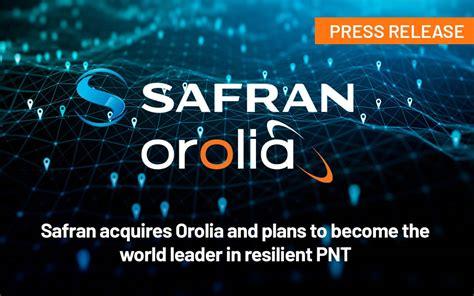
Orolia, a leader in positioning, navigation, and timing (PNT) technology, has long been at the forefront of innovations such as high-performance atomic clocks and GNSS simulation. In July 2022, Safran, a global aerospace and defense giant, announced its acquisition of Orolia, marking a significant milestone in the development of integrated PNT solutions. This strategic acquisition aims to combine the strengths of both companies, offering a comprehensive and resilient suite of PNT technologies for critical applications in aerospace, defense, and telecommunications.
The Acquisition and Integration Process
In July 2022, Safran completed the acquisition of Orolia, with the goal of integrating Orolia’s advanced technologies into Safran’s existing portfolio. The acquisition positions Safran as one of the few companies capable of providing a complete PNT technology chain, which includes atomic clocks, inertial navigation, and time synchronization solutions. By bringing Orolia’s advanced technologies in GNSS simulation, testing, and secure time synchronization under Safran’s umbrella, the partnership enhances Safran’s ability to meet the growing demand for resilient and precise PNT solutions.
This acquisition also underscores the complementary strengths of both companies. Orolia excels in the high-precision atomic clock market, with its Spectratime brand offering cutting-edge aerospace-grade atomic clock modules. Safran, on the other hand, has a deep expertise in inertial navigation systems, with its Geonyx series standing out in applications such as aviation and defense. Together, these capabilities allow Safran to provide a holistic approach to PNT, capable of delivering robust solutions even in GNSS-denied environments.
Core Products and Technological Integration
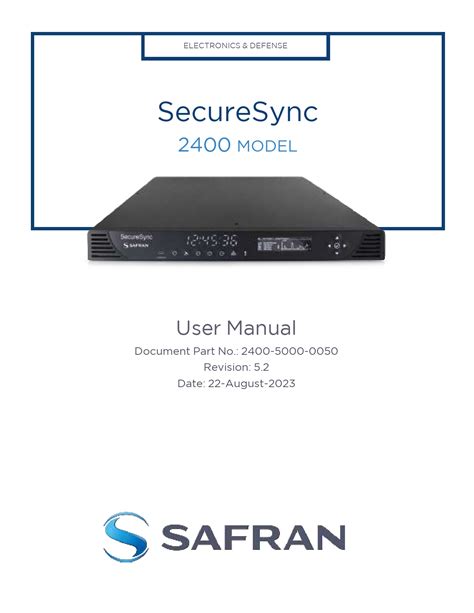
The merger of Orolia and Safran has resulted in the seamless integration of several key products and technologies. Among the most notable is the Spectratime brand of atomic clocks, which has been incorporated into Safran’s product line. These high-performance atomic clocks are used in critical space missions, such as those managed by NASA and the European Space Agency. Additionally, Orolia’s SecureSync time servers, including the SecureSync64 2400 model, have become central to Safran’s time synchronization solutions, providing nanosecond-level accuracy essential in industries like finance, telecommunications, and energy.
Another major development is the integration of Orolia’s GNSS simulation technology into Safran’s product offerings. Safran’s GSG-7/GSG-8 GNSS simulators are now powered by Orolia’s technology, supporting multi-constellation signal simulation (including GPS, BeiDou, and more), dynamic scene simulations, and interference testing. These simulators are crucial for testing applications in automated driving, drones, and other complex environments that require precise navigation and timing solutions.
The Skydel software platform, now integrated into Safran’s portfolio, further enhances the company’s GNSS capabilities. This software-defined platform offers flexible GNSS signal simulation functionality, allowing for scalability from laboratory to large-scale testing environments, along with the ability to receive real-time updates to keep pace with rapidly changing technologies.
Market Position and Industry Applications
Safran, with the addition of Orolia’s technologies, holds a notable position in the global PTP server market, accounting for approximately 6% of market share in 2023. The PTP server market is witnessing rapid growth, driven by emerging sectors such as 5G networks and smart grids. In this competitive market, Safran faces competition from companies like Microchip Technology and Meinberg, but Orolia’s innovations in time synchronization give Safran a strong edge.
The applications of Orolia and Safran’s integrated PNT technologies span a wide range of industries:
- Financial and High-Frequency Trading: SecureSync time servers ensure microsecond-level synchronization for high-frequency trading platforms, providing the accuracy required for successful trading.
- Aerospace and Defense: The combined capabilities of atomic clocks and inertial navigation systems play a critical role in satellite positioning, military applications, and strategic weapon systems.
- Energy and Telecommunications: Safran’s PNT solutions are pivotal for applications such as power grid monitoring and 5G base stations, ensuring reliable and accurate time synchronization for these essential infrastructures.
Technological Innovation and Future Directions
The integration of Orolia’s advanced interference detection technology with Safran’s inertial navigation systems has led to the development of hybrid PNT solutions that can maintain high accuracy even in GNSS-denied environments. These innovative solutions are crucial for applications in defense, autonomous vehicles, and other mission-critical industries where GNSS signals may be unavailable or unreliable.
Further innovations include the integration of satellite channel fading simulation systems, such as those from IZT, with GNSS simulation technologies. This combination enhances the ability of communication devices to operate in complex, degraded environments, ensuring resilience and adaptability in ever-evolving technological landscapes.
As technologies like autonomous driving, edge computing, and 5G continue to mature, the hybrid PNT solutions offered by Safran and Orolia are poised to play a pivotal role in shaping the future of navigation and timing systems. By combining atomic clocks, inertial navigation, and software-defined testing, Safran is driving the next wave of innovation in PNT, expanding the scope of applications across industries.
Supply Chain and Partnerships
In order to support its growing presence in the Chinese market, Safran has partnered with local distributors such as Shanghai Yiwen Technology and ByteBridge. Through these partnerships, Safran has been able to promote products like SecureSync and expand its footprint in key markets like the BeiDou navigation system and SpaceX’s Starlink satellite network.
Additionally, Safran has engaged in research and development collaborations with companies like Germany’s GMV to test time synchronization solutions for underground spaces, further expanding the capabilities of SecureSync in GNSS-denied environments.
Conclusion
The integration of Orolia and Safran has strengthened both companies’ position in the high-end PNT market, making them formidable players in industries like defense, aerospace, telecommunications, and beyond. As technology evolves, the fusion of atomic clocks, inertial navigation, and software-defined testing platforms will continue to drive innovation, offering new possibilities for navigation and timing solutions across a range of industries.
Safran’s expanded portfolio, which now includes Orolia’s cutting-edge technologies, is poised to lead the way in the development of resilient PNT systems that will meet the growing demands of emerging applications like autonomous vehicles, 5G, and space exploration.